|
GLAUCOMA AWARENESS WEEK 9 – 15 MARCH 2025 World Glaucoma Week is a global initiative organised by the World Glaucoma Association. Their goal is to alert everyone to have regular eye and optic nerve checks in order to detect glaucoma as early as possible because there are available treatments for all forms of glaucoma to prevent visual loss. The theme for 2025 is “See the future clearly”. WHAT IS GLAUCOMA? Glaucoma is a group of chronic conditions of the eye which slowly, silently and progressively damage the optic nerve which carries visual information from the eye to the brain. If untreated, it can lead to irreversible vision loss. It is one of the leading causes of blindness worldwide. HOW DOES GLAUCOMA AFFECT THE EYES?
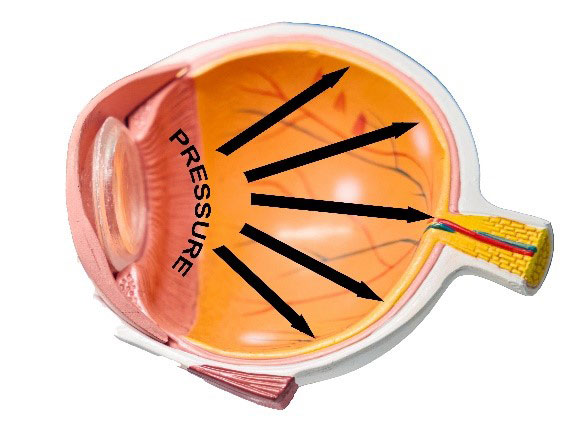
The eyes constantly produce a clear fluid called aqueous humor which circulates in the front part of the eye and drains out through the drainage angle, keeping the pressure within the eyes stable. In most types of glaucoma, the eye’s drainage system becomes blocked, and the intraocular fluid cannot drain. As the fluid builds up, it causes pressure to build inside the eye, which can damage the optic nerve. If the pressure remains too high for too long, the damage to the optic nerve can lead to permanent vision loss. |
||||
|
WHAT ARE THE DIFFERENT TYPES OF GLAUCOMA? Primary open-angle glaucoma is the most common form of glaucoma, characterised by a gradual loss of vision due to damage to the optic nerve. Angle closure glaucoma, also called closed angle or narrow angle glaucoma, is an acute condition which occurs suddenly as the drainage angle becomes blocked and the pressure in the eye rises rapidly, requiring urgent medical attention. Congenital glaucoma is a rare form of glaucoma which is present at birth and is caused by abnormal eye drainage system development. WHO IS AT RISK FOR GLAUCOMA?
Studies have shown that while there are numerous risk factors for glaucoma, the most significant risk factor is a family history of the condition. If a member of your family has glaucoma it is important for other family members to be tested for the condition. Other risk factors include people over 60 years of age, certain ethnic groups, previous eye surgery or injury, use of steroid medications, and certain health conditions. While high intraocular pressure may be a risk factor, many people with high eye pressure do not develop glaucoma. |
||||
|
WHAT ARE THE SYMPTOMS OF GLAUCOMA? In its early stages, over half the people with glaucoma are not aware that they have it because there are no apparent symptoms. The first sign is typically a gradual loss of peripheral vision. As the disease progresses, there may be blurred vision, redness, blind spots and difficulty differentiating colours. |
||||
|
IF THERE ARE NO SYMPTOMS, HOW IS GLAUCOMA DETECTED?
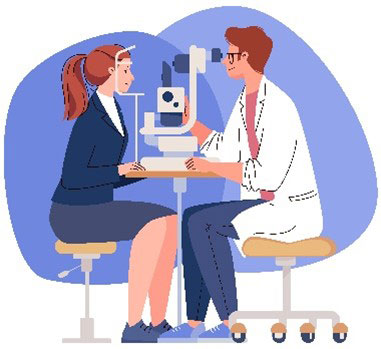
Because there are no early symptoms, it is important to have regular eye examinations so that signs of the disease can be detected early. Your optometrist will check your eye pressure and dilate the pupils in order to examine the back of the eye where early signs may be evident. If it is picked up and treated early, treatment may slow or even stop the progression of the glaucoma and severe vision loss may be avoided. |
||||
|
WHY IS GLAUCOMA AWARENESS MONTH IMPORTANT? Glaucoma Awareness Month is an important reminder that we need to be proactive about our eye health so that problems can be detected and treated early, and vision can be preserved. It is an opportunity to learn about the risk factors that may make us more susceptible to vision-threatening conditions such as glaucoma. While there is no cure for glaucoma and no way to prevent it, the earlier it is diagnosed and treated, the better the outcome so that we can “see the future clearly”. |
||||