|
Many people, both adults and children, suffer from headaches which may vary in severity and frequency, and many of those people struggle to establish the cause and suitable treatment. Some headaches or medical conditions, such as migraines or head trauma, may cause visual symptoms such as blurred vision, a visual aura, or light sensitivity, but the headaches themselves are the primary source of pain. Other headaches may be caused by a visual problem and may be a sign that the eyes are changing or have difficulty focusing, for example with eye strain or an uncorrected refractive error such as short-sightedness. EYE STRAIN
A typical headache as a result of eye strain usually occurs after over-using the focusing muscles of the eyes for extended periods of time on tasks such as reading or sewing. When the eye muscles become tired, a headache can develop around or behind the eyes. A common cause of headaches that seems to be on the rise is digital eye strain, a condition that can arise from prolonged periods of digital screen usage. This can present with a headache, commonly felt behind the eyes, blurred vision, and sensitivity to light. |
||||
|
DIFFICULTY FOCUSING
Both adults and children may experience headaches resulting from uncorrected refractive errors, including shortsightedness, farsightedness and astigmatism. The eyes are required to work harder as they try to compensate for being unable to focus clearly. The appropriate prescription for glasses or contact lenses to correct the problem will generally alleviate the headaches. As people age, they often begin to develop presbyopia, a condition in which their vision becomes blurred when they need to focus to perform activities requiring clear vision for close work such as reading. They may experience headaches which are usually relieved with the use of glasses. |
||||
|
DRY EYES
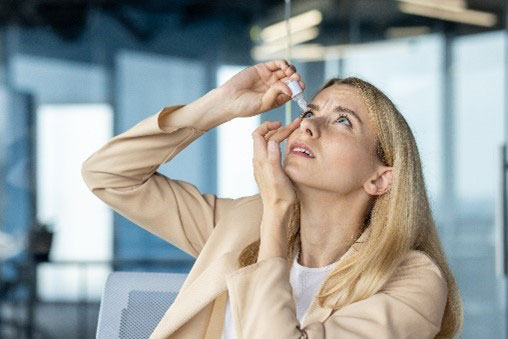
The cornea requires constant lubrication to maintain clear and comfortable vision. Insufficient production of tears or poor tear quality may result in redness, burning, excessive tearing, blurred vision and headaches. The symptoms may be worsened by activities requiring visual concentration, such as reading, watching television, using the computer or driving. Artificial tears can generally offer relief. |
||||
|
INFLAMMATION Inflammation in or around the eye can be painful and is generally accompanied by swelling of the eye and eyelids, pain with eye movement, extreme sensitivity to light and sometimes headache. GLAUCOMA Open angle glaucoma is the most common type of glaucoma and is typically painless and symptomless until the later stages. Acute angle closure glaucoma, on the other hand, is a rare condition which occurs suddenly with eye pain, redness, blurred or sudden loss of vision, and headache. It is a medical emergency which requires urgent medical attention. |
||||
|
BINOCULAR VISION DYSFUNCTION
Binocular vision dysfunction occurs when the eyes are misaligned, causing the eye muscles to overwork and strain in an attempt to focus the eyes. Even with a slight misalignment, the body struggles to compensate, which can result in painful headaches. Other common symptoms may include dizziness, nausea, difficulties with balance, sensitivity to light and neck pain. |
||||
|
HEADACHES IN CHILDREN Frequent headaches in children can impact their ability to learn and function effectively in all aspects of their lives. Just like in adults, the headaches may be caused by a misalignment of their eyes. Depending on the age of the child, the signs and symptoms of binocular vision dysfunction may vary, but include difficulty catching a ball, sitting close to the TV, squinting or closing one eye in order to see clearly, reading difficulties, poor handwriting, frequent blinking, complaining of eye fatigue, anxiety and avoiding activities. Binocular vision dysfunction is usually successfully treated with specialised corrective optical lenses and/or a customised vision therapy programme to strengthen the eye muscles and help the eyes to work together. With treatment, the eye muscles are able to relax, releasing the tension and providing relief from headaches and other debilitating symptoms associated with binocular vision dysfunction. |
||||