|
When do you need to wear glasses? Indoors? For outdoor activities? At the computer? For reading? For driving, day or night? For sport? For watching TV? We all have different visual needs and with the variety of lens coatings available, it is possible to cater for everyone’s unique lifestyle, visual habits, personal preferences and budget. Being faced with too many choices can be confusing, but with an understanding of lens coatings and the guidance of your optometrist the right decision for your specific needs can be made. ANTI-REFLECTIVE COATING
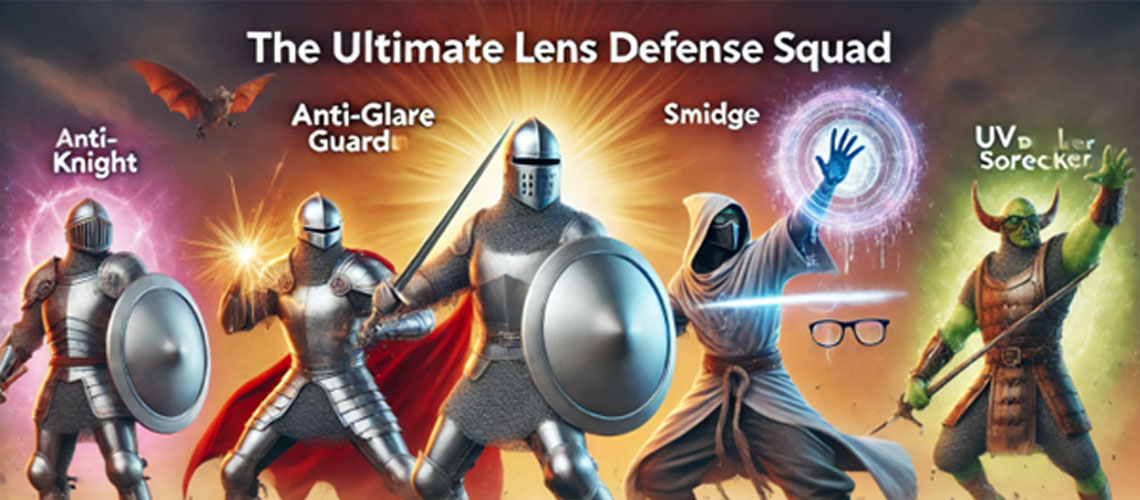
Anti-reflective coatings comprise many different thin layers of coating applied to the front and back of lenses to reduce glare from different wavelengths of light. By reducing unwanted reflections from the lens surfaces, more light is transmitted through the lens, making vision clearer and minimising eye strain. Reflections from the lenses of glasses make it difficult to see the wearer’s eyes, but with an anti-reflective coating, the wearer’s eyes are visible and look more natural. This coating is particularly beneficial for people who drive at night and find reflections from headlights and streetlights uncomfortable. Anti-reflective coatings can show smudges more readily than uncoated lenses so should be cleaned regularly with a soft cloth. |
||||
|
SCRATCH-RESISTANT COATING
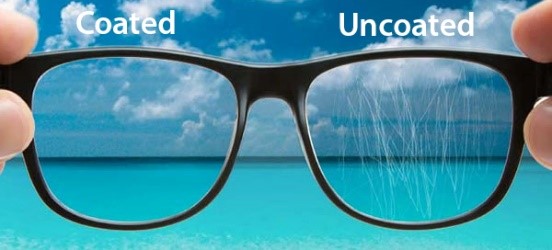
As well as affecting the ability to see clearly and causing eye strain, scratched lenses can reduce the life of the lenses. Plastic lenses are more prone to scratching than glass lenses, and many plastic lenses contain a built-in scratch resistant or hard coat. While no coating can make lenses completely scratch-proof, a scratch-resistant coating will protect them from minor abrasions and enhance durability and visual quality. It is recommended that children’s glasses are treated for resistance to scratches. Nearly anything can scratch lenses, so always store them in a case and clean them with a microfibre cloth. |
||||
|
UV-PROTECTIVE COATING
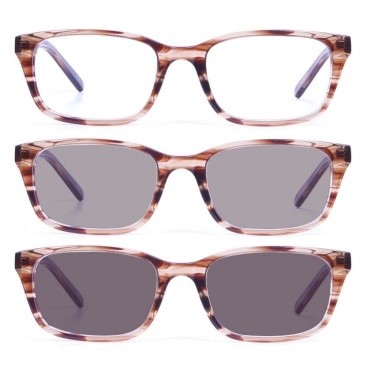
Long term exposure to the ultraviolet rays of the sun can harm the eyes, increasing the risk of vision problems such as cataracts and age-related macular degeneration. There are three types of UV rays, UVA, UVB and UVC. Most high-index plastic lenses and sunglasses have 100 percent UVA and UVB protection built in, but some may need an added protective coating. For people who, for whatever reason, don’t want to have to change their glasses when they go outdoors, photochromic lenses are recommended. These lenses incorporate a special technology which adapts to the sun, darkening automatically in response to sunlight and offering UV protection. TINTS A wide selection of tints is available and can be applied to lenses for a variety of reasons, including to cut down on visible light entering the eyes, aid vision and reduce discomfort in certain vision conditions, and to add a personal cosmetic style. Tints may be a solid colour or graduated from dark at the top to almost clear at the bottom of the lens, or a mirror coating in a variety of colours can be added to lenses. Polarised tints eliminate reflected glare, block 100% of harmful UVA and UVB light rays, and enhance contrast and visual comfort from sunlight reflected off water and wet roads. Research has suggested that a coating which blocks blue light from digital devices may reduce eye strain and minimise the harmful effects of blue light on the eyes. ANTI-FOG COATING Anti-fog coating is designed to eliminate the condensation of moisture that leads to fogging of lenses due to perspiration, while playing sport or moving from a cold to a warm environment. ANTI-STATIC COATING An anti-static coating can be applied to a lens to help prevent dust and other particles from adhering to the lens, keeping the lenses cleaner and easier to clean, and vision clearer and more comfortable. There are many options and combinations of lens coatings available to enhance vision and to prolong the life of your lenses. Lens coatings can vary in price, and the most expensive is not necessarily the most suitable for you. In consultation with your optometrist, the appropriate decision will be made for you based on your vision needs, lifestyle and personal preferences. |
||||