 |
||||||||
|
Helping to ensure that a child’s entry into school is an easy step into his educational journey begins long before buying school uniforms and stationery. As well as being intellectually, emotionally and socially ready for school, the child needs to have appropriate skills in hearing, vision and communication, the three pillars that form the foundation of success in the school years. The development of school readiness skills allows teachers to expand and further develop a child’s skills in the specific areas required for learning. Because 80% of learning occurs through the eyes, clear vision and effective visual perceptual skills are fundamental to learning to read, write and do maths. Visual perception is the brain’s ability to make sense of what the eyes see, allowing us to interpret, filter, organise and make sense of the world around us. Development of visual perceptual abilities can be facilitated by parents in the years before the child starts school. Children are curious natural learners who discover the world around them by play and exploration. Careful selection by parents of appropriate activities and toys can enhance the child’s learning experience, preparing them to engage and thrive in the classroom. WHAT ARE THE BUILDING BLOCKS OF VISUAL PERCEPTION?
Good visual perceptual skills are important, not only for reading and writing, but for many everyday activities. Teaching a child to read and write depends on how well their visual perceptual ability has been built. Each of the following visual skills has a vital role to play in reading, writing and maths. The individual skills necessary for visual perception include visual attention (the ability to focus on important visual information), figure-ground perception (the ability to identify visual detail and to block out unimportant visual information), visual discrimination (the ability to see similarities and differences based on visual information), visual memory (the ability to remember what the eyes have seen), visual sequential memory (the ability to remember what has been seen in sequence), visual analysis and synthesis (the ability to see something as a unit, break it into its parts and put it together again), visual closure (the ability to recognise a form when only seeing a part of it), spatial relationships (the awareness of objects and people in relation to each other), visual motor integration (the ability to integrate visual information with fine motor skills), and visual comprehension (the ability to understand what has been seen). |
||||||||
|
WHAT ACTIVITIES CAN HELP BUILD VISUAL PERCEPTION?
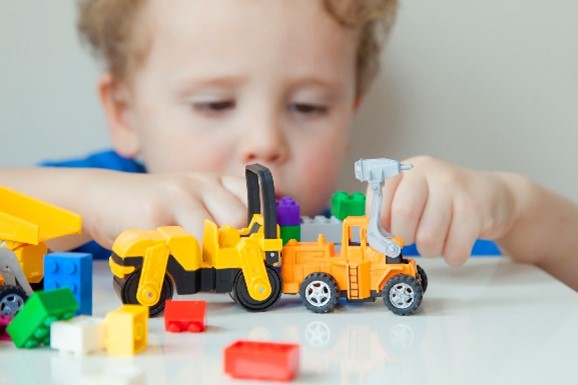
The best way to develop visual perception skills is through play. Activities such as building blocks, construction toys, sorting games and stringing beads are excellent pre-reading activities to stimulate visual perception. Puzzles are a single activity that targets almost every aspect of visual perception. Memory games, story cards and card games which require matching pictures, spot-the-difference and hidden pictures in books enhance visual attention and discrimination. Strengthen fine motor skills with drawing, painting, cutting and playing with play dough.
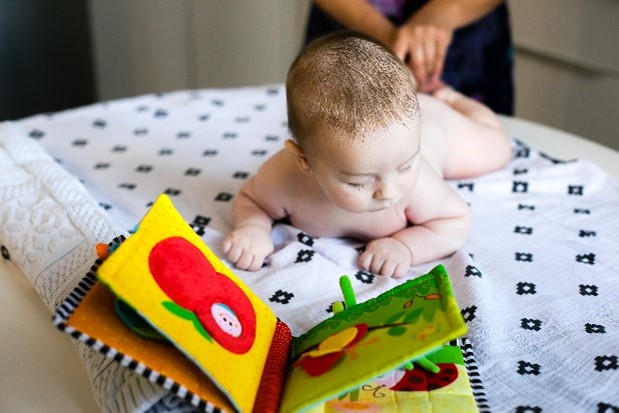
Everyday activities such as matching clothes when getting dressed, sorting cutlery when setting the table, matching or differentiating items when shopping and playing games when travelling all contribute to the development of visual perception. Use opportunities like tidying up toys to introduce visual skills such as differentiating and comparing colours, shapes and sizes. It is never too early to introduce books to children. From a few months old, children are able to recognise simple familiar pictures. As they get older, introduce books with more complicated pictures and encourage them to point to one object from a group of objects. Preschool children can be asked to remember what they saw on the page and to talk about the pictures. Handling of books at a young age familiarises children with turning pages in the correct direction and being aware of reading from left to right. Establishing a bedtime reading routine fosters a love of books and helps build lifelong reading habits. |
||||||||
|
WHAT OTHER SKILLS MAKE A CHILD READY FOR SCHOOL?
Addressing hearing, vision, speech and language development collectively forms a holistic approach to ensuring school readiness. In addition to these skills, school readiness includes independence, the ability to adapt to the routine of the classroom and to follow the teacher’s instructions, concentration, the ability to organise and complete simple tasks and the ability to interact with other children. Through concerted efforts and heightened awareness, parents can pave the way for every child to embark on their academic journey, equipped with the tools they need to succeed. |
||||||||