|
The human eye provides us with the ability to experience the world in ways that our other senses cannot. The only organ more complex than the eye is the brain which processes and interprets the information gathered by the eyes. INTERESTING PERSPECTIVE Because the cornea at the front of the eye is curved, it bends the light that enters the eye, and the image is focused upside down and backwards on the retina. The brain interprets the image and reorients it so that we perceive it right way up. Having two eyes gives us depth perception. The brain computes distances by comparing the different images from each eye. PROTECTIVE FEATURES
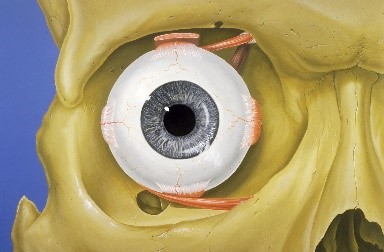
The eye is one of our most fragile organs which is protected by the skull and facial features. The eye socket is hollow and depressed into the skull protecting half the eye within bone. 80% of the human eye is made of a firm jelly-like fluid called vitreous humour that is vital to eye health and function. This clear, colourless substance fills the space between the lens and the retina, maintaining the eye's shape and keeping the fragile retina in place. The eyelids shield the eye from light and particles and the eyebrows divert sweat from the eyes. Eyelashes create a filter for dust and other particles and also act as a sensor, triggering the eyelid to close when necessary. The lifespan of an average eyelash is 5 months, while the rest of the hair lasts 2-4 years. |
||||
|
WE CAN'T SEE IT ALL In the area where the optic nerve exits the eye through the retina, there are no photoreceptors, so no images are detected. We seldom notice this small blind spot, and experts are unsure why. One theory is that the brain fills in the missing information using visual cues in the environment, the other is that the overlapping vision of the two eyes fills in the gap. TRUE COLOURS
It has been suggested that we can distinguish as many as 10 million colours. The eyes contain 7 million cones which help us see colour and detail and 100 million rods which help us to see better in the dark. All colours visible to humans are made up of combinations of red, yellow and blue which are the only three colours detected by the cone cells. The brain combines these into a rainbow of colours of different shades and hues. Humans are able to see more shades of green than any other colour. Males are more likely than females to be colour-blind. |
||||
|
EYE COLOUR
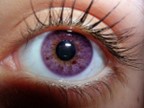
Approximately 79% of the world's population have brown eyes. The next most common eye colour is blue at 8-10%, and the following is amber or hazel eyes at 5%. In spite of being common in some countries, only an estimated 2% of the world's population have green eyes, making them rare overall. Other rare eye colours include red, violet, and grey. A small number of people have two different eye colours, a condition called heterochromia. It is thought that blue and green eyes are more sensitive to light than brown eyes, and that brown eyes are more susceptible to cataracts. Experts agree that everyone, regardless of eye colour, should protect their eyes from the sun. |
||||
|
RED EYE
The “red-eye” effect in photographs occurs when the light of a camera flash or other bright light source is reflected back at the camera. The reflected light illuminates the blood vessels at the back of the eye, which produces the red colour we see in photos. On the topic of photographs, if the human eye were a digital camera, it would have 576 megapixels! |
||||
|
EYE-DENTIFICATION Like a fingerprint, the iris of the eye is unique to each individual. Unlike fingerprints, the iris in each of our eyes is different. The iris has over 256 unique characteristics, compared to fingerprints which have about 40. This makes the iris scan for biometric systems more secure than fingerprints. BLINK! BLINK! Blinking removes dirt and lubricates the eye with tears. Each blink brings nutrients to the surface of the eye, keeping it healthy. Scientists have estimated that we blink between 15 and 20 times per minute, 20,000 and 30,000 times per day on average. Each blink lasts just two-tenths of a second, adding up to approximately 1.5 hours per day. We tend to blink less often when we are staring at a digital screen for extended periods, often leading to discomfort. COMPUTER VISION SYNDROME Studies suggest that 50% to 90% of people who work at a computer screen show symptoms of computer vision syndrome, which is a range of issues relating to eye strain from too much exposure to screens. Using a screen forces the eyes to constantly focus and refocus, the brightness and glare also make the eyes work harder, and over time this repetitive strain can take a toll on the eye muscles. The 20-20-20 rule is useful - look at something twenty feet away for twenty seconds every twenty minutes. As well as being a reminder to take regular breaks, this generally helps alleviate or prevent eye strain. RABBITS DON'T WEAR GLASSES!
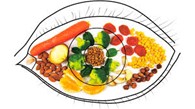
Are carrots good for eye health? While vegetables like carrots are rich in beta-carotene and are a healthy addition to your diet, they are not the only foods that have specific benefits for the eyes. For eye health, eat oily fish and green vegetables that contain lutein, zeaxanthin and meso-zeaxanthin, which support the eye's protective mechanisms. Lutein and zeaxanthin occur naturally in foods like spinach, kale and other leafy greens, while meso-zeaxanthin can be found in certain fish. |
||||
|
A LOOK AT YOUR NEW-BORN At birth a baby's eyes may appear grey or blue. Depending on the amount of melanin in the iris, as well as genetic and other factors, changes to the colour of the eyes will be noticed over a period of six months to one year. New-borns have blurry vision for the first few months, but they do focus on faces. It takes about four months for a baby to fully see colours and distant objects. Although they cry, new-borns don't produce tears until the tear glands have developed between the ages of two weeks and two months. INTERESTING EYE-OPENERS
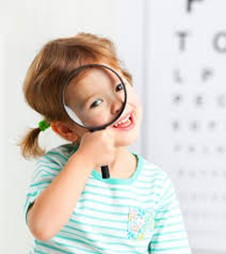
The eyes focus on 50 different objects every second. The older we get, the less tears we produce. Contrary to popular belief, you can sneeze with your eyes open. About 80% of the world's vision problems can be solved with proper treatments. The cornea of the shark is the most similar to the human cornea and has been used in human surgery. Eye tests can detect health conditions. The retina is said to be a good predictor of the health of blood vessels throughout the body. The eyes are a window to your health, so take good care of them. Follow an eye-healthy diet, exercise regularly, protect them from the sun and environmental hazards, and have regular eye examinations. |
||||