|
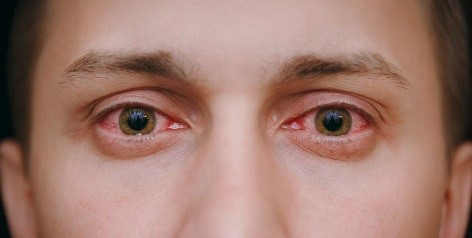
Red or bloodshot eyes are a common occurrence that can be caused by lifestyle choices, nonemergency conditions, or various health conditions. They occur when the tiny blood vessels near the surface of the eyes become enlarged or inflamed due to irritation, infection or injury. They are usually temporary and clear spontaneously with no cause for concern unless they are accompanied by additional symptoms which may indicate a problem. CAUSES OF RED EYES
Allergies frequently cause the eyes to become red and swollen. Associated symptoms include itching, burning, sneezing or a runny nose. Some contact lens wearers develop an allergic reaction to certain contact lens solutions or even the contact lenses themselves. With dry eye, the eyes become red and feel scratchy. Vision may be blurred, sensitivity to light increased and the eyes water excessively. Inflammation of the membrane covering the white part of the eye and the inner eyelids causes the eyes to appear red. Conjunctivitis or "pink eye" is a contagious condition usually accompanied by itching, burning, increased tearing and a discharge which can lead to crusting on the eyelids or eyelashes. Blepharitis is a condition in which the eyes and eyelids become red and swollen. The eyes itch, burn and water. There may be flaking on the eyelids which may be crusty on waking in the morning. If not treated, more serious symptoms can occur, including loss of eyelashes, eyelashes that grow in the wrong location, or blurred vision. Uveitis is inflammation in the middle part of the eye, the area between the white of the eye and the retina. As well as redness, there may be blurred vision, eye pain, eye floaters and sensitivity to light. The condition can lead to vision loss if not treated. Scleritis affects the white of the eye, the sclera, causing it to become red and swollen. Additional symptoms can be increased tearing, eye tenderness or pain, blurred vision, sensitivity to light, decreased vision, or pain in the head, face, or jaw. |
||||||||||||
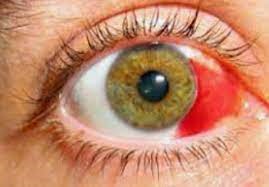
Sometimes, a blood vessel in an eye can break, leaking blood on the surface of the eye. This is a subconjunctival haemorrhage, which is similar to a bruise on the skin. It may look serious but usually clears on its own within a week or two. Typically, the redness in the affected eye is the only symptom, although in some cases, the eye may feel slightly irritated. However, if you have had a head injury and there is decreased vision or persistent pain, a medical professional should be consulted. One of the types of glaucoma, angle-closure glaucoma, can lead to vision loss if not treated immediately. Symptoms occur suddenly and include intense pain in the eye, blurred or decreased vision, halos around lights, eye redness, headache and nausea or vomiting. Corneal ulcers are ulcers, or sores, that affect the outer covering of the eye. In addition to red eyes, other symptoms of a corneal ulcer are severe eye pain, a sensation of something in the eye, increased tearing, discharge of pus, blurred vision, sensitivity to light and eyelid swelling. It is important to seek timely medical attention if symptoms of a corneal ulcer are experienced, as it can permanently damage vision. |
||||||||||||
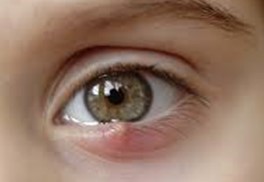
A stye is a blockage of the meibomian gland in the eye which can affect the outside or inside of either the upper or lower eyelid. The area at the edge of the eyelid can become red, swollen, and painful, and the affected area may fill with meibum and can potentially grow to the size of a pea. Sustaining an injury that affects the eye may cause it to become red, often due to irritation or bleeding. Other symptoms that may occur with an eye injury are eye pain, swelling of the eye or the surrounding area, trouble moving the eye and decreased vision. It is advisable to seek medical attention if the eye is injured. Eye redness is frequently the result of prolonged time staring at screens. There is generally associated eye strain, fatigue and neck or shoulder discomfort. Additional causes of eye redness include use of alcohol or cannabis, eye irritation due to sun exposure, ocular rosacea, a skin condition that most often affects the cheeks, nose, or forehead but can also affect your eyes, eyelashes that grow inward and irritate the eye, cellulitis, a bacterial skin infection that can affect the eyelid or eye socket, and retinoblastoma, a type of cancer that affects the eye. MANAGEMENT OF RED EYES The treatment of red eyes depends on the underlying cause, but the majority of the symptoms do not require medical attention. It is necessary to consult your doctor or optometrist if there is associated eye pain, a change in vision, increased light sensitivity, a discharge from the eyes or if the symptoms persist.
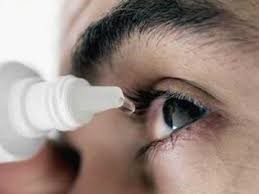
Symptoms can be managed with lifestyle changes such as limiting screen time, avoiding irritants that may induce allergic reactions, drinking water to remain hydrated and help avoid dry eyes, and wearing sunglasses. Introducing omega-3 fatty acids into the diet or taking supplements has been found to be beneficial in reducing inflammation. Lubricating eye drops such as artificial tears can help alleviate the discomfort of dry eyes and flush out irritants. Keeping them in the fridge provides additional relief. Ask your optometrist to recommend a brand that is appropriate for you. For certain conditions, antihistamine or steroid eye drops or medications will be prescribed. Applying a warm or cool compress on the eyes is often effective at relieving discomfort and soothing the eyes. Avoid extremes of temperature on the sensitive areas around the eyes. A cool compress on the closed eyes a few times a day can provide relief by reducing swelling and irritation. The gentle heat of a warm compress can increase blood flow to the eyes, increase oil production and create more lubrication. |
||||||||||||