
EYE CONDITIONS IN CHILDREN

The eyes are a child's gateway to learning about the world around him and to developing the skills that are critical for reading, writing and learning. There is more to healthy eyes than seeing clearly, and parents need to be aware of the signs that may indicate a problem and the need for a visual examination. Early detection is key! The earlier a vision problem is treated, the better the prognosis will be and the less risk there will be of further deterioration or damage.
Common Eye Problems in Children
Amblyopia (Lazy Eye)
Amblyopia, also known as lazy eye, is a condition in which one or both eyes do not develop normal vision even though the eye or eyes look normal. Over time the visual part of the brain ignores signals from the weaker eye. If untreated, amblyopia can cause irreversible vision loss in the affected eye. If recognised early, ideally before the age of 8 years, it generally responds well to treatment.
Blocked tear ducts
Approximately 10% of newborns experience blocked tear ducts, which is often due to an underdeveloped tear-duct system at the time of birth. It generally improves spontaneously by 6 to 12 months of age. Blocked ducts in older children may be due to an infection or injury. Warm compresses can be used to open the duct, and antibiotic drops or oral antibiotics may be prescribed in the case of infection.
Cataract
A cataract is a cloudiness of the normally clear lens of the eye, causing blurred vision. Cataracts are typically associated with older adults but can occur at birth or during childhood. Early detection and treatment of cataracts is critical in infants and young children in order to restore normal visual development.
Conjunctivitis
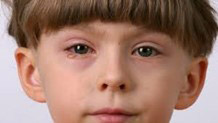 |
Conjunctivitis or "pink eye" is one of the most common eye conditions affecting children under the age of 5 years. This is an inflammation of the conjunctiva, the clear membrane that covers the white parts of the eye and the inner surface of the eyelid, which turn red or pink. They become itchy and often produce a discharge which causes the eyelids to stick together. It is highly contagious, so children should be kept home from school, wash their hands regularly and not share towels to avoid spreading it to other children and family members. |
|
Glaucoma
Glaucoma is a condition that is associated with high pressure within the eye, which gradually damages the optic nerve, eventually resulting in irreversible vision loss. Pediatric glaucoma is a rare condition that can present in the newborn or during childhood. Signs and symptoms of pediatric glaucoma include cloudy corneas, tearing, frequent blinking, light sensitivity, and redness of the eye.
Nystagmus
Nystagmus is an involuntary, rapid, rhythmic movement of the eyes. The eye movements can be side-to-side, up and down, or rotary, making it difficult to fixate on an object. Children with nystagmus are often born with the problem. There may be an underlying condition which needs to be treated.
Ptosis
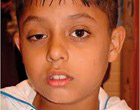 |
Ptosis is characterised by drooping of one or both of the upper eyelids caused by weakness in the muscle that elevates the upper eyelid. It may cover the eye slightly, blocking the field of vision and can block light passing to the retina at the back of the eye, creating a blurry image in the affected eye. It does not improve on its own, and if left untreated, can cause lazy eye and eventually result in permanent loss of vision. The earlier it is examined by a doctor, the better. |
|
Refractive Errors
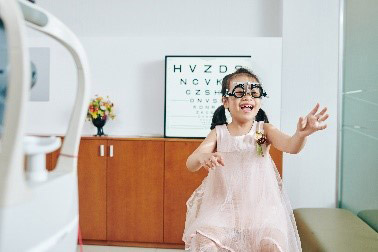 |
Refractive errors are the most common eye problems in both children and adults. They are typically caused by abnormalities in the surface or shape of the eye that prevents light from being properly focused on the retina. They include shortsightedness (myopia), farsightedness (hyperopia) and astigmatism. Myopia is the ability to see close objects clearly, but distant objects appear blurred, while with hyperopia distant objects are clear but nearby objects are blurred. Due to an imperfect curvature of the cornea children with astigmatism experience both near and distant objects as blurred. Glasses or contact lenses generally treat these conditions effectively. |
|
Retinopathy of Prematurity
Retinopathy of prematurity (ROP) is an eye disease that results from abnormal development of the blood vessels in the retina and occurs in some premature infants. Most infants with ROP improve spontaneously, but some require treatment. Generally premature babies at risk of ROP are identified shortly after birth and monitored regularly.
Strabismus
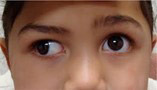 |
Strabismus, commonly known as crossed eyes, is misalignment of the eyes, in which the eye may turn inwards, outwards, upwards or downwards. The eyes are unable to focus on an object consistently. This condition does not improve spontaneously as children grow. There are various successful treatment options, but the key is early detection and treatment to prevent the development of amblyopia or lazy eye and permanent loss of vision. |
|
Styes and Chalazions
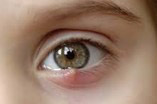 |
A stye is usually caused by an infected eyelash follicle. It is characterised by a red lump in the eyelid, usually accompanied by tearing, pain and discomfort. A chalazion is a small painless swelling in the eyelid which forms when an obstructed oil gland grows slowly over time. These are generally less uncomfortable than styes. Occasionally, the surrounding areas swell or become infected. Styes and chalazions usually respond well to antibiotic eye ointment or the application of warm compresses. |
|
Keep Your Child's Eyes Healthy
Teach your child to maintain a good posture while he is studying or sitting in front of the TV or the computer.
Encourage your child to play outside and limit screen time. When they play outside, children look around frequently, constantly moving their eyes and changing their focus, which is a good exercise for the eyes.
Maintaining a healthy diet is essential. If there is a history of diabetes in the family, low intake of sugary foods helps to curb the onset of diabetes and to prevent eye problems.
Green leafy vegetables and foods rich in antioxidants are crucial for the development and maintenance of eye health.
Regular eye examinations are key to early detection and treatment of problems before they become worse.
Watch your child for signs of problems with his eyes. Some of the signs are obvious, while others may be more subtle. Children are not always aware or able to talk about visual difficulties.
If you suspect a problem, have it checked by your optometrist instead of waiting for it to resolve on its own. If caught early, eye conditions can generally be corrected.