EyeMark Newsletters

A list of all our EyeMark Newsletter Articles

Subcategories from this category:

January - February, March - April

A JOURNEY THROUGH THE BODY'S MEDICINE CABINET


A JOURNEY THROUGH THE BODY'S MEDICINE CABINET
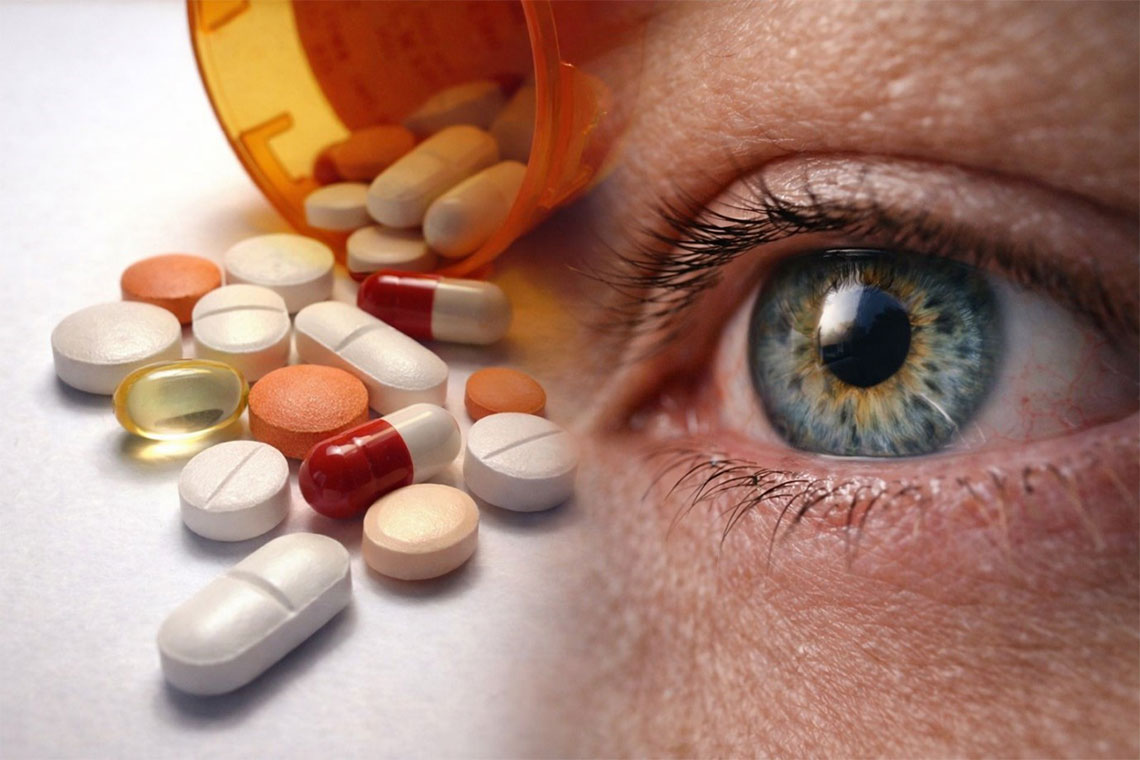
Imagine your eyes as quiet passengers on a long train journey. They don't drive the train. They don't choose the route. But they experience every bump, tunnel, and sudden change in speed. That train is your bloodstream. And every tablet, capsule, injection, or syrup you take becomes part of the journey. Most people think of medication as targeted: blood pressure pills for the heart, antibiotics for infections, antihistamines for allergies. But the body doesn't work in neat compartments. Once a medication enters your system, it travels everywhere, including to the eyes. And the eyes, delicate and highly vascular, are remarkably sensitive to these chemical travellers. Medications can affect vision through various mechanisms. Some drugs may alter the function of the optic nerve, while others might impact the muscles that control eye movement or the blood vessels supplying the eyes. Certain medications can lead to changes in the fluid balance within the eyes, potentially causing increased intraocular pressure. Some effects are subtle, others cause vision problems, and then there are those that cause less noticeable but more serious changes that happen gradually over time. Many medication-related eye effects are temporary and manageable when identified early, and simple interventions can protect long-term vision. Dry Eyes       One of the most common side effects of medications on the eyes is dry eye syndrome, a condition which occurs when tear production is reduced, tears evaporate too quickly or the composition of the tears is altered. Typical symptoms may be blurred vision, burning and...
Continue reading
  10 Hits
10 Hits

HOW TWO EYES CREATE ONE CLEAR WORLD


HOW TWO EYES CREATE ONE CLEAR WORLD
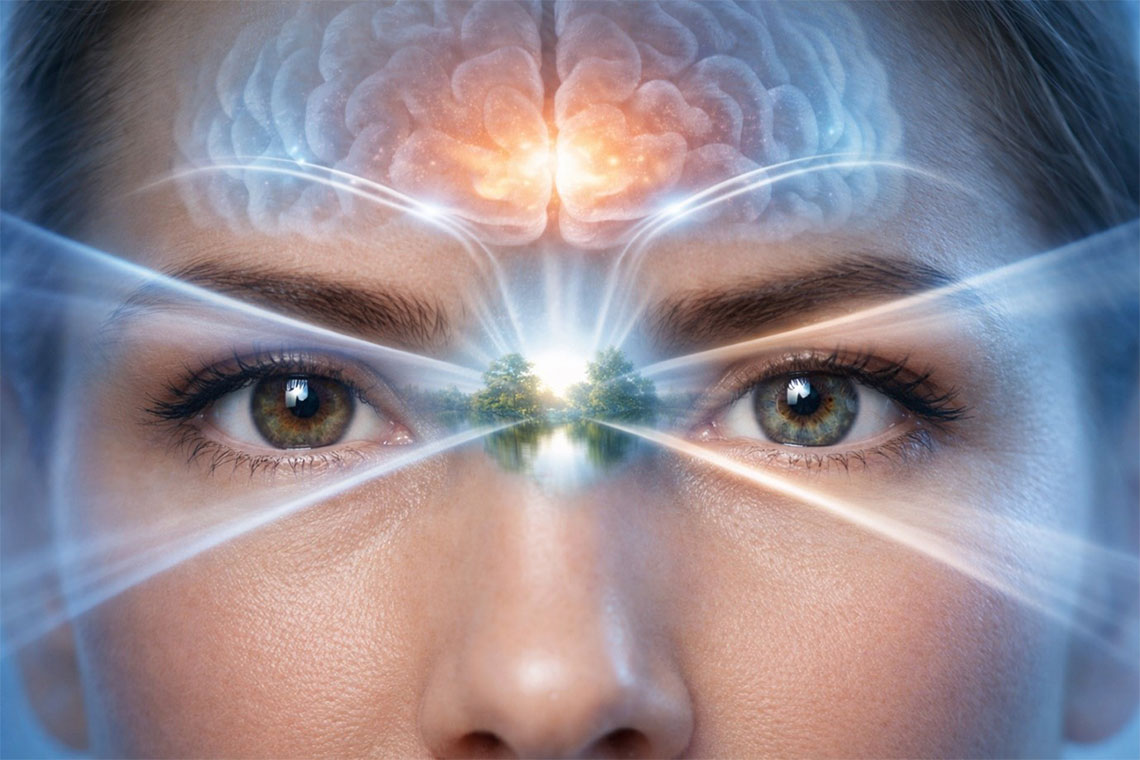
      Binocular vision is the way our two eyes work together to create a single, clear picture of the world around us. Because our eyes are positioned a few centimetres apart, each eye sees the world from a slightly different angle, but instead of seeing two separate images, one from each eye, our brain blends them into one. This teamwork between the eyes and the brain gives us depth perception, allowing us to judge the relationship between objects, how far away things are, how big they are, and where they are in space. It provides a larger, more comprehensive visual field than one eye alone and results in a clearer and more accurate perception of the world. Binocular vision is especially important in everyday life. It helps with balance, coordination, and movement. Daily activities such pouring water into a glass, catching a ball, parking a car, or navigating stairs all rely heavily on good binocular vision. Children use it when learning to read and write, as their eyes must work together to track words across a page. Adults depend on it for many work tasks that require accuracy and hand–eye coordination. When binocular vision is working well, we don't even notice it; it feels completely natural. Without binocular vision, making sense of classroom instructions on a blackboard or screen, and performing simple tasks such as walking or running becomes difficult.       A fun and familiar example of binocular vision in action is the 3D cinema experience. When...
Continue reading
  14 Hits
14 Hits

HOW SMOKING AND VAPING AFFECT VISION


HOW SMOKING AND VAPING AFFECT VISION
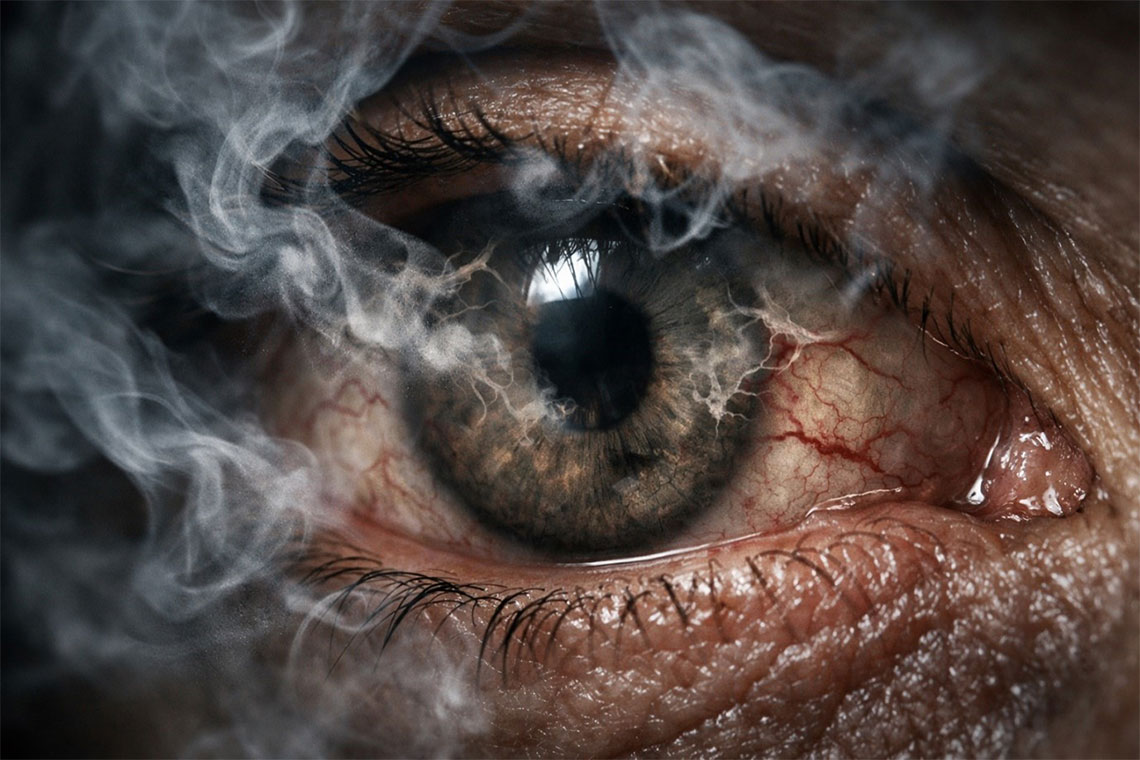
Vision changes are often blamed on age, screens, or genetics. But one of the most powerful influences on eye health is lifestyle. The eyes rely on healthy blood flow, oxygen, and delicate surface balance to function properly. Anything that interferes with circulation, oxygen levels, or tissue health will eventually affect visual health, and this is exactly where smoking and vaping have a direct impact. Smoking and vaping create slow, cumulative damage that often goes unnoticed until vision is already affected. HOW DO SMOKING AND VAPING AFFECT VISION?       As well as smoke irritating the eyes, smoking introduces toxic chemicals into the bloodstream that damage blood vessels and reduce oxygen delivery throughout the body. The eyes, which depend on a constant supply of nutrients and oxygen, are especially vulnerable. Over time, this reduced circulation can weaken important eye structures, affecting both the surface of the eye and deeper internal tissues. Vaping is often seen as a safe alternative to smoking, but the reality is more complex. The long-term effects of vaping on eye health are still being studied, but early evidence shows that it is not neutral or risk-free, but that vaping has risks that are different from smoking, particularly for a system as sensitive as the eyes. While there may not be smoke, the vapour contains nicotine and chemical compounds that affect circulation and tissue health. Nicotine narrows blood vessels, reducing blood flow to the eyes and increasing strain on delicate structures. WHAT VISUAL PROBLEMS ARE ASSOCIATED WITH SMOKING...
Continue reading
  28 Hits
28 Hits

IF YOU THINK THIS IS STRANGE...


IF YOU THINK THIS IS STRANGE...
Let's face it... we're living in strange times. Life is uncertain, prices are rising, and climates are doing unusual things. We can't see into the future, but we can look into the past. And you know what? When we do, we see that this isn't the first time the world has experienced a wild and unexpected April. Aprils past have been the time of Chernobyl, Watergate, the sinking of the Titanic and the infamous San Francisco earthquake of 1906. Way back in April of 1360, a freak hailstorm killed a thousand British soldiers. The historical list goes on and on with turmoil after turmoil. But let's not dwell on the dark times, because for every sombre event there's something brightly odd and quirky. Case in point: On 13 April 1796, the first elephant arrived in the United States. We can't say how much the elephant enjoyed the sea voyage or the experience of becoming an American citizen. But it must have created quite a spectacle. Had social media been invented in the 18th Century, this incident would no doubt have gone viral. Also, the first American dictionary was published in April of 1828. Just think about it... Without an American dictionary, there would be no record of words like “acclimated” and “deplaned” (as in: “We got off the aeroplane.”) Not to make fun of the US or anything, because other nations make up words too. (Looking at you, Australia.) William Shakespeare was born in April too, and look what he did...
Continue reading
  12 Hits
12 Hits

COLOUR IS ALL AROUND US


COLOUR IS ALL AROUND US
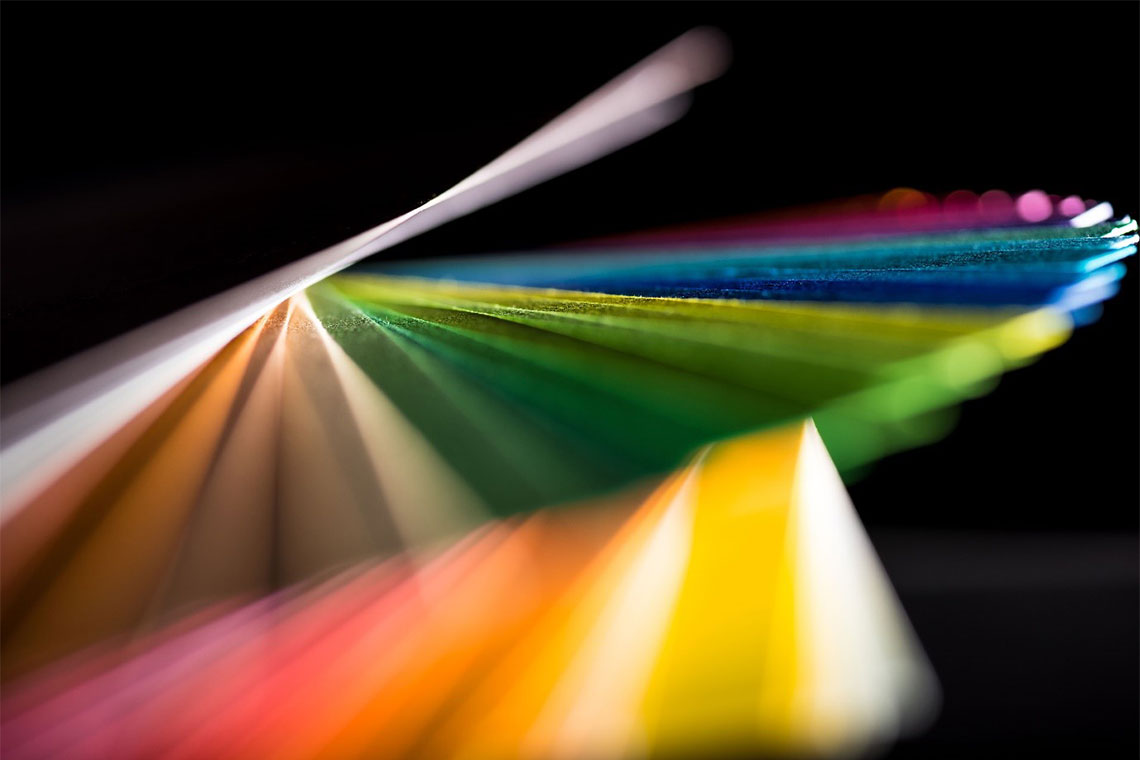
      Colour plays a central role in how we experience the world. With 90% of information sent to the brain being visual, colour is fundamental to human perception, deeply influencing psychology, behaviour, and communication. It impacts moods, facilitates emotional expression, enhances cognitive functions like memory, informs decision-making, and helps us identify hazards. It even plays a role in language: we feel blue, see red, are green with envy. Our ability to perceive millions of colours relies on the way light interacts with the eye and brain. The complex process of colour vision begins with light. When light enters the eye, it is focused onto the retina at the back of the eye, where specialised cells called cones respond to different wavelengths and convert the light into electrical signals. The three types of cones each detect a different spectrum of light, red, green or blue, and send these electrical signals along the optic nerve to the brain. By combining and processing signals from the three cones, the brain is able to interpret millions of colour variations, as well as subtle differences in shade, brightness and contrast. COLOUR AND EMOTION       Colour has a powerful psychological impact on mood and can influence wellbeing. Our emotional response to colour is a blend of biology, psychology, and personal experience. Natural light and cool colours, like greens of plants, blues of sky and water, are calming and restorative and are linked to reduced stress. They tend to evoke a sense of trust...
Continue reading
  11 Hits
11 Hits

WHY DOES SQUINTING SOMETIMES IMPROVE VISION?


WHY DOES SQUINTING SOMETIMES IMPROVE VISION?
“Squinting” is a common behaviour that many people instinctively employ when they find themselves in situations where they need to see more clearly. Whether it is to decipher small print or read a distant sign, recognise a face or watch TV from across the room, this seemingly simple action does often make things look sharper. Why does this happen and is it actually helping our vision in a healthy way? The answer is underpinned by scientific and physiological principles that explain why squinting enhances our vision.       When the eyes are open normally, light enters through the pupil and is focused onto the retina. If your vision isn't perfectly corrected, for example, if you're short-sighted, long-sighted, or have astigmatism, light rays don't focus precisely on the retina. This results in blurry vision. When you squint, you partially close your eyelids, narrowing the opening through which light enters the eye, limiting the amount of light entering. The edges of your eyelids act as a makeshift shield, blocking excess or scattered light, and allowing only more central direct light rays to reach the retina. Squinting slightly alters the angle of incoming light, which may help focus images more precisely on the central part of the retina, enhancing our ability to perceive fine details. These three key factors improve focus and sharpness and vision is temporarily improved.       While squinting may be a helpful tactic in certain situations for improved clarity, it is not a permanent or suitable solution. It...
Continue reading
  33 Hits
33 Hits

CLAIM THE WINS


CLAIM THE WINS <br>  
What is a win? As they often do, the new year started with a flood of inspirational messages. Claim the wins. Celebrate the wins. Seek the small wins. It definitely sets us up for a positive year. But really, what is a win? And how do we measure success? It's only February and New Year' s resolutions have been kept or forgotten. We're back at work and trying to achieve. With December holidays a distant memory, it sometimes feels like a win to just get up and show up every morning. Maybe the context of the world we live in can offer us some guidance? Well, imagine you're a president and you really, really want to win a peace prize. Just when all hope seems lost, a certain soccer federation invents a peace prize just for you. And when you think life just can't get any better, a real peace prize winner gives her award to you. Then, people on social media get into the spirit - and start offering you their dog show trophies and Employee of the Month certificates. Suddenly winning means everything. Or nothing. (I can't tell which...) As we speak, the world is talking about Oscar nominations. As always, there's discussion around who should've been but wasn't - and who shouldn't have been but was. You make a movie about the Wicked Witch of the West and you get ten nominations. A year later you make a sequel and you get nothing. It doesn't make a whole...
Continue reading
  51 Hits
51 Hits

THE “TETRIS EFFECT”: VISION, PERCEPTION, AND A BRAIN THAT ADAPTS


THE “TETRIS EFFECT”: <br>
VISION, PERCEPTION, AND A BRAIN THAT ADAPTS
As children and adolescents, many of us were warned that spending too much time watching TV or playing video games was bad for our eyes. However, modern optometry is proving that in certain cases video games can be helpful in treating specific visual problems. Through a phenomenon known as  neuroplasticity , we are discovering that the brain is not a static organ but can be physically reshaped by the activities we perform. One of the most fascinating examples of this is the  Tetris Effect , which highlights how vision is not just about the eyes, but about how the brain interprets what we see. The visual system is highly plastic because it must constantly make sense of a fast-changing world. Vision is not a passive process. While the eyes capture light, it is the brain that constructs the final image. When we repeatedly expose the brain to certain shapes, movements, or patterns, the visual cortex becomes more efficient at recognising them.       Originally coined in the 1990s, the Tetris Effect demonstrates  brain plasticity , the brain's ability to change and adapt based on repeated visual input. It describes how people who play the classic video game, Tetris, in a controlled setting begin to see the world differently. This adaptability is essential for everyday life. When we engage in a high-focus, repetitive visual task, the brain builds and strengthens new neural pathways to become more efficient at that task. In the case of Tetris, changes in the brain have been...
Continue reading
  75 Hits
75 Hits

BRILLIANT MINDS, DIFFERENT PATHWAYS


BRILLIANT MINDS, DIFFERENT PATHWAYS
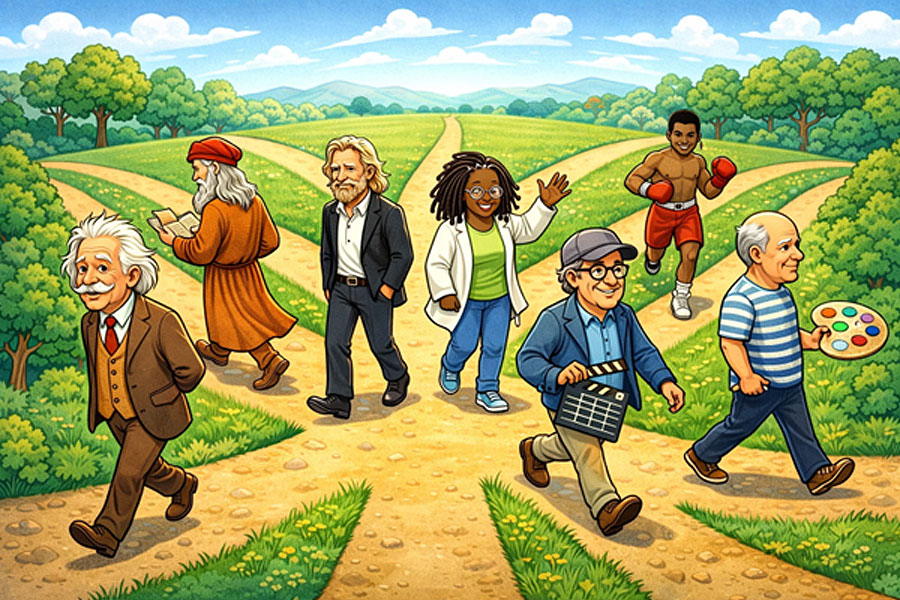
Dyslexia , a brain-based learning disorder characterised by difficulty with specific skills in reading, writing and spelling, is fairly common. It was not largely understood until the late 20th century, and even today it can be hard to diagnose. Often misunderstood as a limitation, dyslexia is not a measure of intelligence but is simply a different way the brain processes language. Given what we know now, many famous people may have had dyslexia and history is filled with remarkable individuals who prove that learning differently can be a powerful advantage. What unites these individuals is not the absence of struggle, but the ability to adapt, persevere, and harness their unique strengths. Many highly successful people with dyslexia excel in creativity, problem-solving, big-picture thinking and visual reasoning, demonstrating that it doesn't hinder achievement but often fosters skills that are increasingly valuable in today's world. ALBERT EINSTEIN       Perhaps one of the most famous figures thought to have had dyslexia is Albert Einstein, a theoretical physicist who won the Nobel Prize in Physics in 1921. While there is ongoing debate about whether he was formally diagnosed, historical accounts suggest he struggled with language and formal schooling in his early years. His teachers believed “nothing would become” of the boy who showed signs of weakness in speech and verbal development, as well as several school subjects. But he pressed on in his studies, using his unconventional thinking and methodology to discover what has become the most famous mathematical equation of all time....
Continue reading
  63 Hits
63 Hits

IF OUR EYES COULD TALK!


IF OUR EYES COULD TALK!
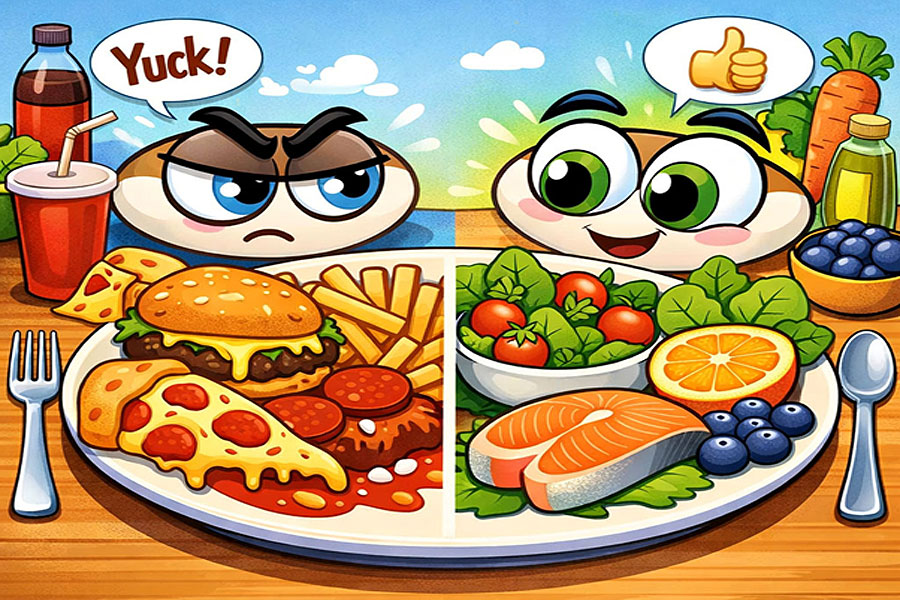
We're often told to look after our eyes, but no one mentions that our eyes are quietly judging what they see on our plates. While glasses and good lighting certainly help, our eyes would very much like a say in our grocery choices too, and they tend to favour colour. Some nutrients in what we eat keep the eyes healthy overall, and some have been found to reduce the risk of eye diseases.       Eaten since ancient times to enhance eye health,  carrots  are the classic eye-food celebrity, and they really do deserve their reputation. Packed with  beta-carotene , carrots help the body produce  vitamin A . The retina needs vitamin A to help turn light rays into the images we see and vitamin A helps the cornea to maintain moisture on the surface of the eyes. While carrots may be celebrated as the quintessential eye food, orange-coloured fruits and vegetables, such as sweet potatoes, apricots and peaches are equally beneficial.       Bright leafy green vegetables may not be an exciting food choice, but they are rich in two powerful  antioxidants  which act like internal sunglasses, helping protect the eyes from harmful light. Lutein and zeaxanthin are key to protecting the macula, the area of the eye that gives us our central, most detailed vision. Spinach, kale and broccoli are the heroes of these substances, but they are also found in  avocados , nuts and seeds and other brightly coloured foods. Think of them as shades for...
Continue reading
  41 Hits
41 Hits