REFRACTIVE ERRORS
|
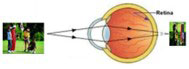
Refractive errors are disorders that affect the way the eyes bend light. Under normal conditions we are able to see a clear image because different parts of the eye bend or refract the light entering the eye and focus it precisely on the retina at the back of the eye. Light enters the eye through the cornea and travels through the lens which is flexible and changes shape to focus on objects at different distances from the eye. When the image reaches the retina, a message is sent via the optic nerve to the brain which interprets what is seen. If something interferes with the refraction of the light and prevents it from being focused correctly on the retina, a refractive error occurs and the image we see will not be clear. Refractive errors are very common, affecting roughly one in three people worldwide. They are usually the result of a problem with the shape or length of the eye, an irregularly curved cornea or a lens that is curved too much or too little or beginning to lose its flexibility. They may be present at birth, but most refractive errors first appear in children and develop over time as the child grows and develops. They can occur at any time in one's life, even if vision was clear before. A refractive error may occur in one or both eyes, and if it is present in both eyes, it may not be the same in both. Mild refractive errors may be hardly noticeable, while more severe errors may be a problem only in specific situations or interfere with everyday activities. Types of Refractive Errors
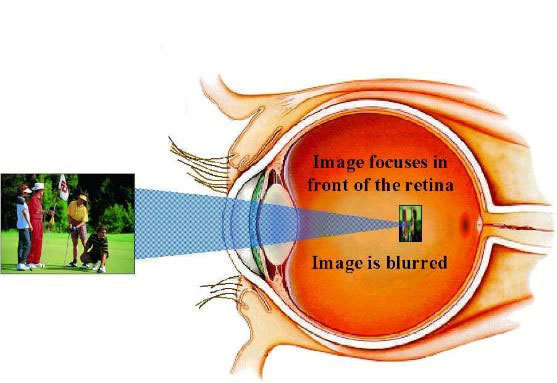
The four most common types of refractive errors are myopia (shortsightedness), hyperopia (farsightedness), presbyopia (age-related farsightedness) and astigmatism (blurred vision at all distances). While the causes, symptoms and management of refractive errors differ, all refractive errors cause vision problems. People with myopia have difficulty seeing distant objects but can see objects close to them clearly. Other symptoms include squinting when trying to focus on far objects, excessive blinking, eyestrain, headaches and trouble seeing clearly while watching TV. Myopia usually occurs because the eye is too long from front to back or the cornea and/or the lens is too curved for the length of the eye, causing light rays to focus in front of the retina rather than directly on it. Myopia in children frequently continues to increase until children stop growing. |
||||||||
Hyperopia makes it difficult for people to see objects up close clearly, but they are able to see at distance. They may be able to see a movie clearly but experience eye fatigue or headaches after reading or doing close work. It occurs when the cornea is not sufficiently curved or the eye is too short from front to back causing light to be focused behind the retina. Hyperopia is usually present at birth. While some children grow out of it as the curvature of the eye lengthens, others experience worsening vision as they grow. Children and young adults who are mildly farsighted may be able to see clearly if the lens is flexible enough to refocus light on the retina. |
||||||||
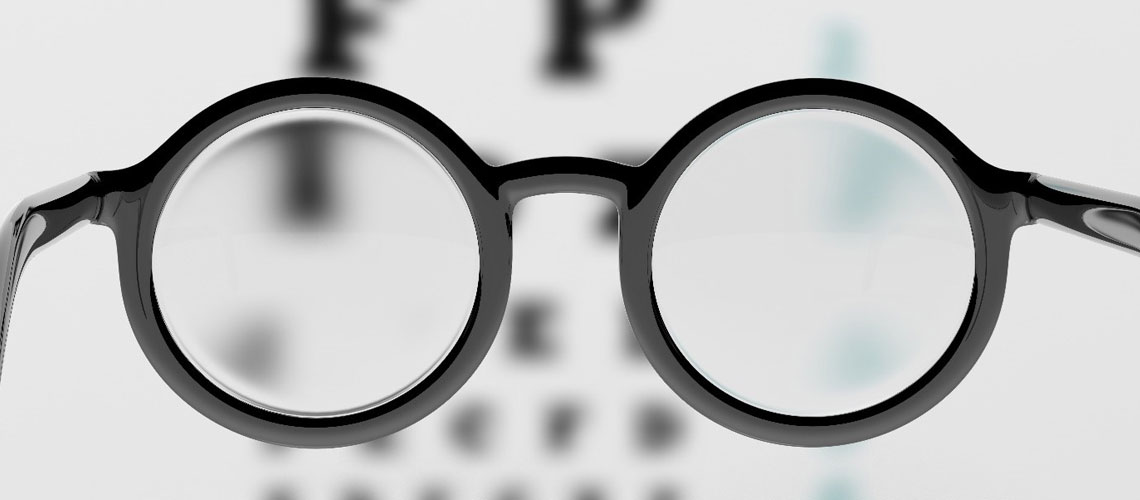
Over time, the lens of the eye loses its flexibility and is unable to focus as well as it used to, leading to presbyopia, the age-related form of farsightedness. Although the onset of presbyopia may seem sudden, it generally starts around the age of 40, deteriorating gradually before vision problems are noticed. Typical symptoms include eyestrain after reading or doing close work, difficulty reading small print particularly in low light, difficulty driving at night, and the need to hold reading material at arm's length in order to focus more clearly. It is possible to have presbyopia in addition to other types of vision problems. Astigmatism is the most common refractive error worldwide. Due to an imperfectly shaped cornea, light that enters the eye is bent or distorted more than it should be, and objects appear blurred at all distances. Risk Factors Some people are more likely to be affected by refractive errors than others. Refractive errors tend to run in families. Some studies have found a link between environmental factors and the development of late-onset myopia. These include not spending enough time outdoors, prolonged periods of close-up work or poor sleeping patterns. Diagnosis of Refractive Errors Refractive errors are diagnosed by means of a visual acuity test. Using an eye chart, the optometrist will determine the type of refractive error present and the extent to which it is affecting vision. Although refractive errors usually occur in otherwise healthy eyes, testing generally also includes other assessments, such as a test of the visual fields, eye pressures, and eye movements. Treatment of Refractive Errors The usual treatment for refractive errors is glasses or contact lenses. The prescription or strength of the corrective lenses might change over time, so regular eye examinations are important in order for optimal vision to be maintained. Other treatment options include laser eye surgery, during which the cornea is reshaped to facilitate refraction of light, and intraocular lens surgery in which the lens of the eye is replaced with an artificial lens, eliminating the refractive error. Discuss with your optometrist which treatment will work best for you. Refractive Errors in Children
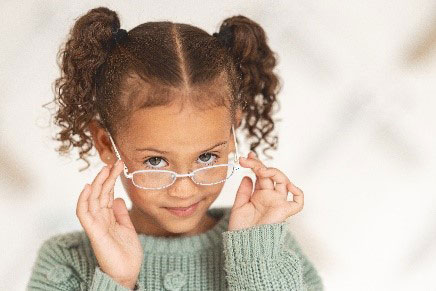
Refractive errors in children can have a negative impact on their learning, playing sport, socialisation and self-confidence. Children generally do not complain of having difficulty seeing clearly, either because they are unaware of how they should be seeing or because they are unable to express that they have a problem. However, there are numerous signs that can alert parents and teachers that all is not as it should be. The child may squint, tilt his head, blink excessively or close one eye in an attempt to see more clearly. He may sit too close to the TV or hold reading material or other objects close to his face. Complaining of headaches or constantly rubbing his eyes may be an indication of eye strain, irritation or fatigue as a result of the effort required to focus. He may avoid activities that require near vision. Outdoors the child may be unaware or unable to identify objects or people a distance away, and he may have difficulty when playing sport. His teacher may report that his grades have dropped, he is unable to see clearly from the back of the classroom or unable to concentrate for extended periods of time due to eye fatigue. The sooner the child has an eye examination, and the problem is diagnosed, the earlier treatment can begin, and the effect of a refractive error dealt with effectively. |
||||||||