THE SECRET SUPERHERO OF YOUR EYES
|
September 28th is World Retina Day. As one of the most important parts within the eye, the retina has been called the “Superhero of the Eyes” and has earned its dedicated day due to its power in helping us experience our visual world.
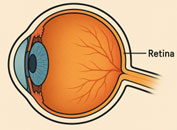
The retina is the nerve layer at the back of the eye which captures light entering the eye and converts it into nerve signals which are sent via the optic nerve to the brain. The brain receives the signals, decodes them and uses them to build a visual image. The retina is a critical part of vision, turning visible light into something the brain can process and work with. The “Superpowers” of the retina include the “Night Vision Ninja” which adjusts to low light allowing us to see stars in the night sky, the “Colour Connoisseur” which allows us to enjoy the full spectrum of vibrant colours, and the “Fast-Action Hero” which enables us to process images in milliseconds, helping us to react quickly to visual stimuli, such as catching a ball or dodging a falling object. |
||||
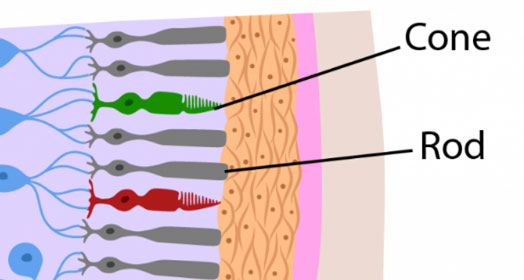
The two types of photoreceptors are rods and cones, which need to work together to give a clear and accurate visual picture. Rods are sensitive to low light levels, crucial for night vision and peripheral vision, while cones function in brighter light and are responsible for colour vision and sharp visual acuity. |
||||
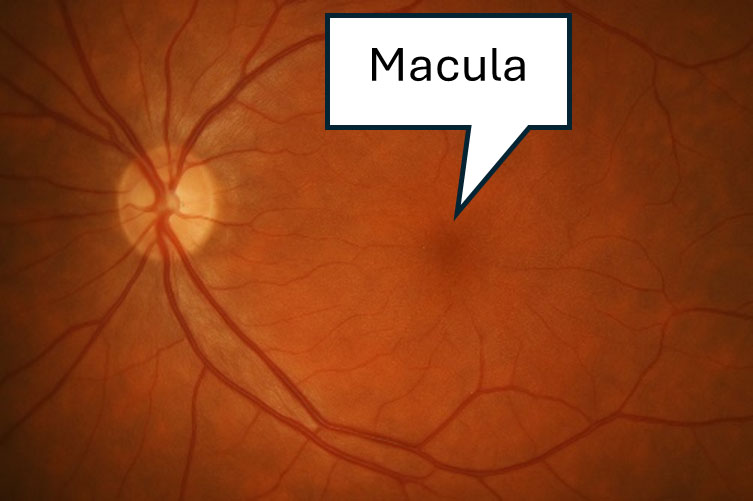
It has a high concentration of cones which enable us to process small details such as text on a page, facial details and differences between colours. If there is macular damage, the eye might still function, but visual images would be blurry and lack detail. The optic nerve is a bundle of nerve fibres that transmits impulses from the eye to the brain for processing. The place on the retina where the optic nerve leaves the eye is the optic disc. There are many challenges the retina can face, many conditions that can affect the retina, causing permanent damage and vision loss. Retinal damage can change the way the world looks, leave gaps in vision or cause total blindness. Retinal diseases include diabetes-related retinopathy, age-related macular degeneration, macular hole, retinal detachment or tear, hypertensive retinopathy, retinal vein or artery occlusion and retinitis pigmentosa. Colour blindness, while not a retinal disease, affects colour vision and the differentiation between certain colours, for example red and green. While a number of these conditions is progressive, worsen over time and cannot be cured, their progress can be slowed down or even stopped if they are treated early. If you notice changes in your vision, make an appointment with your optometrist for a comprehensive eye examination. Signs to be aware of include blurred or distorted vision, peripheral vision loss, double vision, eye flashes or floaters, blind spots or light sensitivity. Seek medical attention immediately if you experience sudden vision loss, vision changes or eye pain. |
||||
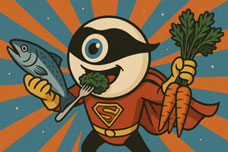
Follow a diet rich in vitamin A, lutein and omega-3 fatty acids, present in foods such as carrots, green leafy vegetables and salmon. Control blood pressure, blood sugar and cholesterol levels. Protect the eyes from harmful UV rays by wearing sunglasses. Know your family history and inform your optometrist of vision problems in the family as many retinal conditions have a genetic component. Most importantly, have your eyes examined regularly. Regular dilated eye examinations facilitate early detection of retinal conditions before extensive damage can occur. Many retinal diseases have few noticeable symptoms in the early stages, so frequent eye examinations are vital to detect signs of eye disease, diagnose and treat problems early and monitor their progress over time. Vision changes often occur gradually. Be aware of these and don’t ignore them, no matter how simple they may seem. Take the opportunity during Retinal Awareness Week, 22nd to 28th September, to care for your retinal Superhero! |
||||