ARE ALL BABIES BORN WITH BLUE EYES?

|
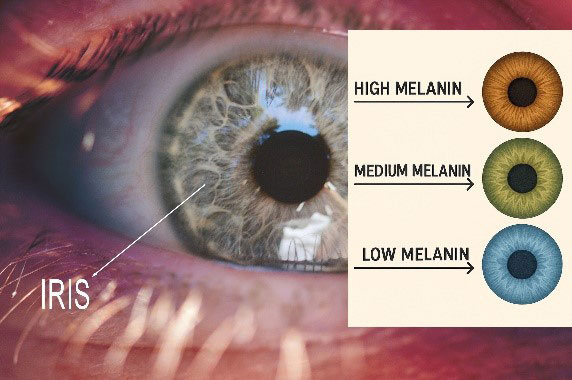
Contrary to popular belief, not all babies are born with blue eyes, but many are. This is due to the fact that most newborns have little to no pigment in their irises at birth, making their eyes appear blue. Over time, as their bodies produce more melanin, a natural pigment, their eye colour can change. Eye colour is a fascinating subject that combines genetics, biology and a hint of mystery. Eye colour and genetics are closely linked, but the inheritance of eye colour is not as simple as was previously believed. HOW IS EYE COLOUR INHERITED? Eye colour is passed down to children from their parents. Early theories suggested eye colour was controlled by a simple inheritance pattern, with one parent’s eye colour being dominant while the other is recessive. For example, if one parent had brown eyes and the other had blue, the child would likely have brown eyes. However, it’s not that simple, and modern genetics has revealed a more complex picture of multiple genes working together, each with their own unique role in determining eye colour. In general, brown eyes are dominant over green and blue eyes, but there are many exceptions to this rule, and eye colour can be highly variable even within families, with shades ranging from brown to blue, green, hazel and even rare variations like grey or violet. In some cases, a child might inherit eye colour from grandparents. HOW DOES EYE COLOUR DEVELOP? Babies are born with low levels of melanin and as they grow more melanin is produced by their bodies. Most of it is produced during the first six months of life, so permanent eye colour can't be determined with certainty until a child is around one year old. WHAT IS THE ROLE OF MELANIN IN EYE COLOUR? Melanin is a yellow-brown pigment that also determines skin tone and hair colour. It is produced by specialised cells called melanocytes. In the case of eye colour, melanin is produced by melanocytes in the iris, the coloured part of the eye. The distribution and density of melanin in the iris layers contribute to the eye’s final appearance, leading to subtle variations even among individuals with the same basic eye colour.
There are a few common eye colours that are seen in the majority of people. Brown eyes are the most common eye colour worldwide and are the result of a large amount of melanin in the iris, which absorbs more light and gives the eyes their dark colour. Blue eyes have less melanin which reflects more light, giving the eyes their blue appearance. Green and hazel eyes are a mix, created by different amounts of melanin and the way in which light interacts with the iris. Grey eyes are a rare eye colour caused by a combination of a small amount of melanin and a large amount of collagen in the iris. In rare cases, some people are born with two different coloured eyes, a condition called heterochromia, which is the result of uneven melanin distribution. |
||||
|
CAN ENVIRONMENTAL FACTORS INFLUENCE EYE COLOUR? While genetics is the primary factor in determining eye colour, there are environmental factors that can influence the colour of our eyes. One of the most well-known factors is exposure to sunlight. Sunlight can cause the melanin in our irises to darken, leading to changes in eye colour over time. Other factors that may influence eye colour include diet and nutrition, stress, and illness. For example, a lack of certain nutrients like vitamin A can lead to changes in eye colour, while stress and illness can cause changes in the distribution of melanin in the iris. |
||||
|
IS IT POSSIBLE TO PREDICT EYE COLOUR?
While there are tools and charts that predict eye colour, they are not very accurate because of the many genes involved. It is impossible to predict a baby's eye colour with complete certainty without knowing their specific genes. With advances in genetic testing technology, scientists are developing genetic tests to predict eye colour by identifying specific gene variations. These tests analyse DNA to estimate how much melanin a person is likely to produce, helping to determine their probable eye colour. However, these predictions are not always accurate and can be influenced by environmental factors like aging and hormonal changes. |
||||
|
CAN EYE COLOUR CHANGE OVER TIME? There are factors that can cause changes in eye colour. One of the most common causes is aging. As we age, the amount of melanin in the irises can change, causing our eye colour to become lighter or darker. Hormonal changes during pregnancy or puberty can also result in changes in eye colour. Certain medical conditions affect the production and distribution of melanin in the iris, leading to changes in eye colour. Eye colour is a fascinating example of the complexity of human genetics that has much to teach us about inherited traits and human diversity. Understanding the science behind eye colour genetics can help us better understand our ancestry and family history, as well as the complex interplay between genetics and the environment. So, while many babies are born with blue eyes, their final eye colour is a genetic mystery that unfolds over time. This natural process makes each person’s eyes as unique as their fingerprints! |
||||