 |
||||||||
|
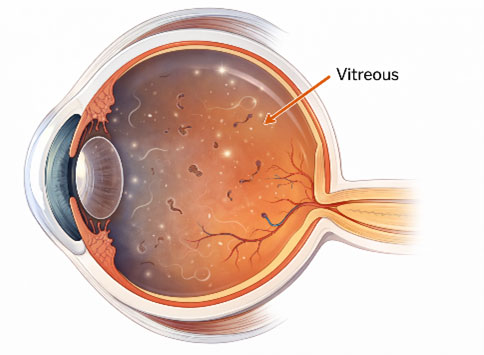
Few visual disturbances are as distracting as the tiny specks or sudden bursts of light that appear seemingly out of nowhere. These drifting spots, thread-like shapes, or quick flickers, which generally appear at the edges of the field of vision, are floaters and flashes. Many people experience them and they are usually no cause for concern, although they can signal a problem with the eyes. WHAT ARE FLOATERS AND FLASHES? Floaters are tiny shapes that look like small dots, squiggly lines, cobwebs, or shadowy shapes that drift across vision. They move when you move your eyes and dart away when you try to focus on them. They are most noticeable against bright, plain backgrounds like a blue sky, white wall, or computer monitor. Unlike floaters, which drift and linger, flashes often look like flickers, sparks, or fleeting streaks of light in the peripheral vision. WHAT CAUSES FLOATERS AND FLASHES?
Floaters are generally caused by clumps of gel or cells inside the vitreous, the clear jelly-like liquid that fills the inner eye between the lens and the retina. As we age, the vitreous changes, liquefying and contracting over time, a process that causes it to pull away from the inside surface of the eye. As the vitreous changes, collagen fibres within the vitreous break down and form clumps and strings which block some of the light passing through the eye. This casts tiny shadows on the retina that are seen as floaters. These usually fade or become less noticeable over time. Flashes occur as the vitreous shrinks or changes and pulls on the retina, stimulating it in a way similar to light entering the eye, even though no actual light is present. This can happen during a vitreous detachment, which is common as we get older. In some cases, the traction on the retina may create a tear, and retinal tears frequently lead to a retinal detachment which if left untreated can lead to permanent blindness. |
||||||||
|
WHAT ARE THE RISK FACTORS FOR FLOATERS AND FLASHES? Eye floaters and flashes can occur in anyone at any age, but certain factors increase the likelihood of experiencing them. While shortsightedness and aging are common contributors, other conditions and circumstances that can raise the risk include a family history of retinal problems, eye surgery, eye inflammation or injuries, diabetes and migraines. Stress and tiredness or prolonged hours on digital screens don't directly cause eye floaters or flashes, but they may seem more noticeable under these conditions. HOW ARE FLOATERS AND FLASHES DIAGNOSED?
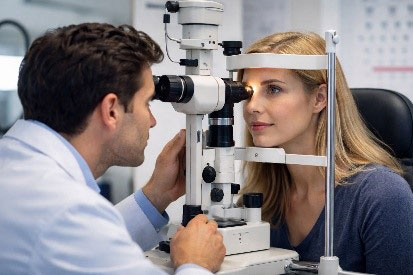
It is important to see your optometrist regularly to rule out serious eye conditions and to monitor your general eye health. Floaters and flashes and their causes are diagnosed during a comprehensive visual examination, which usually includes dilation of the pupils so that the optometrist is able to examine the vitreous and the retina. HOW ARE FLOATERS AND FLASHES TREATED? In most cases, eye floaters do not require treatment and will go away on their own. They can linger for months but will become less noticeable over time. In very rare cases, if a floater interferes with vision, surgery may be necessary. If flashes are not due to a retinal tear or hole, they may come and go, but they normally settle down after a few months without treatment. If a tear is found, laser eye surgery will be performed to prevent retinal detachment. WHEN IS THERE CAUSE FOR CONCERN?
While occasional floaters or flashes can be normal, sudden vision changes may signal a more serious problem. If you notice more floaters than usual or a sudden onset of new floaters, persistent flashes, a shadow or curtain moving across your vision, peripheral vision loss, or a sudden loss of vision, it is essential to have your eyes examined urgently. These symptoms can sometimes indicate a retinal tear or detachment, which requires prompt treatment to protect vision. |
||||||||
|
CAN FLOATERS AND FLASHES BE PREVENTED? Because they are often age-related, floaters and flashes can't be prevented. However, protecting your eyes with a healthy lifestyle, regular eye examinations, and managing chronic conditions like diabetes or high blood pressure, can help safeguard your vision. The key message is simple: don't ignore sudden changes. If your vision suddenly looks different, it's better to be checked and reassured than to wait and wonder! |
||||||||