 |
||||||||
|
Most health conditions announce themselves. They arrive with pain, discomfort or obvious physical changes that make us aware that something is not right and we need to seek help. Glaucoma is different. It doesn't knock, it doesn't warn, and it rarely causes symptoms in its early stages. Instead, it quietly creeps up and over time steals something priceless: vision. Glaucoma, a leading cause of irreversible blindness, is often described as a “silent thief of sight” because it damages the optic nerve gradually, usually starting with peripheral vision. The brain is remarkably good at compensating for the vision loss, so that people may not notice anything wrong until significant, irreversible damage has already occurred. By the time vision changes are obvious, it may be too late to recover what's been lost. RISK FACTORS Glaucoma doesn't discriminate, and anyone can develop glaucoma, but there are factors that increase the risk. These include family history, age, shortsightedness, elevated eye pressure, eye injury, long-term use of steroid medications, diabetes, migraines, high blood pressure, poor blood circulation or other chronic health problems. CAUSES OF GLAUCOMA
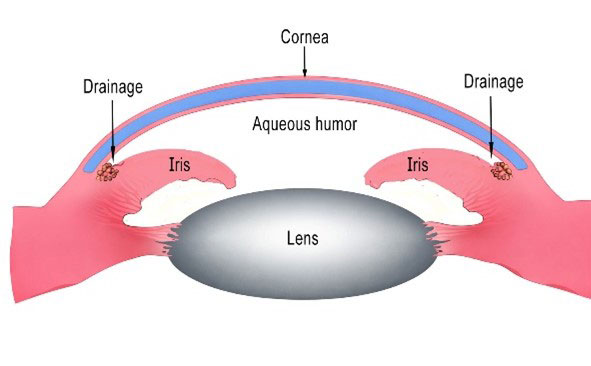
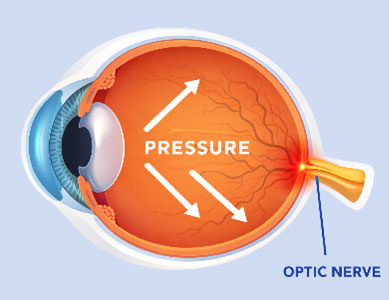
The eyes constantly produce a fluid, aqueous humor which circulates in the front part of the eye. As new aqueous flows into the eye, the same amount should drain out, keeping pressure within the eye stable. The fluid drains out through the drainage angle, but if the drainage angle is blocked or not working properly, fluid builds up and pressure inside the eye rises, damaging the optic nerve. The optic nerve is made of more than a million tiny nerve fibres. As these nerve fibres die, blind spots begin to develop in the vision. These blind spots are not noticeable until many of the optic nerve fibres have been affected, and permanent vision loss has occurred. |
||||||||
|
TYPES OF GLAUCOMA The two main types of glaucoma are open-angle glaucoma and angle-closure glaucoma. Most other types of glaucoma are variations of these, but what most types of glaucoma have in common is an increase of pressure inside the eye.
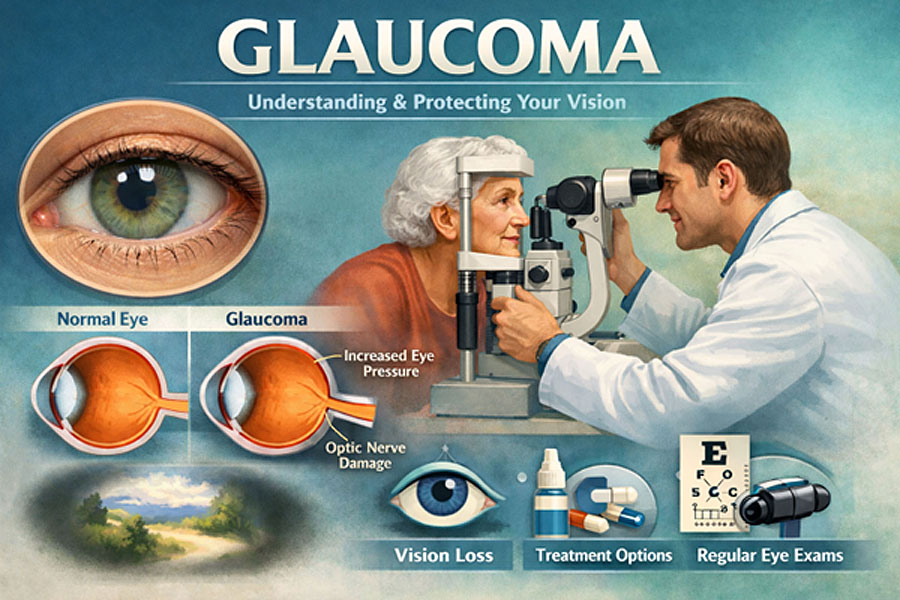
Open-angle glaucoma is the most common type of glaucoma. It happens gradually, is typically painless and has no warning signs, obvious symptoms or vision changes in the early stages. As the disease progresses blind spots appear in the peripheral vision, becoming more noticeable as the damage becomes more severe and irreversible vision loss has occurred. In the case of the less common angle-closure glaucoma, also called “closed-angle glaucoma” or “narrow-angle glaucoma”, eye pressure rises very quickly, creating an emergency which requires immediate treatment. Signs of an acute attack include sudden blurry vision or vision loss, severe eye pain, eye redness, headache, nausea and vomiting, and halos around lights. Some people with angle-closure glaucoma develop it slowly. There are no symptoms at first, so they are unaware of it until the damage to the optic nerve is severe or they have an acute attack. DIAGNOSIS OF GLAUCOMA One of the aims of World Glaucoma Day on 12 March is to challenge a dangerous assumption many people hold: “If I can see well, my eyes must be healthy.” Unfortunately, with glaucoma, this is not necessarily true. Many people with glaucoma feel perfectly fine and function normally in daily life until the disease has become advanced, which is why regular eye examinations are so critical. The only sure way to diagnose glaucoma is with a comprehensive eye examination. During a dilated glaucoma examination, eye pressure is measured, the eye's drainage angle is inspected, the optic nerve is examined and peripheral vision is assessed. Early signs of glaucoma can be revealed long before vision is affected. Vision lost to glaucoma cannot be recovered, but with early detection and proper care, most people can continue to see the world clearly for decades to come. Early detection doesn't cure glaucoma, but it can slow or stop further vision loss, preserving sight for life. GLAUCOMA TREATMENT
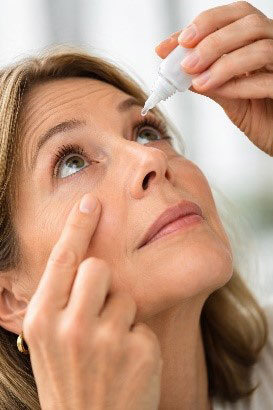
Once diagnosed, glaucoma requires consistent ongoing management to protect remaining vision. Perhaps the most powerful way to think about glaucoma is not as an eye problem, but as a lifelong partnership with prevention. The goal isn't to restore what's lost, but to safeguard what remains. Treating glaucoma successfully is a team effort between you and your eye care team. Treatment varies depending on the type of glaucoma, the severity, and how the eyes respond. Treatment options include medicated eye drops, laser procedures, and in some cases surgery. These treatments can lower eye pressure to slow or stop further damage. Some do this by reducing the amount of aqueous fluid the eye produces, while others reduce pressure by helping fluid flow better through the drainage angle. |
||||||||
|
This World Glaucoma Day, the message is simple but vital: don't wait for symptoms. Because, when it comes to glaucoma, seeing well today doesn't always mean seeing well tomorrow. |
||||||||