 |
||||||||
|
Dyslexia, a brain-based learning disorder characterised by difficulty with specific skills in reading, writing and spelling, is fairly common. It was not largely understood until the late 20th century, and even today it can be hard to diagnose. Often misunderstood as a limitation, dyslexia is not a measure of intelligence but is simply a different way the brain processes language. Given what we know now, many famous people may have had dyslexia and history is filled with remarkable individuals who prove that learning differently can be a powerful advantage. What unites these individuals is not the absence of struggle, but the ability to adapt, persevere, and harness their unique strengths. Many highly successful people with dyslexia excel in creativity, problem-solving, big-picture thinking and visual reasoning, demonstrating that it doesn't hinder achievement but often fosters skills that are increasingly valuable in today's world. ALBERT EINSTEIN
Perhaps one of the most famous figures thought to have had dyslexia is Albert Einstein, a theoretical physicist who won the Nobel Prize in Physics in 1921. While there is ongoing debate about whether he was formally diagnosed, historical accounts suggest he struggled with language and formal schooling in his early years. His teachers believed “nothing would become” of the boy who showed signs of weakness in speech and verbal development, as well as several school subjects. But he pressed on in his studies, using his unconventional thinking and methodology to discover what has become the most famous mathematical equation of all time. |
||||||||
|
LEONARDO DA VINCI
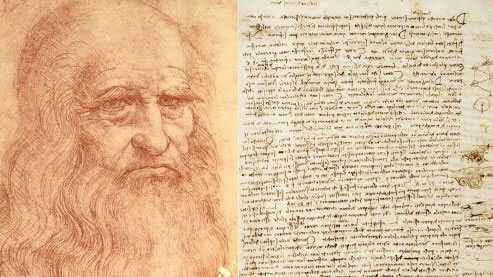
The notebooks of this famous Renaissance mind show mirror writing and unconventional spelling, yet his visual thinking and creativity produced masterpieces in art, engineering, and anatomy that remain unmatched centuries later. Da Vinci's legacy highlights the deep connection between visual processing and innovation. RICHARD BRANSON Richard Branson, speaks openly about his dyslexia, saying that his different way of thinking has helped him to succeed by leading him to gain adaptive thinking skills that later in life have become major advantages. The Virgin Group founder has launched over 400 companies and was knighted by Queen Elizabeth. A high school teacher predicted that this British entrepreneur would end up in prison or become a millionaire! WHOOPI GOLDBERG Whoopi Goldberg was bullied and called stupid at school. She struggled with reading as a child but went on to become an award-winning actress, author, and advocate for learning differences. She said her mother knew something was amiss with her learning habits, but without the knowledge on dyslexia that exists today, her mother had a hard time understanding what was causing her daughter struggle. MAGIC JOHNSON and MUHAMMAD ALI
Athletics and sport provide further evidence that dyslexia does not limit success. Magic Johnson, one of basketball's greatest players, and Muhammad Ali, widely regarded as one of the greatest boxers of all time, both navigated dyslexia while achieving extraordinary careers. Their success relied on spatial awareness and timing, strengths often seen in dyslexic individuals. The legendary heavyweight boxing champion may have been able to “float like a butterfly” and “sting like a bee,” but he could barely read. Dyslexia was one of Ali's first fights. He said, "A man who has no imagination has no wings." |
||||||||
|
STEVEN SPIELBERG
Steven Spielberg's journey with dyslexia began long before his official diagnosis at age 60. Bullied as a child, he struggled through school and dropped out of college in 1968. Young Spielberg found comfort in creative pursuits, beginning to make movies at age 12. Since then, the famed filmmaker has fought back using the big screen. His early interest in visual storytelling may have been a way to express himself without relying on traditional reading and writing. PABLO PICASSO
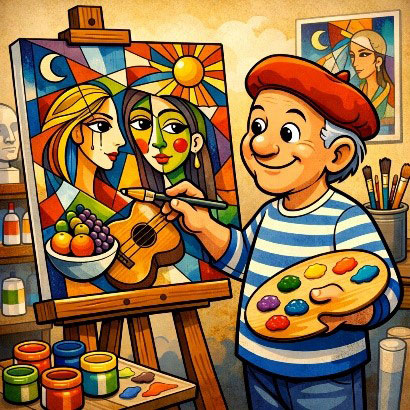
One of the most prolific and creative artists of the 20th Century, Pablo Picasso created paintings that reflected viewpoints and perspectives, both artistic and literal, that changed the way the world looked at art. Through his cubism and other works, Picasso often flipped objects around, backwards or out of order for what seemed like artistic vision, but to the painter, who grew up struggling to make sense of letters and numbers, he was actually showing the world the impact dyslexia had on his talent. “I paint objects as I think them, not as I see them,” he has said, and it is this different viewpoint that gave him the unique perspective he needed to create some of the most famous works of art in the world. |
||||||||
|
JAMIE OLIVER Jamie Oliver is dyslexic and, like many people, was undiagnosed while at school, where he says he felt “disengaged, misunderstood, and dumb”. Now, he is turning his impressive campaigning skills towards improving things for the dyslexic children of tomorrow. “I knew I had to face all those feelings and get back into the classroom, the heart of where our kids learn. Because that's where the change urgently needs to happen.” STEVE JOBS
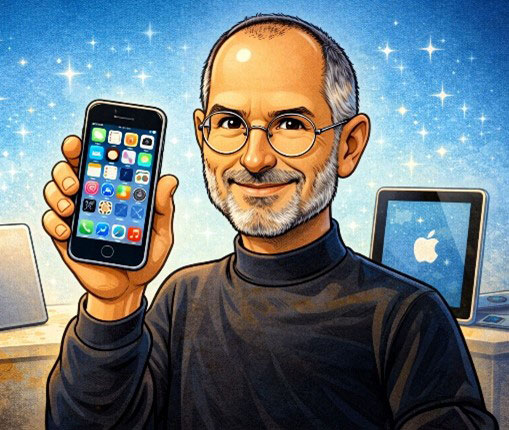
Steve Jobs is widely recognised as having dyslexia, a learning difficulty that affected his early reading and writing but which he and others believe contributed to his visionary, big-picture thinking, creativity, and unique focus on design, allowing him to excel by leveraging his strengths in communication and aesthetics, and becoming a major force in tech innovation despite his challenges. Jobs viewed dyslexia as a gift, enabling him to think visually and see the world differently, focusing on images and overall concepts rather than details. For children and adults with dyslexia, these stories carry an important message: learning differently does not mean learning less. With the right support, understanding, and encouragement, dyslexia can be a different pathway to success, not a barrier. Because sometimes, seeing the world differently is exactly what it needs! |
||||||||