
MEN AND WOMEN DON’T SEE EYE TO EYE!
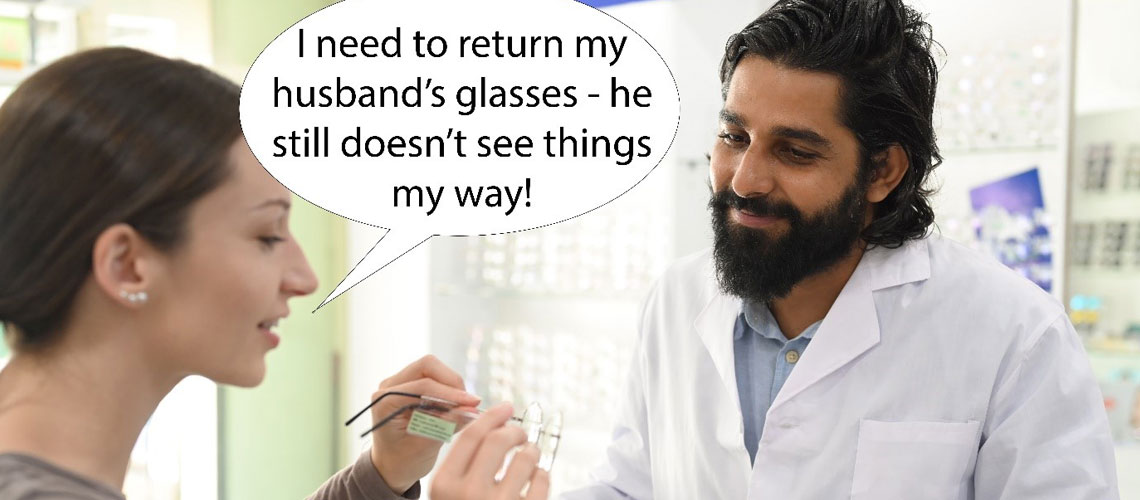
MEN AND WOMEN DON’T SEE EYE TO EYE!
Does gender play a role in our visual ability? Is there a distinction between men’s and women’s vision? According to research, the answer is an unreserved yes – men and women literally see the world differently. To paraphrase a well-known expression, “visual ability is in the eye of the beholder”, or at least in the gender of the beholder. Among other factors, this difference includes hormonal effects and susceptibility to eye diseases and eye care.
VISUAL PERCEPTION
Generally, women are better able to distinguish subtle differences in colour, while men are more able to detect fast-moving objects and details. It has been suggested that this may have its roots in the evolutionary history of human beings. Dating back thousands of years, the differentiated roles of men and women in prehistoric society is thought to have impacted brain function and led to the development of distinct abilities to fit those roles. Men were required to hunt, necessitating the ability to perceive fast motion and detect the fine details of both prey and predators at long range. The task of women was to forage and gather food, requiring better recognition and colour differentiation at close range to determine which foods were edible or ripe enough to eat. Research concludes that biological evolution and adaptation has differentiated the vision between the two genders.
INFLUENCE OF HORMONES
Hormones, the body’s natural messengers, play an important role in how the eyes work. Hormonal fluctuations during significant life changes, such as pregnancy and menopause, can impact a woman’s eyesight in unexpected ways. Pregnancy hormones might lead to temporary changes in prescriptions to glasses and contact lenses, while hormonal shifts during menopause can result in dry eyes and discomfort. Gestational diabetes during pregnancy may lead to diabetes and diabetes-related eye problems after pregnancy.
While men may not experience hormonal changes as frequently or dramatically as women do, they are not immune to hormone-related vision changes. During puberty, it’s common for boys to develop temporary shortrsightedness as their eyes grow along with their bodies. Sometimes this may resolve naturally, but in some cases, it may need correction with glasses or contact lenses.
EYE DISEASE
About two-thirds of global blindness and visual impairments are suffered by women. Women face a greater risk of eye conditions such as glaucoma, age-related macular degeneration and certain autoimmune conditions which are often accompanied by visual side effects. This heightened vulnerability in women is largely attributed to their longer life expectancies; the more years we live, the higher the chances of encountering age-related vision issues. Both genders are impacted by issues of aging, but women tend to live longer than men making them more susceptible.
One out of ten women have diabetes, which may lead to diabetic retinopathy. More women than men suffer from migraines, which frequently have vision-related symptoms. Colour blindness, although not an eye disease, is a condition significantly more prevalent in men due to genetic factors.
EYE INJURIES
Men are statistically more prone to eye injuries, largely because they are more likely to engage in high-risk occupations and sports. Compounding the risk is a tendency among men to neglect wearing protective gear and to minimise or ignore injuries when they occur.
SIDE EFFECTS OF MEDICATION
Statistically, women are more inclined to take medication such as anti-depressants, anti-anxiety and high blood-pressure medication, which can have an impact on eye health.
EYE CARE
 |
|
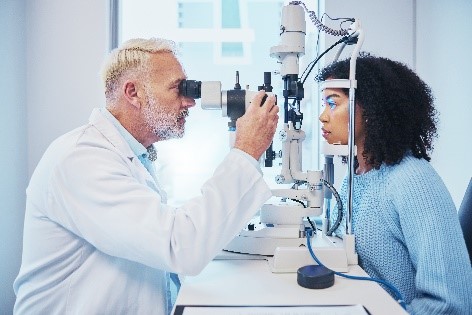
Women tend to deprioritise their own health needs in favour of the needs of others and are less likely to access health care or have regular eye examinations. Eye conditions such as glaucoma and macular degeneration develop gradually typically with no symptoms in the early stages. A dilated eye examination can detect the signs of disease before serious vision loss has occurred. Regular examinations are critical to prevent or even halt vision loss.
PREVENTION
Women can take certain steps to protect their eyes and reduce the risk of eye disease. These include a healthy diet rich in nutrients which facilitate eye health, managing chronic health conditions, regular exercise, protecting the eyes from ultraviolet light, being aware of inherited health conditions, and, most importantly, scheduling regular eye examinations.