DIFFERENT LENS COATINGS FOR DIFFERENT VISUAL NEEDS

|
Everyone has different visual needs. With the advances in technology and continued improvements in lens coatings, it is possible to cater for each person's needs and lifestyle. A lens coating is a treatment that is added to glasses to enhance their performance, appearance, durability and longevity, while also providing protection for both your lenses and your eyes. There are many different types of coatings, each with their own benefits. CAN COATINGS BE ADDED TO ALL LENSES? Lens coatings can be applied to single vision, bifocal and progressive lenses. WHICH COATING WILL PROVIDE THE BEST PROTECTION FOR MY LENSES?
To protect your glasses and your vision, a scratch-resistant coating is highly recommended and is essential for children's glasses. Scratched lenses interfere with the clarity of vision, often leading to eye strain or headaches. Once a lens is scratched it needs to be replaced, as buffing out the scratches or resurfacing the lens changes the curvature and prescription. While no lenses are completely scratch proof, this coating makes them more resistant to scratches which prolongs their life. For added protection, store your glasses in a hard case and clean them with a microfibre cloth. Many lenses contain a built-in scratch-resistant or “hard coat”, usually with a warranty included. |
||||
|
IS THERE A COATING THAT CAN PROTECT MY EYES? Over time, exposure to the ultraviolet rays from the sun can increase the risk of developing eye conditions such as cataracts and macular degeneration. Ultraviolet (UV) coating shields the eyes against these harmful rays as long as it provides 99 – 100% protection. WHAT IS THE BENEFIT OF AN ANTI-REFLECTION COATING?
As one of the most popular lens treatments, an anti-reflective coating reduces glare and halos by blocking reflected light and allowing more light through the lenses making vision clearer. It is generally applied to the back and front surfaces of the lenses. It is particularly beneficial for night driving when the reflections and halos from streetlights and oncoming vehicles can cause discomfort and eye strain. The aesthetic of the lenses is improved so that they appear almost invisible allowing people to focus on your eyes rather than being distracted by reflections from your glasses. Anti-reflection lenses may show smudges more readily than uncoated lenses so should be cleaned regularly with a soft microfibre cleaning cloth. |
||||
|
CAN I AVOID THE NEED FOR SEPARATE GLASSES FOR INDOORS AND OUTDOORS? Photochromic or Transition lenses, although not strictly a coating, offer the best of both worlds. They automatically change from clear to dark when they come into contact with UV rays, and they have 100% UVA and UVB protection. They also help to reduce blue light emitted by the sun and electronic devices and screens. Not all photochromic lenses are suitable for driving as they may not become dark enough. IS IT NECESSARY TO HAVE A BLUE LIGHT COATING? There are different opinions on blue light and its effects on the eyes and the body. Blue light glasses are sometimes recommended for anyone who spends a significant amount of time in front of digital devices. It has been suggested that this lens coating helps to reduce the blue light entering the eyes, resulting in less eye strain and fatigue, better contrast and improved visual comfort. ARE THERE LENS MATERIALS OR COATINGS THAT ARE EFFECTIVE AGAINST GLARE?
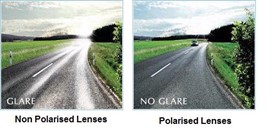
Glare can be mildly irritating, but it can also be dangerous at certain angles, obstructing vision. Polarised lenses have a built-in filter that blocks horizontal light waves to minimise glare in hazy conditions or reflected off surfaces such as water, wet roads and the bonnet of a car. They reduce eye strain and deepen contrast, creating a better perception of colour, as well as offering 100% UVA and UVB protection. |
||||
|
WHAT IS THE BEST WAY TO CLEAN GLASSES WITHOUT DAMAGING THE LENSES? It is essential to look after your coated lenses by cleaning them properly and regularly. Avoid using hot water, alcohol, concentrated or abrasive substances to clean coated glasses lenses as this can wear the coating off as well as damage the frames of your glasses. Tissues or the corner of a shirt are abrasive and can scratch the lenses. Use a recommended lens cleaner and a soft microfibre cloth to care for your lenses and extend their life. ARE LENS COATINGS WORTH THE EXTRA EXPENSE? Glasses are an expensive item. While some coatings may be included in the price of your prescription, others are add-ons that will cost extra and may not be covered by your medical aid. Speak to your optometrist about getting the most out of lens coatings and achieving the best vision possible by applying the coatings that meet your unique vision and lifestyle needs. |
||||