DRY EYE SYNDROME CAN BE DEBILITATING

|
Dry eye is a common condition, and yet it is often overlooked as a problem that can affect quality of life. “When my symptoms were at their worst, my productivity at work decreased significantly because I couldn’t stare at computer screens for too long before I had to stop because my eyes felt exhausted, and I got blurry vision and excessive tearing. I love reading but doing it for too long would cause a burning sensation in my eyes. When I travelled to cities where humidity levels were low, my symptoms worsened tremendously, so I was never able to fully enjoy my trips.” This description of symptoms by a woman who suffers from dry eye syndrome led her optometrist to comment that “dry eyes can be debilitating”. FUNCTION OF TEARS
Our eyes need tears to stay healthy and feel comfortable. The tear glands located above each eyeball continuously supply tear fluid that is spread across the surface of the eye each time we blink. Excess fluid drains through the tear ducts into the nose. Tears are made up of three layers, each of which serves a specific purpose. The oily layer keeps the surface of the eyes smooth and clear and prevents the tears from drying up too quickly. The aqueous or watery layer makes up what we see as tears. Its role is to provide moisture to the eyes and wash away particles. The mucus layer helps spread the watery layer over the surface of the eyes, keeping them moist. Antibodies and proteins in the tears help protect the eyes against infection. An imbalance or instability in the tears can be the result of insufficient tear production or tears of poor quality or a combination. |
||||
|
SYMPTOMS OF DRY EYE Ranging from irritation to extreme discomfort, symptoms may include grittiness, scratchiness, blurred vision, eye fatigue, burning, redness, sensitivity to light, difficulty driving at night and discomfort wearing contact lenses. Although it may seem like a contradiction, one of the common symptoms of dry eye is excessive watering of the eyes, which occurs as the body compensates for the dryness by producing more tears, but these are often of poor quality. CAUSES OF DRY EYE Although it can occur at any age, dry eye is more common in older people as tear production tends to decrease as part of hormonal changes and the normal aging process. Chronic health conditions such as diabetes, lupus, thyroid disease and rheumatoid arthritis often affect tear production. Dry eye can be one of the side effects of certain medications, including diuretics, antihistamines, antidepressants, birth control medications and hormone replacement therapy. The glands which produce the oily layer of the tears may become blocked due to certain skin disorders. Reduced blinking as a result of neurological conditions such as Parkinson’s disease, or simply spending prolonged hours reading or working on a computer can lead to dry eye. Dry eye may occur in contact lens wearers or people who have had refractive eye surgery. Certain situations may exacerbate the symptoms of dry eye, including working in an airconditioned environment, travelling on an aeroplane, windy conditions or prolonged screen use. |
||||
|
TREATMENT
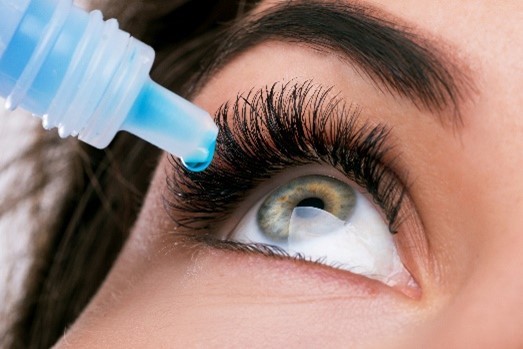
There are various treatment options available, depending on the cause and severity of the problem. Some treatments aim to increase tear production and quality, while others focus on conserving the natural or artificial tears in the eyes for longer by blocking the tear ducts with tiny silicone or gel plugs. For mild symptoms, over the counter artificial tears may be recommended to relieve the discomfort. For more persistent or severe cases, eye drops, ointment or oral medication may be prescribed. A nasal spray to increase tear production has been found to be effective for some people. Made of more breathable materials than traditional contact lenses, certain contact lenses are specially formulated to lubricate the eyes. Scleral contact lenses protect the surface of the eyes and trap moisture, by creating a “bandage” over the cornea. In some cases, treating an underlying health condition or changing chronic medication that is causing side effects may improve or even eliminate the dryness. |
||||
A number of home remedies and lifestyle changes have been found to be effective in managing the symptoms of dry eyes. Regular daily use of warm compresses on the eyes and gentle massage of the eyelids can be helpful. Using artificial tears regularly even when the eyes do not feel particularly dry helps to maintain lubrication. Eye drops should preferably be preservative-free as preservatives tend to irritate the eyes. Keep the eyelids clean and free of makeup or face creams that can cause irritation. Increase humidity in the home by using a humidifier, particularly during the dry winter months when heaters are used. Add foods rich in omega-3 fatty acids to the diet or take them as supplements. Limit screen time and take breaks from staring at screens. We tend to blink less often, and the eyes become dry when we are concentrating on something, so become aware of blinking often to spread the tears over the eyes. Be aware of the surrounding environment - at high altitudes, in desert areas and in aeroplanes the air can be extremely dry, so frequently close the eyes for a few minutes to help slow down the evaporation of tears. Your optometrist will recommend which of these solutions to the problem of dry eyes is most appropriate for your unique symptoms. |
||||