MORE THAN A BUMP ON THE HEAD

|
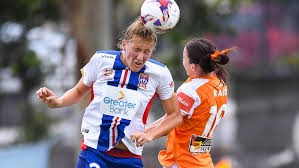
Concussion is an injury to the brain as a result of a sudden bump or blow to the head which causes the brain to move rapidly back and forth within the skull. Sports-related injuries, falls and car accidents are among the common sources of concussion. A person does not have to become unconscious in order to suffer a concussion. The effects are usually temporary with the majority of people healing quickly without long term side effects. However, severe or repeated concussions can have a longer lasting impact on a number of areas, including visual functioning. VISUAL SYMPTOMS
It has been estimated that more than half of the people who have suffered a concussion, regardless of age, have some problems with their vision which range from mild to more severe. These are sometimes initially overlooked, or they may occur a while after the head trauma. The most common symptoms include blurred or double vision, sensitivity to light, partial vision loss, eye pain, abnormal eye movements and reading difficulties. Cognitive symptoms not directly associated with vision may include dizziness, poor balance, disorientation, headaches, difficulty concentrating, memory problems and frustration. Blurred or double vision - Blurred or double vision may result from damage to the muscles and/or nerves around the eye, resulting in convergence insufficiency, the difficulty with the alignment of the eyes when trying to focus on close objects. Associated problems, such as reading difficulties, dizziness and eye strain may occur. Light sensitivity and photophobia – This effect of concussion is often exacerbated by bright sunlight, fluorescent lighting and computer or smartphone screens. Light sensitivity can contribute to concussion-related headaches and other sensory sensitivities. Vision loss - Partial or complete loss of vision can occur after head trauma, varying from person to person. There may be blind spots in peripheral vision or reduced vision in one half of the visual field. Vision loss is usually the result of direct injury to the eye, such as bruising or swelling. More rarely, it may be neurological in origin. Eye pain – Eye pain may manifest as a stabbing pain or a dull ache in or around the eye, often associated with redness, burning and itchiness. Sometimes one of the muscles around the eye contracts after trauma and remains contracted for an extended period of time, causing accommodation spasm which can be uncomfortable or painful. Light sensitivity can also cause eye pain. Abnormal eye movements - Weakened, delayed or otherwise abnormal eye movements may be present with concussion. The ability to track and focus on moving objects or scan and shift visual focus from one object to another are the most typical deficits. Gaze stability, the eye's ability to maintain focus while the head is moving, can be affected by head trauma. Visual motion sensitivity and disorientation - People with concussion often report that they feel disoriented or uncomfortable and/or have symptoms such as vertigo triggered by busy or disorienting environments. This is thought to be caused by dysfunction of the central nervous system that limits the ability to process complex external stimuli. Vertical heterophoria - Vertical heterophoria occurs when the eyes are misaligned vertically so that one eye is higher than the other. The eyes will try to compensate which can cause strain or fatigue in the eye muscles. Vertical heterophoria can also cause double vision, dizziness, headaches or eye pain. DIAGNOSIS AND TREATMENT
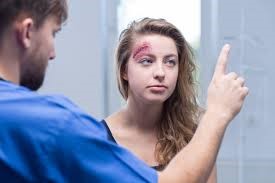
Following a concussion, it is recommended that the eyes are examined, even if visual symptoms seem not to be present, so that if there are subtle problems they can be detected, and treatment started early. Unless they are treated early, visual problems related to concussion can become debilitating over time. A routine visual examination can assess visual functioning, including visual acuity, eye movement and how the eyes are working together. Treatment may be carried out by a neuro-optometrist who has specialised training and experience in the diagnosis and treatment of neurological conditions that affect the visual system. Special lenses may be prescribed. Rehabilitative therapy is a non-invasive individualised process aimed at rehabilitation and regaining of visual control. A series of activities carried out under professional supervision may target areas including double vision, eye teaming, visual tracking, focusing and visual processing issues. Problems not directly associated with vision but related to the visual system may be an aspect of the treatment, for example balance, attention span, difficulty judging distances and disorientation. |
||||||||
|
PREVENTION Although concussion cannot be prevented entirely, steps can be taken to minimise the risks and severity of symptoms. Many concussions are sport-related, so coaches, teachers and parents should be aware of the rules and follow them responsibly. While not a guarantee against injury, protective headgear should be worn. Injuries should not be ignored or undermined. If problems are suspected consult a medical professional. |
||||||||