I AM NOT MY VISION LOSS!
|
There are many assumptions and misconceptions around vision loss, such as that closing our eyes gives us an understanding of what it must be like to be blind, or people with vision loss need help with all their daily tasks. Vision loss is diverse and varies depending on the individual as well as on the eye condition which makes each individual see things in a unique way. "Rather than making assumptions, engage with blind people like you would anybody else. Show curiosity about them. And if you want to know if there's something they need, ask them and don't assume", suggests the parent of a blind child. Is it OK to use the word: ”blind”? Or should we say: “visually impaired” or “low vision”? In any situation, terminology is a sensitive issue, and some people may be more sensitive than others to the words used to describe their condition. Most people with vision loss have some degree of remaining vision and may prefer to use terms that express that, but the amount of vision a person has is not what defines them. The word “blind” has been found to have more negative connotations in society at large than amongst people with vision impairments.
“You don't have to watch all your words carefully,” says one person with vision loss. He goes on to say that we don’t have to be embarrassed to ask if some-one watched the rugby match on TV. Even if someone has limited to no remaining sight, it's still socially acceptable that vision-oriented words are part of social communication. While there are occasions when people lose their vision suddenly, vision loss typically occurs slowly. This gradual loss has been compared to the natural aging process, which has led one person to comment that “its not something most of us dwell on daily. Just like you don’t inspect every new wrinkle each day, I don’t notice every little change in my vision constantly. Most people don’t wake up one day and realise they are older. We notice it from time to time, and vision loss is similar.” |
||||
Some people assume that certain sight-related activities are no longer accessible or interesting after vision loss, but just because vision changes need not mean that hobbies or interests do. Of course, some things inevitably change, but there are always ways to adapt and compensate for the activities one enjoys. When a person has a talent or interest, they find a way to continue it and participate successfully. Vision loss sometimes feels socially isolating. Responding to a greeting can make a person losing their vision feel awkward or self-conscious if they don’t know who greeted them or the greeting came from across a crowded room. “When someone identifies herself when she greets me, I can engage in conversation, ask how her daughter is for example, something sighted people do in social situations without even thinking about it.” While they can still participate in activities such as going to a sports match in which their child is playing, some of the comments on the shared visual experience of other parents may be missed by people with vision loss. Vision loss is not always a concrete black-and-white experience and can be confusing for the person as well as the people around them. Sometimes they are able to see or identify certain objects or colours, while at other times its more difficult which can’t always be explained. The way one woman described it is that her eyes sometimes play tricks on her. |
||||
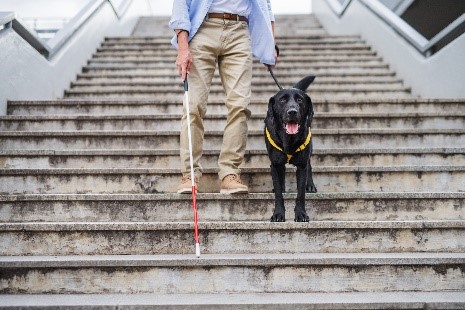
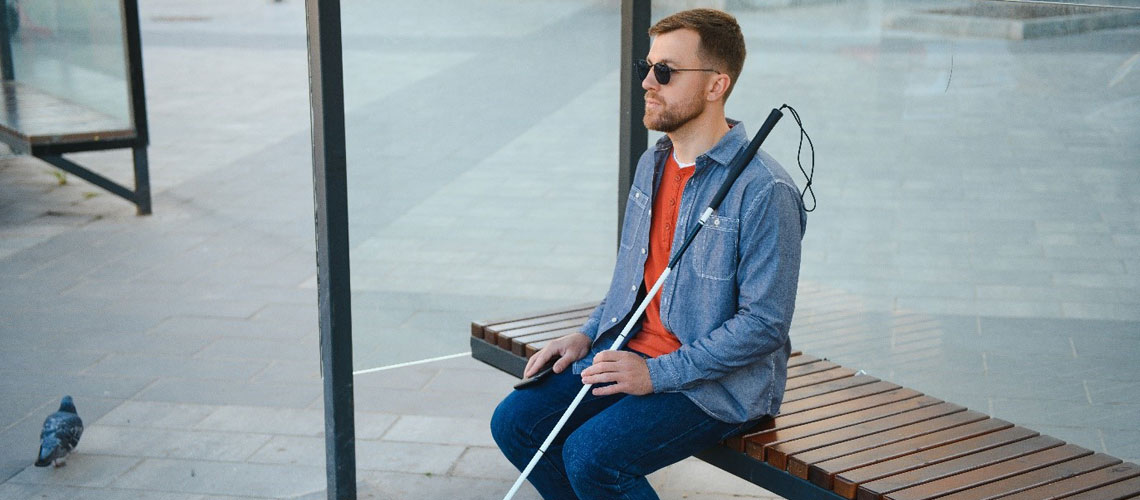
Often, people with exactly the same vision navigate their world and function completely differently. Some use mobility aids like canes or guide dogs while others don’t. This is a matter of personal preference. A common misconception when someone begins using a cane is that their vision has suddenly deteriorated. Sometimes this is the case, but many times the person just is ready for some help. “I wish people knew that being blind does not define me, it is not my whole life.” People who are losing their vision have jobs and families, they exercise, travel, try new recipes and become irritated by the rising cost of living, just like the rest of us. They have their struggles and may have to adjust to the challenge of living with vision difficulties, but overall, they lead ordinary lives. “Things that people perceive as really hard are not hard because we have learned to live with our vision loss, learned techniques to help us cope and do these things on a daily basis.” "A lot of people ask if I wish I were born with better sight. Most people are surprised when I answer 'no'. My visual impairment doesn't mean I can't see, it just means I see the world differently. If my path, my journey as someone with a physical impairment can inspire someone else to be all that they can be, then I wouldn't trade it for anything in the world. My visual impairment is not a detriment, it’s a strength that has pushed me to do what I want to do and hasn’t let anything stop me.” “If we can alter people's misconceptions of our vision, we can create a world where people will have the vision to achieve their goals and complete their dreams, without having to have vision at all.” |
||||