KEEP YOUR EYE ON THE BALL
|
Vision is not only about being able to see clearly at various distances. It also involves a number of skills that enable accurate, comfortable and effective functioning of the visual system. As well as being necessary for everyday activities and success in the classroom, these skills are essential for optimal sports performance. While all sports require the overall ability to process and respond to visual stimuli, different sets of visual skills may be more important for certain sports, depending on their specific demands. Essential Skills for Sport
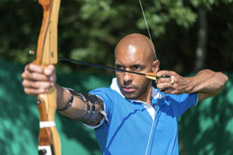
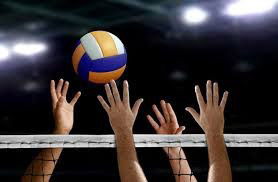
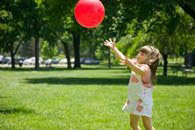
Static visual acuity is the ability to see a target at a fixed distance when the target is not in motion, for example in archery. Dynamic visual acuity is the ability to clearly see moving objects. It is critical for sports such as tennis, rugby or soccer, which require the ability to see a moving ball clearly as well as having awareness of other players who are moving while the player may be moving himself. Eye tracking allows a player to follow objects with the eyes, with minimal head movement, to "keep their eye on the ball". This is an essential skill in all sports played with a ball. |
||||
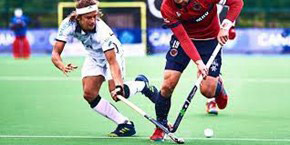
Many sports, including soccer and hockey depend on the ability to focus quickly and accurately from one distance to another, as in changing focus from the ball to the goal or the boundary line. Delays in focus flexibility may result in delayed reaction time. Peripheral vision allows players to notice what is going on around them while focusing on a target, to see "out of the corner of the eye". This skill is essential for all sports, including netball and sailing. Both batting and fielding in cricket rely on optimal depth perception, the ability to quickly and accurately judge the speed and distance of objects and to react appropriately. Depth perception and hand-eye coordination are the most important skills for archery. |
||||
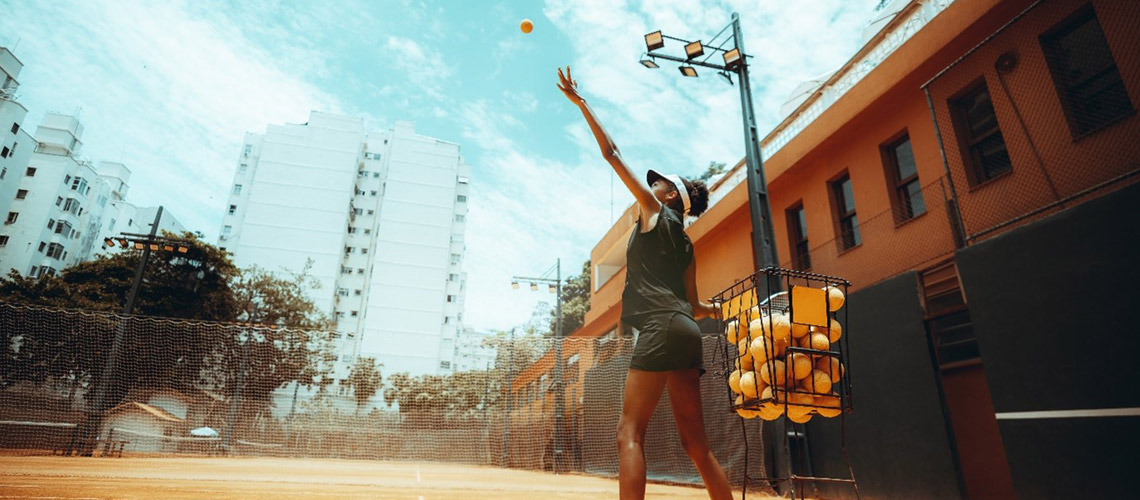
Visual reaction time is the speed at which the brain interprets and reacts to visual information, for example catching a ball or returning a serve in tennis. Football players often have to react very quickly to rapidly changing game situations. The accurate response of the hands or body to information received by the eyes, eye-hand coordination, is an important skill for all sports as it affects timing and control. Being in the right place at the right time depends on visual memory, the ability to interpret and remember visual information while remaining in control of the ball or game. |
||||
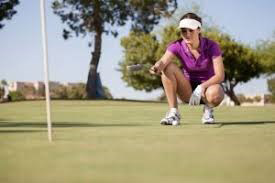
Visualisation or using the mind's eye to read a putt in golf or imagine a perfect serve in tennis, can facilitate success. According to research, the areas of the brain that light up during performance, also light up when a person visualises the performance. Contrast sensitivity is the ability to see fine details and perceive differences in brightness between different areas at a distance, an important skill to have on the golf course or in the snow when skiing. Perhaps the most fundamental quality for all sporting activities is visual concentration, which allows participants to maintain focus on the game while screening out distractions such as cheering spectators, moving objects like a bird flying past, or even the scoreboard. |
||||
|
Signs of a Vision Problem
Compromised visual skills may make it difficult to participate in sporting activities and may lead to diminished interest in sport, loss of confidence or poor self-esteem. Possible signs of a visual problem impacting on sport may include difficulty throwing or catching a ball, difficulty seeing the ball clearly, inability to judge distances accurately and take appropriate action, struggling to track the ball or maintain focus on the game. Sports performance may be inconsistent, and the player may become tired easily. Persistent practice may not necessarily improve performance, leading to lack of motivation. |
||||
|
Vision Therapy
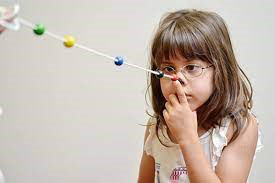
If a problem is detected in the way the brain processes information coming in through the eyes, vision therapy can help to improve visual processing skills. Vision therapy is a personalised treatment programme designed to improve and strengthen the visual skills and retrain the eye-brain connections to interpret visual input with increased accuracy and ease. Each programme is designed for the specific needs of the individual, be they on the sports field or in the classroom. It involves a variety of eye exercises and activities conducted and supervised by a sports vision optometrist or vision therapist. Homework may be given to reinforce the skills learned during the therapy session. |
||||
|
Protective Eyewear
An important factor in playing any sport is protection against injury, including to the eyes and surrounding areas of the face. Wrap-around glasses are ideal as they do not restrict peripheral vision. Shatterproof lenses shield the eyes from impact injuries, for example from a fast-moving ball or accidental contact with a bat or racquet. Reduced visibility due to glare can affect sports performance. Your optometrist can recommend appropriate glasses or contact lenses for protection against injury, glare and harmful UV radiation. Vision care for athletes of all ages and skill levels should begin with the identification of visual factors that potentially contribute to peak or poor performance. As a legendary football coach has stated: "the eyes lead the body". |
||||