FIND THE RIGHT CONTACT LENSES
|
Contact lenses have been used for decades and offer an effective solution for various vision problems ranging from refractive errors such as shortsightedness, farsightedness and astigmatism to light sensitivity and eye injuries. The technology is constantly changing and developing to keep up with the need to improve the comfort, safety and vision needs of the millions of contact lens wearers worldwide. With the large selection of different types of contact lenses, your optometrist will guide you and recommend the most suitable ones for your unique visual and lifestyle requirements. SOFT CONTACT LENSES
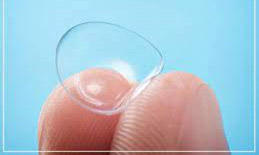
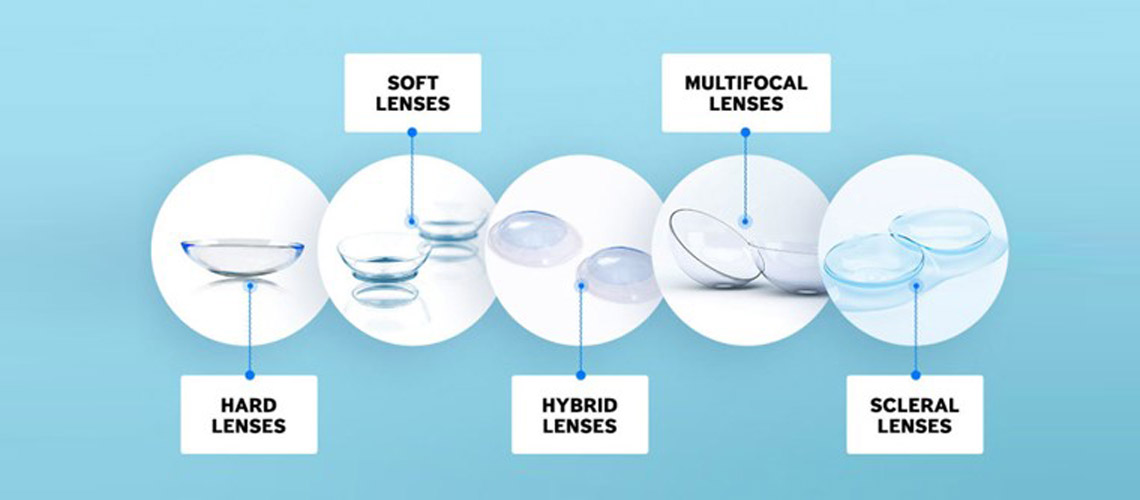
Soft contact lenses are the most commonly prescribed contact lenses. They are made from a special type of plastic mixed with water. The water content allows oxygen to pass through the contact lens to the cornea, making them more comfortable, reducing dryness and keeping the cornea healthy. In general, soft contact lenses are more comfortable to adapt to than hard lenses. Many of them provide UV protection. One of the disadvantages of soft lenses is that they are fragile and can tear fairly easily when being handled. They tend to absorb particles, bacteria and chemicals which irritate the eyes. However, many soft lenses are disposable, minimising the chance of infection and eye irritation. There are a number of soft contact lenses to choose from. Daily wear contact lenses are worn on a daily basis and removed and cleaned at night. These may be replaced after a period of two weeks, a month or even a year. Daily disposable lenses are often a good choice for people who suffer from allergies. They are worn only for a day and then thrown away. Although more costly, the advantage of these is that they do not have to be cleaned and the risk of dry eyes and irritation due to allergies to cleaning solutions is reduced. Overnight wear lenses can be worn continuously for up to 30 days, including during sleep. The complication with these is that less oxygen reaches the cornea during sleep, which may lead to a build-up of debris under the contact lens and the possibility of corneal problems or eye infections. |
||||
|
RIGID GAS PERMEABLE CONTACT LENSES
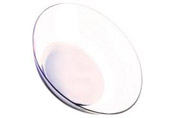
Rigid gas-permeable lenses, as the name suggests, are stiffer than soft contact lenses, but still allow oxygen to pass through to the cornea. They may take longer to adjust to at first, but are more durable than soft contact lenses, provide sharper vision, and are often recommended for people who are prone to allergies and those with higher levels of astigmatism. They need to be removed for cleaning and disinfecting at night. In the long term they are more cost effective than soft lenses. |
||||
|
HYBRID CONTACT LENSES
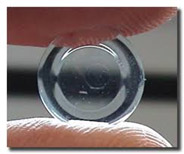
Hybrid contact lenses have a rigid gas permeable centre surrounded by a soft outer ring. They are more comfortable to wear than gas permeable lenses. They can correct shortsightedness, farsightedness, astigmatism and age-related loss of close-up vision, as well as an irregular corneal curvature. |
||||
|
COLOURED CONTACT LENSES
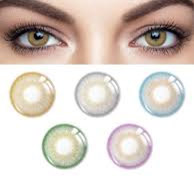
Coloured contact lenses may be simply cosmetic, or they may contain a prescription. Visibility tint lenses do not affect the colour of the eyes, while enhancement tint lenses highlight the eyes' natural colour. Colour tint lenses are darker and opaque and can dramatically change the colour of the eyes. Some coloured contact lenses may compensate for colour vision deficiency and offer some help to people who have difficulty differentiating colours. While coloured contact lenses are fun, they are medical devices and should be fitted by an optometrist, not bought at a novelty store or market. They need to be cleaned and cared for in exactly the same way as other contact lenses. |
||||
|
MULTIFOCAL CONTACT LENSES
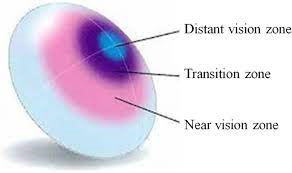
For people who have multiple visual needs, for example with visual difficulties associated with aging, bifocal or multifocal contact lenses can help. Just like glasses with corrections for both near and distance vision, these contact lenses have prescriptions for both and provide a gradual transition between the two. They are available in both soft and rigid gas permeable options. |
||||
|
MONOVISION CONTACT LENSES Another option for both distance and near vision requirements is monovision contact lenses. One eye has a contact lens for near vision and the other for distance vision. This can take time to get used to, but in time the brain adjusts to seeing clearly at all distances. |
||||
|
SCLERAL CONTACT LENSES
Scleral contact lenses are large lenses that rest on the sclera, the white of the eye. They are made with rigid gas permeable material that allows oxygen to reach the cornea, keeping it comfortable and healthy. They may be prescribed to reduce light sensitivity or pain with eye injuries or severe dry eye syndrome, or to minimise discomfort in people who have difficulty wearing conventional contact lenses. They can help correct vision problems associated with an irregularly shaped cornea. |
||||
|
CONTACT LENSES FOR KIDS
Deciding when a child is old enough or mature enough to wear contact lenses is best done in consultation with your optometrist who will evaluate the child and his visual needs and recommend the most suitable lenses. Daily disposable lenses which are worn daily and discarded at night are the most convenient choice because no cleaning or disinfecting is required, but they do tend to be expensive. If the child can cope with the responsibility of cleaning and caring for the lenses, weekly disposables may be an option. Rigid gas permeable lenses are the most durable contact lenses but adjusting to them takes time and they may be less comfortable than soft contact lenses. Whatever the decision, make sure that the child has a pair of glasses with the current prescription in case he is unable to wear his contact lenses for some reason. |
||||
|
AVOID COMPLICATIONS WITH CONTACT LENSES
Practice good hygiene. Minimise contact with water and saliva. Use only commercially prepared, sterile contact lens solutions recommended by your optometrist. Discard the solution in the contact lens case each time you disinfect and store your lenses. Clean and rinse your case with sterile contact lens solution each time you finish using it. Replace contact lenses and cases as recommended. Avoid over-the-counter contact lenses. If you're interested in decorative contact lenses, talk to your optometrist and have him or her fit your contact lenses. Never share contact lenses. Even with proper use and care, dry eyes can be an issue for contact lens wearers. If your eyes are itchy or red, remove your contact lenses and use lubricating eyedrops recommended by your optometrist. If your vision becomes blurry or you experience eye pain or extreme sensitivity to light, see your optometrist for prompt treatment. |
||||