GOOD LUCK OR BAD LUCK?
 |
||||||||
|
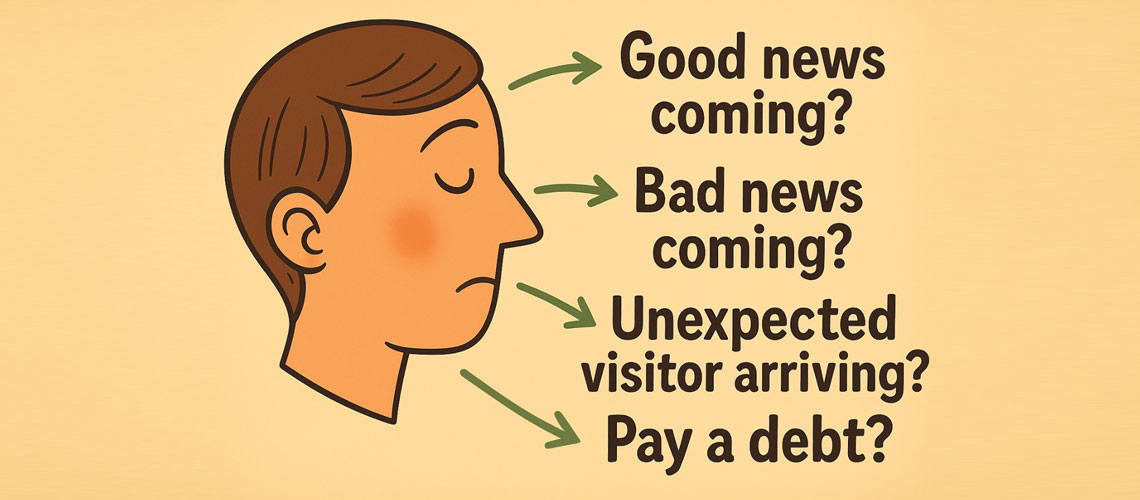
When your eye twitches, does it mean you will receive riches or bad news, someone is saying something bad or something complimentary about you? Superstitions and myths around eye twitching exist in many cultures around the world. They range from predicting an unexpected visitor to needing to pay a debt, and vary depending on whether they are experienced by a male or a female, in the left or right eye, what time of day they happen, and even in which part of the eye they occur. Whether one believes there is a meaning behind them or simply feels that they are an annoyance, everyone experiences eye twitches at one time or another. An eye twitch or eyelid spasm is a repetitive, involuntary contraction of the eyelid muscle. Episodes of twitching are unpredictable, typically occurring every few seconds and stopping on their own after a few minutes. They may appear on and off for a day or two and then not for weeks or months, although occasionally chronic twitching could be experienced all day for weeks. The upper eyelid is affected more often than the lower lid, but twitching can occur in both or either. Strong spasms could cause the eyelids to close completely and then reopen rather than twitching. Most twitches are painless and harmless, and will resolve without intervention, but in rare cases eyelid spasms may be an early sign of an underlying health condition.
The exact causes of eyelid twitching are unknown, but certain lifestyle factors have been thought to trigger them. These include fatigue or lack of sleep, stress, caffeine, alcohol consumption, certain medications, dehydration, increased screen time and eyestrain. Migraine, dry eyes, light sensitivity, environmental irritants, eye inflammation or infections may lead to eye twitching. Deficiency of vitamins D and B12, as well as calcium and magnesium deficiencies have been suggested as potential triggers. Very rarely, twitching may be indicative of or associated with a neurological condition such as Parkinson’s disease.
Eyelid twitches may be classified based on frequency, severity, and underlying causes. Myokymia is a mild sporadic spasm which ranges from being almost unnoticeable to bothersome, usually one eye at a time. The twitching normally goes away quickly but could be repeated after a few hours or over a few days. Chronic and sustained eyelid spasms may indicate blepharospasm, a rare neurological condition which usually affects both eyes and manifests in mid to late adulthood, worsening over time. The spasms might become so severe that the eyelids remain shut for several hours. Botox injections have been found to ease the spasms. While there is no specific treatment for eyelid twitching and they typically stop as spontaneously as they began, steps can be taken to ease the symptoms and minimise the chances of them recurring. A warm or cold compress placed over the eyes for a few minutes may reduce the twitching. Preventative measures include getting adequate sleep, remaining hydrated, cutting back on caffeine, alcohol and smoking, keeping the eyes lubricated with artificial tears or eye drops, and managing stress. |
||||||||