20/20 IS NOT ENOUGH!
|
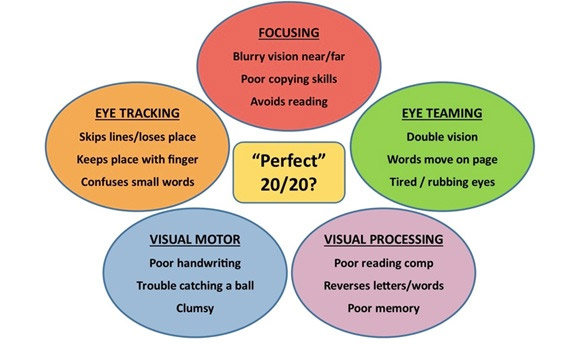
20/20 vision means that one can clearly see the letters on the vision testing chart at 20 feet away. However, for reading and learning a child needs visual skills over and above visual acuity. In fact, poor visual processing skills, rather than poor eyesight, is frequently at the root of learning problems in children. With the COVID-19 pandemic, schooling was disrupted all over the world and children were forced to learn on-line, impacting their lives in many areas including visual health. Visual Processing Skills Essential for Learning In order to learn to read and write successfully, a child needs to understand and respond to what is seen. The eye sees, the brain interprets. Basic visual skills needed for effective learning include:
If any of these visual skills are lacking or not functioning adequately, a child will have to work harder to learn as effectively, often leading to eye strain, headaches, fatigue or negative attitudes towards learning. Signs of a Visual Problem
An increased amount of digital learning and screen time is bound to cause eye strain, but there may be other problems with visual skills interfering with a child's ability to learn effectively. A child may not be able to tell his parents or teachers that he has a visual problem, either because he is unable to express what he experiences or because he is not aware that he experiences what he sees differently from others. Certain signs, both obvious and more subtle, can alert the adults around him that he is struggling. He may be easily distracted while reading and have poor reading comprehension. Poor handwriting and reversal or confusion between letters while reading or writing is a sign of a visual perception problem. Observation of the child's behaviour offers useful information to parents and teachers. Does he often rub his eyes, squint to see more clearly, close one eye to read? Does he complain of sore eyes or headaches? Does he sit too close to the TV or hold a book too close when reading? Does he frequently lose his place while reading, skip letters or words, or have a poor understanding of what he has read? Avoiding reading or writing activities or becoming easily bored or frustrated may point to a difficulty with learning. Academic performance may be lower than usual. |
||||||||
|
The Link Between COVID-19 and Myopia
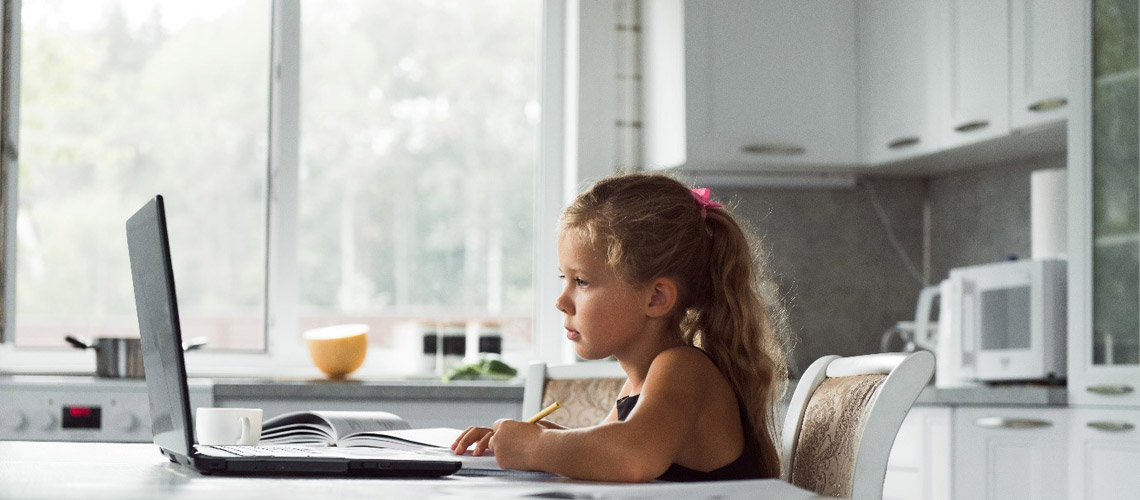
Even before the pandemic, rising childhood myopia (shortsightedness) was increasingly recognised as a problem. Recent research indicates that this has been exacerbated by COVID-19, due to a number of factors. The shift towards online learning and increased periods of screen time coupled with decreased outdoor time has been found to be a risk factor for myopia in school-aged children. Some experts have suggested that parents working from home and spending extended periods of time in front of digital screens without a break have provided poor role models for their children. |
||||||||
|
Minimising Vision Problems During COVID-19
It is the responsibility of parents to raise awareness of the importance of maintaining a balance between indoor screen time and outdoor recreation. Outdoor time is a well-established environmental factor for myopia and increasing outdoor time away from screens has been shown to have a positive impact in preventing myopia, enhancing fitness, boosting health and improving academic performance. Incorporating physical activity into a child's day is beneficial for whole-child health, especially since access to school sports has been denied. During outdoor play, the child's eyes are able to focus over various distances. Home-based learning allows for flexibility in balancing indoor and outdoor time.
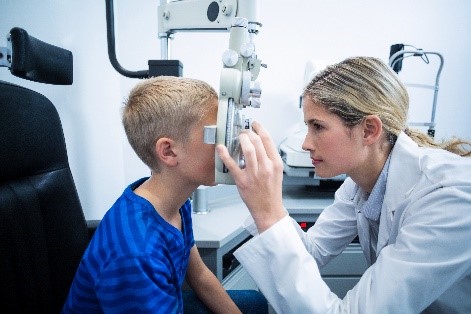
Parents need to help their children to cultivate a healthy relationship with digital devices and to provide positive examples of this. Monitor the child's distance from the screen, posture while working on the computer and lighting and ventilation in the room. Encourage regular breaks away from screens. During the various periods and levels of lockdown, many of us delayed or neglected regular medical check-ups. It is important for school-aged children to have regular eye examinations, particularly if they have been diagnosed and are being treated for myopia. If any of the signs of visual problems are noticed, make an appointment for your child to visit your optometrist. A comprehensive eye examination will not only test the child's vision but can also identify other visual problems that can affect visual health and learning. Early diagnosis and treatment make for a better long-term prognosis. |
||||||||