FUN IN THE SUN!
|
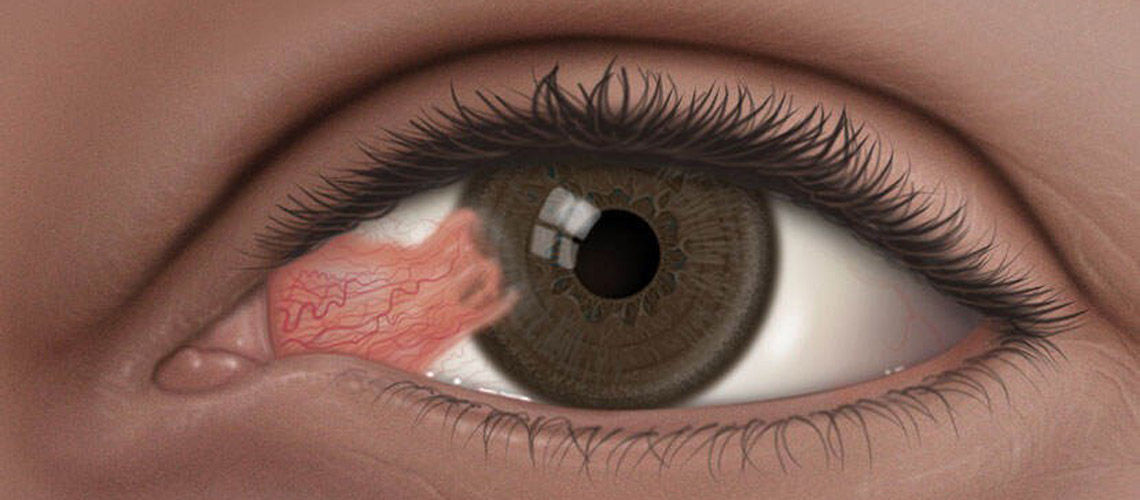
Surfers' Eye, as the name implies, is found most commonly in hot dry countries in people who spend a good deal of time outdoors exposed to sun and wind. Surfers' Eye, or pterygium, is a triangular or wedge-shaped growth that develops on the conjunctiva (the clear membrane that covers the front surface of the eye) and grows onto the cornea, the eye's clear protective outer layer. A pinguecula is a yellowish raised growth on the conjunctiva. While pterygium and pinguecula may appear similar, and have similar symptoms and causes, they are different conditions. Pterygium is a fleshy growth that contains blood vessels, whereas a pinguecula is a deposit of fat, protein or calcium. Although these are both abnormal growths in the eye, they are not harmful, but they can cause discomfort. Symptoms
Symptoms of pinguecula and pterygium can range from mild to severe. They typically originate in the inner nasal corner of the eye and spread towards the pupil, growing slowly over time. In the early stages, both pterygium and pinguecula are usually asymptomatic; however, if they become inflamed, they can cause redness of the conjunctiva, dryness, itching, a gritty sensation, tearing, and burning. In its later stages, a pterygium can grow over the iris and pupil and obstruct vision. In some cases, a pterygium may grow only a little, then stop growing altogether. Sometimes, a pinguecula can develop into a pterygium. |
||||||||
|
Causes
Pterygia occur most commonly in people aged 20-40. The exact cause remains unknown, but both pinguecula and pterygium are believed to be caused by exposure to ultraviolet (UV) light from the sun, as well as by wind and dust, and that an outdoor lifestyle is one of the risk factors. Although UV exposure does play a role, even people who have low UV exposure can develop pterygia. Likewise, some people who have high UV exposure may never develop the condition. It has been suggested that genetics has a role to play. Diagnosis Pterygium and pinguecula can be diagnosed by simple observation. The optometrist makes a formal diagnosis following a slit-lamp examination that allows close-up observation under magnification. Treatment
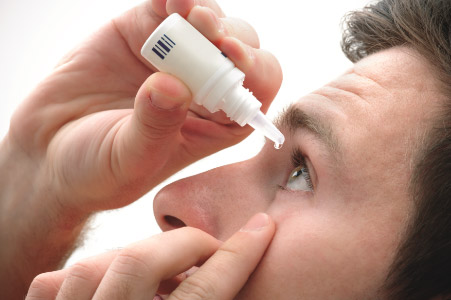
In many cases, treatment is not required, and is usually limited to the optometrist monitoring the pterygium over time. If it becomes larger or causes uncomfortable symptoms, these can be successfully alleviated with over-the-counter artificial tears, lubricating eye drops or anti-inflammatory drops or ointments. Steroid eye drops may be prescribed for redness or swelling. If the pterygium causes problems with vision or the discomfort cannot be easily managed, surgery may be recommended to remove it. Unfortunately, there is a high recurrence rate after surgery, and the decision to undergo pterygium removal surgery should be done only after careful consideration and discussion with your optometrist and ophthalmologist. |
||||||||
|
Prevention
The best way to prevent a pterygium is to protect the eyes from the sun's harmful UV rays, and from irritants, including wind, dust and grit. Wear sunglasses that offer 99 - 100% UV protection when outdoors, while traveling in a vehicle and even when it is cloudy or raining. Wraparound glasses protect the eyes from every angle. A wide-brimmed hat offers additional sun protection when outside. Wear suitable protective glasses or goggles when spending time in a dusty or dirty environment. Use artificial tears to help alleviate dryness and irritation. Visit your optometrist regularly to monitor pterygium, pinguecula and overall eye health. |
||||||||