THE EYES IN SPACE
|
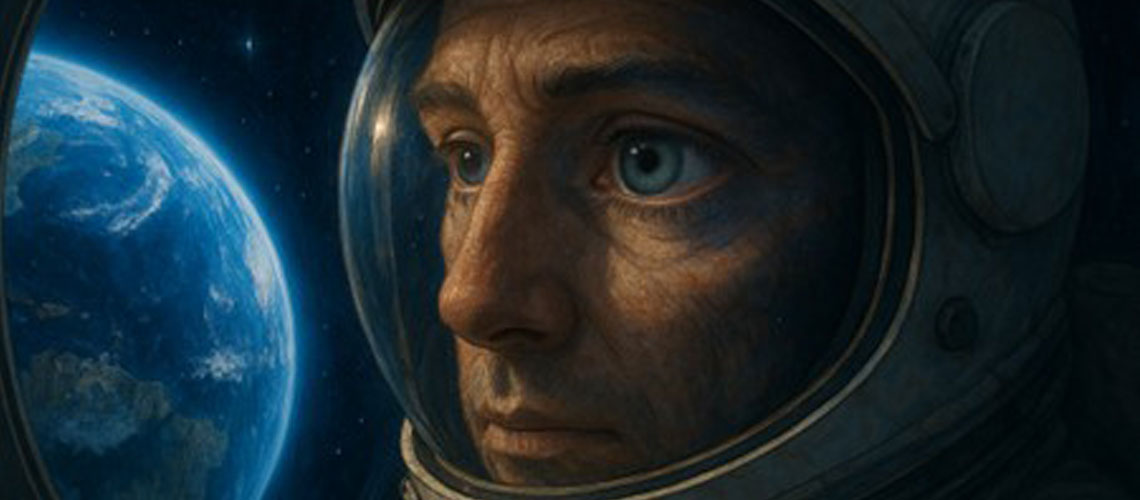
When astronauts blast off into space, they leave behind fresh air, blue skies and gravity, but they also experience a range of physical effects including back ache, bone loss, balance problems, headaches and changes to their vision. Symptoms such as blurry vision, difficulty focusing and changes to the prescriptions of their glasses are collectively known as Spaceflight Associated Neuro-Ocular Syndrome (SANS) and are primarily due to the effects of microgravity.
On Earth, gravity pulls fluids, like blood and cerebrospinal fluid, downwards into the lower body. In space, however, those fluids are redistributed, floating upwards toward the head, causing increased fluid pressure inside the skull. It is thought that the constancy of pressure on the back of the eye changes the structure and functioning of the eye, leading to the vision problems astronauts experience over time. These problems include flattening of the back of the eye, swelling of the optic disc (the point where the optic nerve enters the eye) and changes in the retina. Many astronauts experience changes in their visual acuity, becoming farsighted or requiring stronger reading glasses. Because some astronauts seem more susceptible to visual problems than others, it has been suggested that genetics, body fluid regulation and cardiovascular health may all play a role. These issues were thought to be minor and usually reversible, but the longer astronauts spend in space, the greater the risks for long-term effects may be.
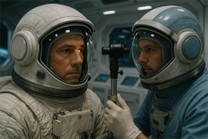
Impaired vision is considered both a health and safety concern. Vision problems during a space flight could make a critical mission far more dangerous. Before, during and after space missions, astronauts undergo a rigorous battery of tests. The eye tests include Optical Coherence Tomography (OCT) to examine the retina and optic nerve, ultrasound scans to monitor eye structure, visual acuity tests to track changes in sharpness of vision, and fundus photography to document changes in the back of the eye. In case an astronaut’s vision undergoes changes during a mission, glasses with multiple prescriptions are sent on the space flight. While most vision changes resolve after returning to Earth, some structural changes can take a year or more to fully correct. The longer astronauts are in space, the greater the risks may be. According to some studies, it is possible that the effects of multiple space flights could be cumulative, potentially leading to more significant and persistent vision problems. The long-term effects of extended spaceflights are constantly being investigated, and potential solutions are being tested to mitigate the effects of fluid shifts. These include lower-body negative pressure suits to draw fluid back down toward the legs, medications to manage pressure, new exercise routines to help fluid distribution and artificial gravity experiments on rotating spacecraft. |
||||||||
The challenges of spaceflight continue to teach us just how sensitive and adaptable the human body is. Studying SANS in astronauts might help researchers better understand vision conditions that affect people on Earth, particularly those involving pressure in the brain or eye, like glaucoma. As odd as it sounds, your local optometrist and a NASA flight surgeon might have more in common than you’d think. They’re both working to keep vision sharp, whether it’s reading a chart on Earth or docking a spacecraft in orbit. Insights gained in space could one day lead to new treatments here at home. And for astronauts, every discovery brings them one step closer to safer and longer journeys among the stars. |
||||||||