EyeMark Newsletters

A list of all our EyeMark Newsletter Articles

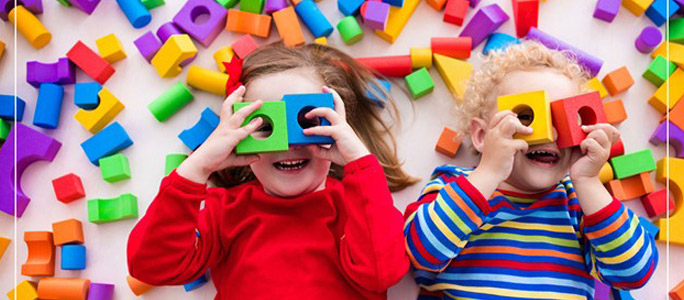
TOYS FOR VISUAL DEVELOPMENT


As 2020 draws to a close, many people will be breathing a sigh of relief to put this difficult year behind them. But for many the coming festive season brings mixed feelings with it. There is the anticipation of celebrating with family and friends, albeit under strict rules, but also the financial anxiety of having to spend wisely. Children look forward to the excitement of receiving gifts and many families need to cut back on those. However, with careful thought by parents, the choice of gifts and toys can still delight the young family members. Play is not simply a matter of having fun. It is important for the social, mental, physical and emotional development of children. Children use play to process information and make sense of their world. It stimulates the development of crucial skills for learning and helps children to understand their thoughts and feelings and learn how to deal with them. Toys that help facilitate this are not simply playthings but are tools on this important childhood journey. The visual system is the most complex sensory system in the body but is the least mature system at birth. The progress from the blurry world of the newborn to the sophisticated ability to handle complex visual tasks is enhanced through the careful selection of toys and activities which stimulate this process. By following certain guidelines parents can choose toys that are appropriate yet fun, toys that offer a good balance between enriching the child's skills and providing opportunities for...
Continue reading
  2073 Hits
2073 Hits

IF YOU CROSS YOUR EYES, THEY WILL STAY THAT WAY!!


My grandmother used to warn me that if I cried too much, I would get small eyes. Well, many decades and oceans of tears later, I still cry, and my eyes seem to have remained the same size! At some point in our lives, we have all been instructed, or cautioned, about the do's and don'ts on a variety of health-related topics. Some of these are myths or old wives' tales used by parents, grandparents or teachers to encourage good behaviour in children. Others contain an element of truth, but the truth may have been stretched or exaggerated for added effect. So, with regard to the eyes, which are fact and which fiction? Where does myth end and truth begin? Is there a clear dividing line between the two? IF YOU CROSS YOUR EYES, THEY WILL GET STUCK THAT WAY   If you cross your eyes, they will not remain crossed, but will naturally return to normal once you focus on something else. A small percentage of children have a problem with the eyes not being aligned correctly, so that they appear permanently "crossed". This condition, known as strabismus, is not caused by deliberately crossing the eyes and is usually evident before the age of five. It is often the subject of another myth that can result in permanent visual problems.   CHILDREN WITH A SQUINT WILL GROW OUT OF IT A squint, or strabismus, is a condition in which the eyes point in different directions. Contrary to some opinions, it...
Continue reading
  1849 Hits
1849 Hits

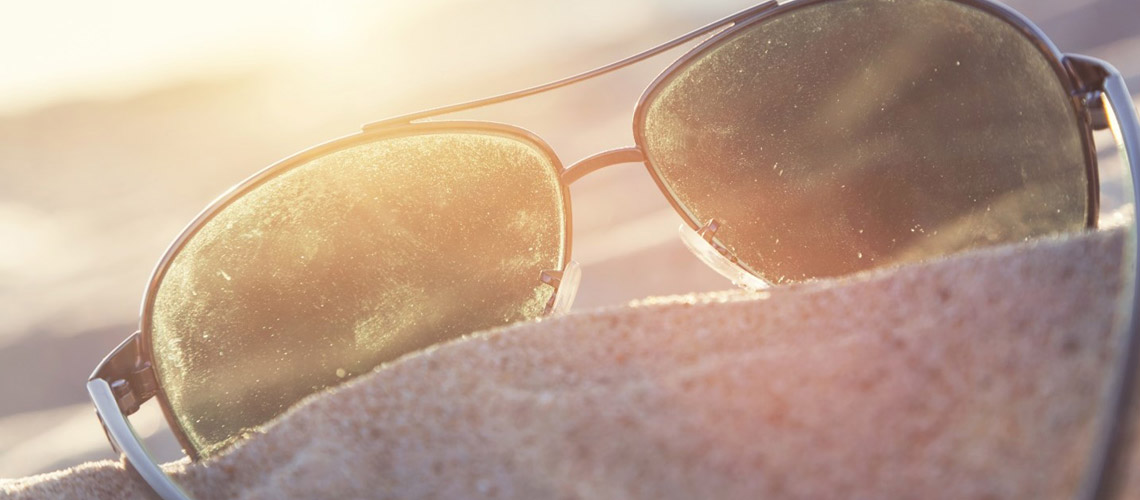
SUNGLASSES AND UV LIGHT


Sunglasses are a popular fashion accessory, but their most important function is to protect the eyes from the harmful ultraviolet rays of the sun. Ultraviolet (UV) radiation from the sun can damage not only the skin of the eyelid but also the delicate parts of the eye itself. Long term exposure contributes to the development of eye conditions including cataracts and macular degeneration.     Ultraviolet (UV) light is electromagnetic radiation that is invisible to the human eye. The sun emits three types of ultraviolet radiation. UVA makes up the vast majority of the ultraviolet radiation reaching the Earth's surface. It is capable of penetrating deep into the skin and is thought to be responsible for up to 80% of skin ageing. UVB can damage the DNA in the skin leading to sunburn. UVC rays are filtered out by the Earth's ozone layer and rarely reach the earth. UV light is absorbed by molecules which are present in the eye cells and tissues. If too much UV light is absorbed, over time eye structures, such as the cornea, the lens and the retina can be damaged. The longer the eyes are exposed to solar radiation, the greater the risk of developing conditions such as cataracts or macular degeneration later in life.     There are various light sources that have an effect on the eyes.  Direct light  is light that goes straight from the light source (like the sun) to the eyes.  Reflected light  is light that has bounced off a...
Continue reading
  1929 Hits
1929 Hits

EYE CONDITIONS IN CHILDREN


The eyes are a child's gateway to learning about the world around him and to developing the skills that are critical for reading, writing and learning. There is more to healthy eyes than seeing clearly, and parents need to be aware of the signs that may indicate a problem and the need for a visual examination. Early detection is key! The earlier a vision problem is treated, the better the prognosis will be and the less risk there will be of further deterioration or damage. Common Eye Problems in Children Amblyopia (Lazy Eye) Amblyopia, also known as lazy eye, is a condition in which one or both eyes do not develop normal vision even though the eye or eyes look normal. Over time the visual part of the brain ignores signals from the weaker eye. If untreated, amblyopia can cause irreversible vision loss in the affected eye. If recognised early, ideally before the age of 8 years, it generally responds well to treatment. Blocked tear ducts Approximately 10% of newborns experience blocked tear ducts, which is often due to an underdeveloped tear-duct system at the time of birth. It generally improves spontaneously by 6 to 12 months of age. Blocked ducts in older children may be due to an infection or injury. Warm compresses can be used to open the duct, and antibiotic drops or oral antibiotics may be prescribed in the case of infection. Cataract A cataract is a cloudiness of the normally clear lens of the eye, causing blurred...
Continue reading
  622 Hits
622 Hits

IS HALLOWEEN STILL HALLOWEEN IF WE’RE ALL WEARING MASKS ANYWAY?

IS HALLOWEEN STILL HALLOWEEN IF WE’RE ALL WEARING MASKS ANYWAY?
It's not huge in South Africa, but every October the northern hemisphere starts dusting off its Jack-‘o-lanterns and cobwebs (if it's possible to dust off cobwebs). Halloween gets people excited about putting on masks. But without wanting to make light of a serious global situation, how will Halloween be different in a year characterised by people wearing masks every day? The world has been hiding behind masks for over six months. And while trick-or-treating might not be the same in a world of social distancing, it's likely that the American tradition of dress-up will still go ahead on 31 October. It'll be interesting to see how everybody chooses to wear their masks - and their masks. For those of us who wear glasses, mask-wearing always presents its challenges. This is something I've raised many a time, and I still haven't found a solution to COVID Mask Lens Fog. Whether it's a COVID mask or a full Spider-Man face covering, what to do with one's glasses? Speaking of glasses and dressing up, many an outfit wouldn't be complete without an eye-catching pair of frames (if you'll pardon the pun). Superman managed to disguise himself for years by putting on a pair of glasses. And for decades of comic books, TV episodes and movies, nobody questioned that Clark Kent was anyone other than Clark Kent… all thanks to a pair of heavy black frames. That's what a pair of glasses can do for you. And I don't have my statistics at hand, but...
Continue reading
  1527 Hits
1527 Hits

DAZZLING BUT DANGEROUS

DAZZLING BUT DANGEROUS
As the end of the year approaches, so do many occasions for the lighting of fireworks. Throughout the world and across many cultures, fireworks are part of traditional festivals, commemorative events and celebrations. They elicit a sense of awe and wonder in children and adults alike but are potentially harmful and need to be used with care and caution. Eye injuries are second only to skin burns as a result of fireworks accidents. These range from scratches on the surface of the eye to more serious and sometimes permanent vision damage. They happen in seconds but can be life changing. One of the main causes of eye injuries to children under 15 years of age is sparklers, which burn at a temperature of 1200 to 1800 degrees Fahrenheit, hot enough to melt gold. FIREWORKS AND EYE SAFETY Many injuries can be prevented by applying basic fireworks safety.      The safest way to enjoy fireworks is at a professionally organised fireworks display. However, remember that injuries are not necessarily dangerous only to the people handling the fireworks. Bystanders are at risk of injury, too. Respect safety barriers and follow guidelines regarding safe distances from which to watch the display. If lighting your own fireworks at home, only buy fireworks from authorised dealers and shops. Ensure that they are in sealed packages. Children under the age of 16 should be accompanied by an adult when purchasing fireworks. Carefully follow the instructions printed on the packaging. Homemade fireworks can be extremely dangerous to...
Continue reading
  1441 Hits
1441 Hits

LOOK INTO MY EYES

LOOK INTO MY EYES
LOOK INTO MY EYES COMMUNICATION IN THE ERA OF FACE MASKS      Smile and the world smiles with you! A friendly idea in an ideal world, but in our COVID-19 world of mandatory masks this becomes a little more challenging. How often have we wondered: "Do you know I am smiling at you? Are you smiling back at me?" Or even: "Are you who I think you are, or did I mistake you for someone else? Do you recognise me?" Many of us are struggling with our so-called "new normal" of trying to breathe, talk and listen while navigating social distancing. All this with a backdrop of uncertainty, anxiety and discomfort in a world that doesn't seem as friendly when it's filled with people wearing masks. Masks are not simply covering our faces; they are creating a barrier to the communication channels we are so used to, making us feel alienated and a little disorientated in social situations. In literature, comics and movies, masks have been used to suggest mistrust and suspicion. Among others, think of Zorro, Batman, Hannibal and The Man in the Iron Mask, all characters whose identities were hidden one way or another, creating discomfort and often fear. Such powerful cultural cues can be activated, however subconsciously, when we cover our faces, even for the valid protective reasons.      When body language specialists are asked if it is still worth smiling if your smile is hidden or blocked, the answer is a resounding yes, because so...
Continue reading
  935 Hits
935 Hits

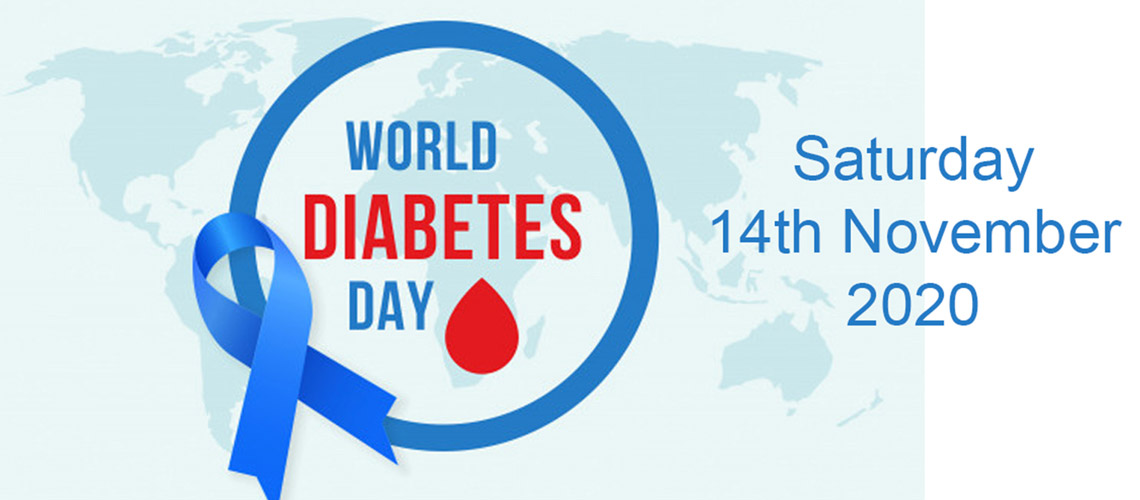
DIABETES AND EYE DISEASE

DIABETES AND EYE DISEASE
The KEY is Early Detection! Diabetes is one of the fastest growing chronic diseases world-wide and is very much on people's minds as a risk factor during the COVID19 pandemic. What many people are not aware of is the impact that diabetes has on the eyes, and still fewer know about the role played by optometrists in detecting not only diabetic eye disease, but diabetes itself. A recent American study found that a significant number of optometrists spotted diabetes-related markers in the eyes of patients who were unaware that they had diabetes. With early detection being the key to early management, a regular eye examination is vital. The Effect of Diabetes on the Eyes Diabetes is a disease characterised by the body's inability to effectively control the sugar levels in the blood. One of the effects of high blood sugar levels is damage to the blood vessels. The eyes are particularly vulnerable to this damage because the tiny blood vessels supplying the eyes are sensitive to blood sugar fluctuations in the body. Diabetic eye diseases include diabetic retinopathy, diabetic macula edema, cataracts and glaucoma. Diabetic Retinopathy      Diabetic retinopathy is a general term for all disorders of the retina caused by diabetes and is the most common of the diabetic eye diseases. It is caused by damage to the small blood vessels in the retina at the back of the eye. Diabetic retinopathy usually progresses through four stages, from mild nonproliferative retinopathy through moderate and severe nonprliferative retinopathy to the...
Continue reading
  1662 Hits
1662 Hits

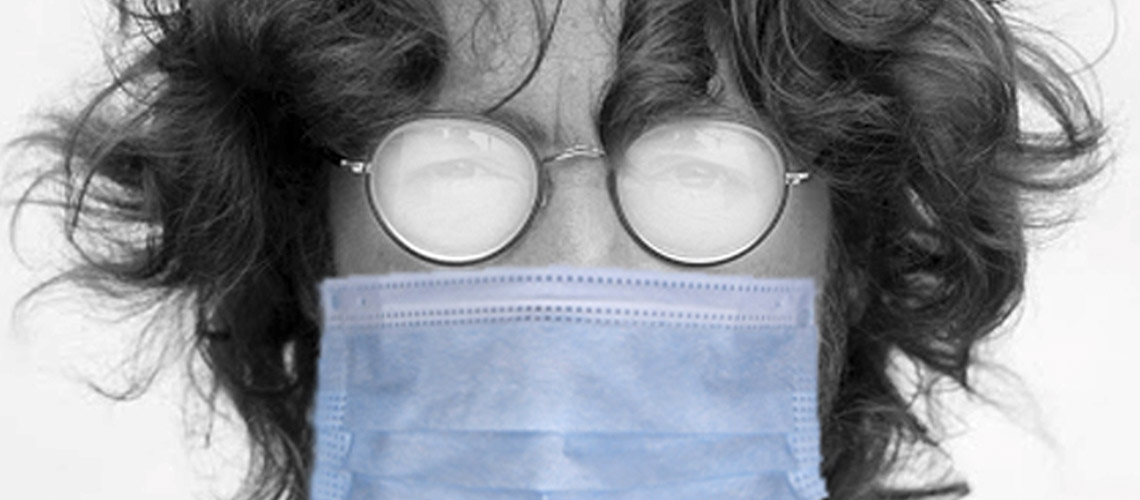
FIGHTING THE FOG

FIGHTING THE FOG
Fogging of glasses has always been an irritating problem for some people in some situations but since the mandatory wearing of masks to protect ourselves and others from COVID-19 the problem has become more widespread. With a global pandemic to worry about right now the last thing we need is something as simple as foggy glasses to add to our concerns. But there are a number of solutions to lift the haze and brighten the day!      Glasses fog up because the mask directs the breath upwards instead of forwards, which is necessary for preventing disease transmission but annoying when it interferes with vision. The simple science behind it is that when warm air hits a cool surface condensation occurs. The lenses of the glasses are relatively cool compared to the breath, so that when the water vapour from the breath comes in contact with the cool surface of the lenses it changes into tiny droplets of liquid forming a film which we experience as fog. Glass lenses are more likely to fog, whereas lens materials like polycarbonate and plastic may be more resistant to fogging. As the demand increases for anti-fog products, a number of optical companies are offering new products, special lenses and lens coatings to help alleviate the problem. One company has developed technology that permanently prevents build-up of vapour on the lenses, while another uses a physical process to produce a long-term and reliable coating layer rather than relying on chemicals that provide only a short-term...
Continue reading
  1778 Hits
1778 Hits

CARE FOR YOUR EYES

CARE FOR YOUR EYES
     World Sight Day on 8th October falls within Eye Care Awareness month which extends from 21st September to 18th October. Don't take your eyes for granted; rather, take advantage of this opportunity to visit your optometrist for an examination. A significant percentage of eye and vision problems are preventable through early detection and treatment. Become aware of the day to day steps you can take to protect your sight and maintain optimal eye health. Eat Well Good eye health starts with the food you eat. Nutrients like omega-3 fatty acids, lutein, zinc, and vitamins C and E may help ward off age-related vision problems like macular degeneration and cataracts. Dark green leafy vegetables such as spinach contain vitamins that nurture the nerve tissue within the eyes. Orange vegetables and citrus fruits boost eye health. Oily fish like salmon and tuna are rich in omega 3 fatty acids. A well-balanced diet lowers the risk of chronic diseases including diabetes and heart disease which have a role to play in certain eye conditions. Wear Sunglasses      Ultraviolet rays from the sun are harmful to the eyes, even in winter and on cloudy days. Sunglasses which block 99% to 100% of UV rays can help protect the eyes from the risk of cataracts and macular degeneration. Polarised lenses reduce glare, but don't necessarily offer added UV protection. Certain contact lenses offer some protection, but it is advisable to wear sunglasses with contact lenses. Use Safety Eyewear Protective eyewear can shield the...
Continue reading
  1413 Hits
1413 Hits