EyeMark Newsletters

A list of all our EyeMark Newsletter Articles

BLIND BUT NOT BEHIND

BLIND BUT NOT BEHIND
What can a runner who can't see teach us about the way we look at the world? June is traditionally the month of the Comrades Marathon, the so-called Ultimate Human Race. It was established in memory of the fallen South African soldiers in World War I. The first race had 34 participants, started outside the City Hall in Pietermaritzburg and ended in Durban. It has continued every year since then with the exception of the war years 1941 – 1945, and more recently 2020 with the restrictions due to COVID19. 2021 is its centenary year, but unfortunately, due to the ongoing pandemic, some of the planned activities have been cancelled, but runners will participate in virtual races.       The challenge, spirit and camaraderie of the Comrades Marathon attracts thousands of people from around the world, many returning year after year. It has been completed by numerous runners with various disabilities, including blind runner Richard Monisi who completed the race 12 times. Richard grew up in a rural village in Limpopo. As a child, he didn't realise he had a disability. He often bumped into things, and fell, but was unaware that he was different from other children who might fall. Each time, he got up and carried on playing. Falling and getting up again is what Richard continued to do his whole life. It was at the age of 12, when he was hospitalised for typhoid fever, that Richard's eyes were examined, and it was confirmed that he was...
Continue reading
  1160 Hits
1160 Hits

FOLLOW THE 20-20-20 RULE

FOLLOW THE 20-20-20 RULE
What is the "20-20-20 rule"? This simple remedy can help to ease the discomfort of digital eye strain. We live in a digital age, spending a good number of hours each day looking at screens of one kind or another. During the COVID-19 pandemic this has increased dramatically, with many people working from home, children doing remote schooling, and communication with family, friends and work colleagues often taking place via screens rather than personal contact. We have meetings, celebrations, lectures, even yoga and dance classes on digital platforms. The social, educational and psychological impact has been far-reaching, and this phenomenon has had an effect on the eyes, too, with eye strain and discomfort on the rise.       Like any muscle in the body, the eye muscles become fatigued from continued use. Because the text on digital screens is not as sharp as on the printed page, the eyes need to work harder to focus. There is often glare or reflection from a computer screen, as well as less contrast between the images and the background. Viewing angles are different than with written material, and the continual eye focus and movement can cause eye strain and fatigue. Added to this, the viewing distance may be incorrect, causing poor posture and resultant back, neck or shoulder pain. For many people who wear glasses, the prescription may not be correct for extended time staring at a screen, and it may be necessary to adjust the prescription or wear glasses specifically for computer...
Continue reading
  1972 Hits
1972 Hits

KEEP AN EYE ON YOUR FAMILY HISTORY

KEEP AN EYE ON YOUR FAMILY HISTORY
Genetics is a complex field with genes passed down from parents, grandparents, even great-grandparents, and having an influence on areas ranging from hair or eye colour to medical conditions. Heredity can increase our risk of developing a number of chronic health conditions including some that impact eye health and vision. Many eye diseases develop gradually with no symptoms in the early stages. Although their occurrence does not depend exclusively on genetic factors, lifestyle and environmental factors have a contribution to make, understanding our family history can play a vital role in being aware of potential problems and managing them before they become serious.       Recent research has revealed that a significant number of ocular conditions are genetically linked and passed down through generations. Some conditions do not pass directly from parents to offspring but may miss a generation and manifest in later generations, while others may be influenced by multiple genes. Even then, their cause may be an interplay of genetic, environmental and lifestyle factors. It is important to be proactive by learning your family history and sharing it with your optometrist. Genetics is believed to play a major role in many forms of glaucoma, a condition that irreversibly damages the optic nerve due to pressure build-up within the eye. If left untreated it leads to vision loss and is one of the leading causes of blindness worldwide. Having a family member with glaucoma significantly increases the risk of developing it. Another cause of blindness, age-related macular degeneration (AMD)...
Continue reading
  2127 Hits
2127 Hits

GUIDE TO VISION DEVELOPMENT

GUIDE TO VISION DEVELOPMENT
Children's vision plays a critical role in their development, ability to learn and overall health. Research shows that approximately 75% of what children learn during the early years of life is processed through their visual system. Learning to see is a complex constantly evolving learned skill that depends on appropriate stimulation and experience in order for children to reach the fundamental milestones for interpreting, understanding and interacting with the world around them. Visual development begins in the womb and continues throughout childhood and adolescence. At birth, the visual system is still immature, and the development of a mature visual system is especially critical within the first six years of life. Having a basic timeline for vision development helps parents know what to expect at different ages, while being able to enjoy their child's development. However, they need to remember that each child is unique, and each child reaches developmental milestones at their own individual pace. A timeline is simply an age-related guide which may assist parents with stimulating their child and alerting them to any problems that the child may experience.       At birth, an infant is very sensitive to bright light, and the pupils remain small, limiting the amount of light entering the eyes. Within a couple of weeks, as the retinas develop, the pupils begin to widen. Newborns see in black and white. By one month of age, the baby may focus briefly on faces but is more attracted by large shapes and bright colours. Although his...
Continue reading
  1116 Hits
1116 Hits

FEELING APRIL FOOLISH?

FEELING APRIL FOOLISH?
We won't be allowed to touch each other. We'll sometimes have to queue for groceries. We'll have to cover our faces - all the time. We'll have curfews and alcohol bans. Beaches will close. In some countries, Christmas will literally be cancelled. Certain world leaders will say the virus will just magically disappear. The perfect April Fool's joke? Not exactly. Because it's really happening and we're all living through it. Make no mistake, we've had our share of laughs. Remember when our president got his mask stuck over his eyes? Remember when one of our minister's comments was transformed into a wildly successful song called "When People Zol"? Some might say it's too soon to look back and laugh because we're still living in the days of COVID-19. But as another April dawns, it's worth remembering that last year this time we were only just beginning our "New Normal". (Anyone else tired of hearing those words?) There were so many unknowns, including how long we'd be living in these very strange times. Last April people were shocked that COVID regulations could last until… (gasp)... July! Now it's over a year later and here we are. We didn't know when schools would re-open. We didn't know when we'd be able to go to restaurants again. But here's another thought… we also didn't know what strength lay within us. How resilient we are. How we have a capacity for humour even in these scary times. Yes, people have been selfish and corrupt. But...
Continue reading
  1479 Hits
1479 Hits

WHAT IS THE BLIND SPOT?

WHAT IS THE BLIND SPOT?
Look at the image above with the plus sign and the circle. Look straight at the image, with your nose positioned somewhere between the plus and the circle. Close your left eye and focus on the plus sign with your right eye. Do not look deliberately at the circle. Now move closer to the image, slowly. Don't take your focus off the plus sign while you are doing this. At some point between 30 - 35cm, the circle will disappear from your peripheral vision. And the brain will read the surrounding white colour to fill up the empty space. This exact spot is the blind spot in your right eye. The blind spot is a very small gap in the visual field of each eye. Generally, you don't notice this blind spot because the spot in one eye doesn't match the spot in the other eye. They overlap, allowing the eyes to compensate for each other. Each eye sends its own information to the brain, which is very efficient at filling in the missing information. Light enters the eyes by passing through the pupil and reaching the retina at the back of the eye. The retina is made up of light-sensitive receptor cells which transmit information via the optic nerve to the brain where visual information is processed. There are no light-sensitive cells at the point where the optic nerve enters the retina, creating an area in the visual field of each eye where nothing is seen. The blind spot! There...
Continue reading
  4527 Hits
4527 Hits

CHRONIC HEALTH CONDITIONS AND YOUR EYES

CHRONIC HEALTH CONDITIONS AND YOUR EYES
Many chronic systemic health diseases that affect the body can affect the eyes, too. In fact, an eye examination sometimes gives the first indication that a systemic disease may be present in the body. The eye is composed of different types of tissue, making it susceptible to a variety of diseases as well as providing insight into many systems of the body. The eye structures are uniquely transparent and blood vessels can be clearly viewed by an optometrist. The health of these blood vessels at the back of the eye often indicates the health status of blood vessels throughout the body. The optic nerve and eye movements can reflect changes in the central nervous system. Almost any part of the eye can give important clues to the health or ill-health of other organs in the body. Signs of problems can be detected before symptoms become apparent, and disease can be diagnosed and treated early. Early detection and treatment is the key to better health. Diabetes        Diabetes is a chronic condition in which the body does not produce insulin or use it efficiently, resulting in abnormal blood sugar levels. Fluctuations in blood sugar can cause temporary vision changes, and over long periods of time uncontrolled diabetes can lead to more serious eye problems. Diabetic retinopathy is a condition in which the tiny blood vessels supplying the eye are affected causing progressive damage to the retina, gradual vision loss and sometimes blindness. Changes in the blood vessels of the retina...
Continue reading
  2677 Hits
2677 Hits

CONJUNCTIVITIS

CONJUNCTIVITIS            
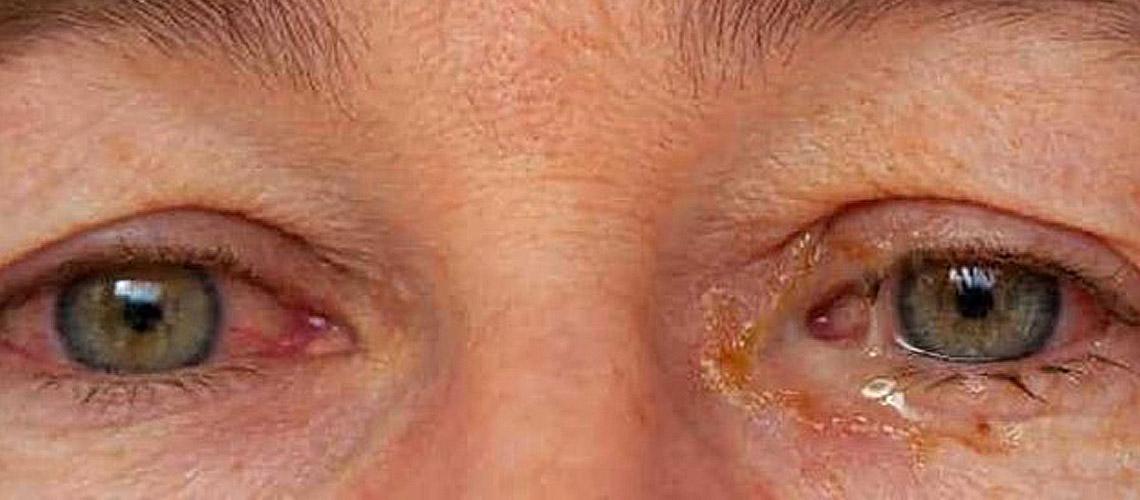
Conjunctivitis, more commonly known as 'pink eye', is an infection or inflammation of the thin clear membrane over the white of the eye and the inside of the eyelid. The blood vessels become inflamed, giving the eyes the characteristic red or pink colour. There are several types of conjunctivitis, each with their own causes, symptoms and treatment. Not usually a serious health risk, it is generally contagious while the symptoms are present, and spreads easily and rapidly from person to person. What causes conjunctivitis? Conjunctivitis may be caused by bacteria, or a virus, usually the one that causes the common cold, or be an allergic reaction, for example to organisms in the environment, or a reaction to an irritant which enters the eyes. What are the symptoms? While the causes may differ, the symptoms of viral and bacterial conjunctivitis overlap and are often similar. These include redness of the eyes, itching, burning, tearing and a discharge from the eyes. Viral conjunctivitis usually starts in one eye and can spread to the other eye. It is usually associated with a cold or viral infection of the upper respiratory tract. The discharge from the eyes is watery, unlike the thick discharge in bacterial conjunctivitis, which builds up overnight and leaves a crusting of the eyelids and eyelashes. Bacterial conjunctivitis affects both eyes and can start with a respiratory or ear infection. Allergic conjunctivitis is typically characterised by itching, watering and a feeling of irritation. It may occur during certain seasons of the year...
Continue reading
  1742 Hits
1742 Hits

DO YOU NEED A LENS COATING?

DO YOU NEED A LENS COATING?            
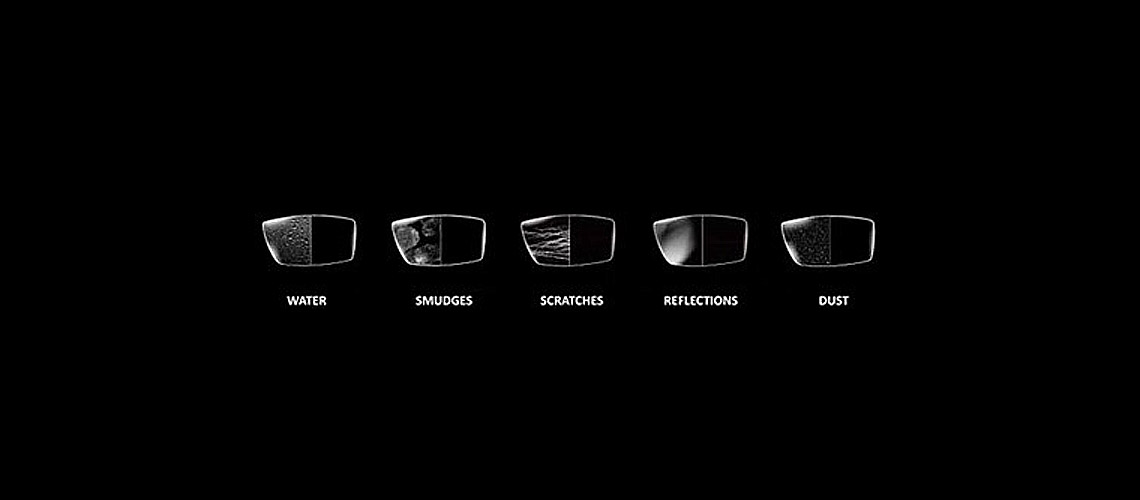
  You have had your eyes examined, chosen a frame for new glasses and your optometrist may have recommended adding a coating to your new lenses to improve both the quality of the lenses and the quality of your vision. Are lens coatings really necessary or is this just an added bonus which usually comes with added expense? Lens coatings can improve the performance, longevity, durability and appearance of your glasses, while also providing protection for both your lenses and your eyes. The added expense is usually worthwhile, but different coatings offer different benefits, and a number of factors need to be considered before making a decision. These include your lifestyle, vision needs and budget. ANTI-REFLECTIVE COATING        As light contacts any clear surface, such as the lenses of glasses, most of it passes through but a certain percentage of it is reflected back. An anti-reflective coating is typically applied on both the back and front of the lenses, reducing the amount of light reflected off the surface and allowing more light to pass through the lens, enhancing vision. Glare is eliminated. Reflections from the lenses of glasses make it difficult to see the wearer's eyes, but with anti-reflective coating the cosmetic appearance of glasses is improved. Anti-reflective coating is particularly beneficial for people who drive at night and find reflections of street lights and headlights of oncoming cars disturbing. Eye strain from reflections during visual tasks such as computer use is minimised. SCRATCH-RESISTANT COATING As well as being...
Continue reading
  1511 Hits
1511 Hits

THE MORE OPEN YOU ARE, THE MORE YOU SEE

THE MORE OPEN YOU ARE, THE MORE YOU SEE
"The artist has a sharper eye. He sees what you do not see. He has a more fertile imagination and captures in the mirror of his imagination things that escape your notice. He sees more; he sees deeper; he sees better; he sees things in relationship to each other." These words by Abraham Kuyper make us wonder if creative people have an edge over other people in terms of how they see the world. Research seems to indicate that they do, that they are able to see things that others can't.       According to French writer Anais Nin, "we don't see things as they are; we see things as we are", supporting the view that how we see the world is determined to some extent by our personality. There is some evidence that suggests that people who are adventurous and open to new experiences have better visual awareness and can take in more visual information than other people and combine it in unique ways. Openness to experience is one of the five traits often used to describe personality. It is characterised by curiosity, creativity and an interest in exploring new things. Open people tend to do well at tasks that test our ability to come up with creative ideas, such as imagining innovative new uses for everyday objects. Most people's brains can only process one image at a time. When faced with two different images most people's eyes switch back and forth to focus on one or the other....
Continue reading
  1596 Hits
1596 Hits