EyeMark Newsletters

A list of all our EyeMark Newsletter Articles

RED ALERT?


RED ALERT? <br>  
Red or bloodshot eyes are a common occurrence that can be caused by lifestyle choices, nonemergency conditions, or various health conditions. They occur when the tiny blood vessels near the surface of the eyes become enlarged or inflamed due to irritation, infection or injury. They are usually temporary and clear spontaneously with no cause for concern unless they are accompanied by additional symptoms which may indicate a problem. CAUSES OF RED EYES      Allergies  frequently cause the eyes to become red and swollen. Associated symptoms include itching, burning, sneezing or a runny nose. Some contact lens wearers develop an allergic reaction to certain contact lens solutions or even the contact lenses themselves. With  dry eye , the eyes become red and feel scratchy. Vision may be blurred, sensitivity to light increased and the eyes water excessively. Inflammation of the membrane covering the white part of the eye and the inner eyelids causes the eyes to appear red.  Conjunctivitis  or  "pink eye"  is a contagious condition usually accompanied by itching, burning, increased tearing and a discharge which can lead to crusting on the eyelids or eyelashes. Blepharitis  is a condition in which the eyes and eyelids become red and swollen. The eyes itch, burn and water. There may be flaking on the eyelids which may be crusty on waking in the morning. If not treated, more serious symptoms can occur, including loss of eyelashes, eyelashes that grow in the wrong location, or blurred vision. Uveitis  is inflammation in the middle part...
Continue reading
  1164 Hits
1164 Hits

KEEP YOUR GLASSES CLEAN AND CLEAR


KEEP YOUR GLASSES CLEAN AND CLEAR
Keeping your glasses clean is not simply a matter of keeping them in good condition but is also important for the protection of your eyes. Because your glasses are being worn and touched constantly in many different situations, it is inevitable that the lenses will become grimy. Smudges or dirt may be irritating, but they can also cause your vision to be blurred and lead to eye strain and headaches. Bacteria can accumulate on the frames which may be harmful to the eyes and the sensitive skin around them. While you may be afraid of cleaning your glasses thoroughly for fear of damaging them, following simple guidelines will ensure that both your glasses and eyes are protected. DO'S and DON'TS      Wash your hands thoroughly before you start to clean your glasses, so that dirt and oils on your skin will not inadvertently end up on your glasses. When removing your glasses, use both hands or take them off from the centre of the frame. Taking them off with one hand may cause misalignment of the frame and eventually weaken or break it. Hold the frames firmly on the nose piece. This way you will avoid accidentally bending the frame out of shape. Run a gentle stream of warm water over the glasses to get rid of dust or other particles that can scratch the lenses. Hot water can damage the glasses, and cold water may not clean them sufficiently. While it may sometimes be tempting to use saliva to...
Continue reading
  1287 Hits
1287 Hits

DOES YOUR CHILD NEED GLASSES?


DOES YOUR CHILD NEED GLASSES?
A child's ability to grow and learn depends to a large extent on the optimal development of the visual system. Undetected and untreated problems with the eyes can impact various areas of the child's development and his performance both in and out of the classroom. The visual system continues to develop during the first seven to eight years of life. The earlier problems are diagnosed, the earlier they can be managed and the better the long-term outcome will be. At what age can a child have an eye test and wear glasses? Very young children can have a visual examination and receive glasses as soon as they need them. This means that infants of just a few months old can wear glasses if necessary. Some eye problems require treatment other than glasses and the sooner this is started the better. Why would young children need glasses? Children may need glasses for several reasons, many of which are different than for adults. The main reasons are to improve their vision, to help straighten crossed or misaligned eyes, to strengthen vision in a weak or ‘lazy' eye, or to provide protection for one eye if vision is poor in the other eye. Glasses may play an important role in ensuring normal visual development. How would you know that your child might need glasses? It is unlikely that your child will tell you that he is having problems with his eyes. He may be unaware that he sees differently from those around him, or...
Continue reading
  1489 Hits
1489 Hits

CLEAR TO CLOUDY


CLEAR TO CLOUDY
As light enters the eye it passes through the lens reaching the retina which transmits visual signals to the brain via the optic nerve. A cataract develops when the proteins in the lens form clumps turning the lens from clear to cloudy and preventing clear images from being sent to the brain. It develops slowly, darkening with a yellow or brown tinge, worsening over time and gradually interfering with vision. Cataracts are common in older people but can occur in younger people. How Cataracts Affect Vision      Initially cataracts may have little effect on vision, but the effect typically increases as the cataract progresses. The most common symptom of cataracts is blurry or cloudy vision. Other symptoms include difficulty with night vision, increased sensitivity to glare and bright lights, halos surrounding lights, double vision, frequent changes to glasses or contact lens prescription and faded colour vision or difficulty distinguishing certain colours. Some people experience "second sight". Due to the cataract acting as a stronger lens, near vision temporarily improves; however, as the cataract worsens, this temporary improvement disappears. Types of Cataracts There are three main types of cataracts, affecting different parts of the lens. They are classified according to where and how they develop. Nuclear cataracts form in the centre of the lens, cortical cataracts are situated on the side of the lens, and posterior subcapsular cataracts affect the back of the lens and develop faster than the other two types. Other, less common types of cataracts are secondary cataracts...
Continue reading
  1140 Hits
1140 Hits

THE CRUELEST MONTH OR THE COOLEST MONTH?


THE CRUELEST MONTH OR THE COOLEST MONTH?
April is the cruelest month. At least, that's what T.S. Eliot said. In a nutshell, it's when everything comes out of hibernation. Or rather, when it's forced out of hibernation even though it would rather stay in bed and binge-watch some or other series on Netflix. (Okay, that's not exactly what T.S. Eliot said, but the general idea is there...) A few weeks ago - in the middle of March - someone mentioned that exactly two years ago we were in our last "normal" week, and we didn't even know it. March of 2020 was like any other, until it wasn't. We had no idea that we were about to be forced into a hibernation of sorts. Who'd have thought that, a week later, we'd be queuing outside the supermarket and figuring out how to have meetings on a computer? How could we have known that we'd be tasked with entertaining our kids while schools were closed for four months? Not that we knew at the time that it would last for four months, because we didn't know anything at all. Now, is it just me, or does it feel like April 2022 is drawing us out of hibernation? Not completely, because some scientists on some news channels are talking about the next wave (will it be fifth or sixth? Can anyone remember?) Slowly we're returning to work, to sports events, to capacity-controlled concerts... Could it be that we're returning to some kind of normal? And that doesn't refer to the...
Continue reading
  1071 Hits
1071 Hits

INADEQUATE TEARS


INADEQUATE TEARS <br>  
Your eyes feel uncomfortable, gritty, as though you have something in your eye but there is nothing there. They are red, burning and watery. Your vision is blurry, and you are over-sensitive to light. Your contact lenses don't feel as comfortable as they used to. If you are experiencing any of these symptoms, you could be suffering from dry eye syndrome, a common condition that occurs when the tears are unable to provide adequate lubrication for the eyes, leading to inflammation of the surface of the eyes. Sometimes, dry, red, or irritated eyes come and go, depending on a number of factors, but if the condition persists consult your optometrist who will recommend appropriate treatment.     Tears are made up of three layers; water for moisture, oils for lubrication and mucus for even spreading over the eyes. Antibodies and proteins in the tears help protect the eyes against infection. An imbalance or problem with any of these layers can cause dry eyes. Reasons for tear film dysfunction could be hormonal changes, autoimmune disease, inflamed eyelid glands or allergic eye conditions.     Although it seems like a contradiction, sometimes dry eyes create too many tears causing the eyes to water. This is reflex tearing which occurs because the lack of moisture irritates the eyes and sends a distress signal to the nervous system for more lubrication. The response is a flood of tears, but these are mostly made up of water so are unable to provide effective lubrication. There are...
Continue reading
  1136 Hits
1136 Hits

DOES SMOKING AFFECT THE EYES?


DOES SMOKING AFFECT THE EYES?
The effects of cigarettes and tobacco on health are widely known but smoking also has a direct impact on eye health and vision. Toxins inhaled when smoking end up in the bloodstream and are distributed throughout the body, including the eyes. This can lead to various eye and vision problems. Tobacco smoke does not only affect the eyes internally. It can also affect the tissues around the eyes, causing puffiness under the eyes and inflammation of the eyelids. It has been shown to have an impact on the area of the brain that processes vision. How does smoking cause vision problems?     The retina at the back of the eye is responsible for humans being able to see. The macula is a small section in the centre of the retina which plays a crucial role in our central vision, most of our colour vision and allowing us to see fine detail. Peripheral vision is located in the rest of the retina. Damage to the macula due to the aging process, ultraviolet light and other factors cannot be entirely prevented, but smoking accelerates the damage. Many vision problems, especially the ones that can eventually cause blindness, occur because of damage on the macula. Smoking affects the body's circulatory system, damaging blood vessels, including the tiny blood vessels in the eyes, causing them to become fragile and prone to breaking down and leaking, and decreasing their ability to carry oxygen and nutrients to the retina. Even if one's diet contains the essential...
Continue reading
  1250 Hits
1250 Hits

FIND THE RIGHT CONTACT LENSES


FIND THE RIGHT CONTACT LENSES
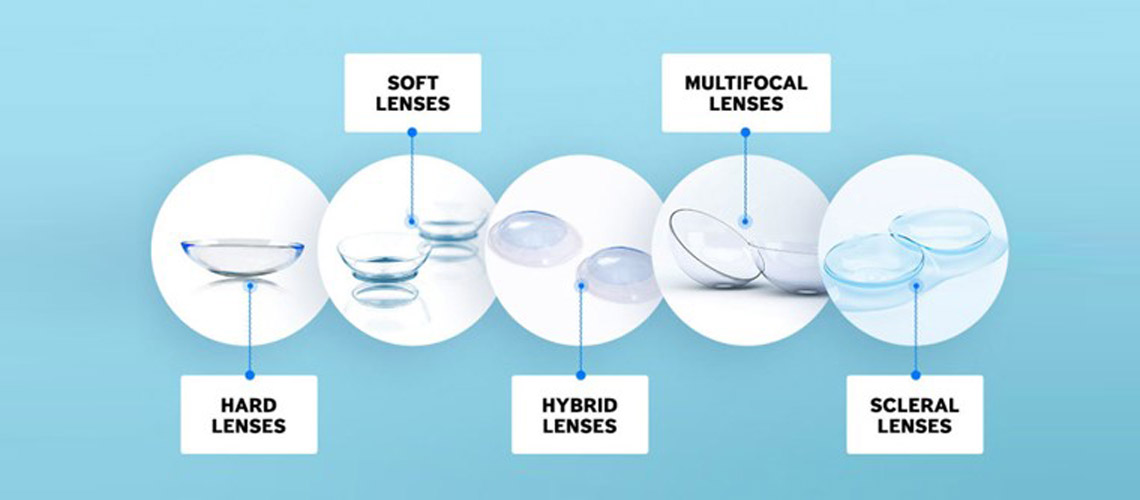
Contact lenses have been used for decades and offer an effective solution for various vision problems ranging from refractive errors such as shortsightedness, farsightedness and astigmatism to light sensitivity and eye injuries. The technology is constantly changing and developing to keep up with the need to improve the comfort, safety and vision needs of the millions of contact lens wearers worldwide. With the large selection of different types of contact lenses, your optometrist will guide you and recommend the most suitable ones for your unique visual and lifestyle requirements. SOFT CONTACT LENSES     Soft contact lenses are the most commonly prescribed contact lenses. They are made from a special type of plastic mixed with water. The water content allows oxygen to pass through the contact lens to the cornea, making them more comfortable, reducing dryness and keeping the cornea healthy. In general, soft contact lenses are more comfortable to adapt to than hard lenses. Many of them provide UV protection. One of the disadvantages of soft lenses is that they are fragile and can tear fairly easily when being handled. They tend to absorb particles, bacteria and chemicals which irritate the eyes. However, many soft lenses are disposable, minimising the chance of infection and eye irritation. There are a number of soft contact lenses to choose from. Daily wear contact lenses are worn on a daily basis and removed and cleaned at night. These may be replaced after a period of two weeks, a month or even a year. Daily...
Continue reading
  441 Hits
441 Hits

CHECK YOUR BLOOD PRESSURE!


CHECK YOUR BLOOD PRESSURE!
"I'm just here to have my eyes tested!" is what many patients say when they visit their optometrist. However, the optometrist is looking for more than a change in the prescription and the possible need for new glasses. He or she is searching for clues that may indicate the early stages of vision or health conditions that have not yet been diagnosed but signs of which may be present in the eyes.     Changes due to vascular conditions or conditions such as diabetes may be noticed on the retina some time before symptoms appear and the condition is diagnosed. The earlier these are detected and treated, the better the chances for a successful outcome. One of these chronic conditions is hypertension or high blood pressure. High blood pressure, or hypertension, occurs when the force of blood against the artery walls carrying blood from the heart is too high, causing the arteries to stretch, narrow and become damaged over time. Hypertensive retinopathy is a condition of the eyes resulting from high blood pressure when the blood vessels supplying blood to the retina in the back of the eye become damaged. When blood pressure is too high, the retina's blood vessel walls may thicken, causing them to become narrow, which restricts blood carrying oxygen and nutrients from reaching the retina, limiting the retina's function, and putting pressure on the optic nerve, causing vision problems. SIGNS AND SYMPTOMS Generally, vision symptoms may not be experienced in the early or mild stages of hypertensive...
Continue reading
  1177 Hits
1177 Hits

HELLO DARKNESS MY OLD FRIEND


HELLO DARKNESS MY OLD FRIEND
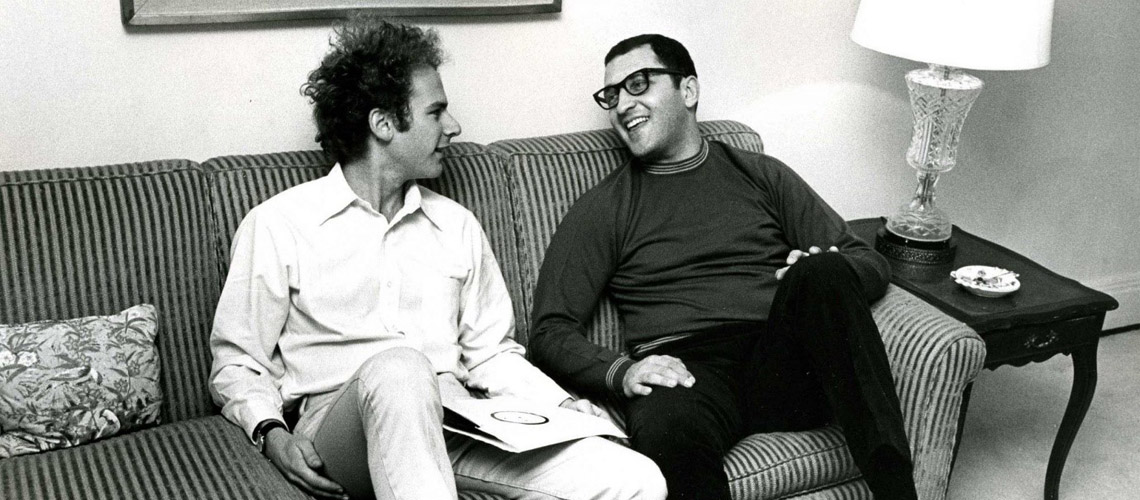
A Beautiful Story Behind a Great Song One of the best-loved songs of all time, Simon and Garfunkel's "Sounds of Silence", with the poignant opening lines "Hello darkness my old friend", was inspired by a college roommate who went blind. The song topped the US charts and went platinum in the UK. It was named among the 20 most performed songs of the 20th century, was listed among the 500 greatest songs of all time and provided the unforgettable soundtrack to the 1967 movie classic "The Graduate". But to one man this song means much more than all that.     Sanford "Sandy" Greenberg is Art Garfunkel's best friend and reveals in a moving memoir that the song was a touching tribute to their undying bond, and the singer's sacrifice that saved Sandy's life when he unexpectedly lost his sight. "He lifted me out of the grave", says Sandy, aged 79, who recounts his plunge into sudden blindness, and how Art's selfless devotion gave him reason to live again. Sandy and Arthur, as Art was then known, met during their first week as students at Columbia University in New York. They became roommates, bonding over a shared taste in books, poetry and music. "Every night Arthur and I would sing, he would play his guitar. The air was always filled with music." Still teenagers, they made a pact to always be there for each other in times of trouble. They had no idea their promise would be tested so soon. Just...
Continue reading
  1559 Hits
1559 Hits