EyeMark Newsletters

A list of all our EyeMark Newsletter Articles

IT’S CRUCIAL TO CONTROL PROGRESSIVE MYOPIA


IT’S CRUCIAL TO CONTROL PROGRESSIVE MYOPIA
Myopia, or shortsightedness, is the ability to see clearly close up, but distance vision is fuzzy or blurred. It is one of the most common eye disorders in the world, affecting children and adults alike. There is a growing concern that the incidence of myopia is increasing rapidly and continuing to progress, posing a threat to the future visual health of children. It has been estimated that by 2050, 50% of the world’s population will be shortsighted. While mild myopia typically does not increase a person’s risk for other eye problems, moderate and high myopia can have serious effects on vision. In the near term, difficulties seeing clearly can impact aspects of a child's life including learning, sports, arts and even behaviour. Left uncorrected, progressive myopia poses longer term vision threatening risks. What are the risks of progressive myopia in children? Left undetected or uncorrected, the biggest risk is the quality of future vision, as progressive myopia presents increased risks for vision threatening conditions at ever younger ages. Earlier myopia onset can lead to a faster rate of progression and a higher degree of myopia, as well as earlier onset of eye diseases typically associated with adults. These include cataracts, glaucoma, macular degeneration and retinal detachment. High myopia reduces the possibility of being a candidate for refractive surgeries such as LASIK® and increases the risk for complications from these treatments. Why is progressive myopia in children increasing?       While there is no specific cause, genetics seems to be a...
Continue reading
  1096 Hits
1096 Hits

VISION AND SAFE DRIVING


VISION AND SAFE DRIVING <br>  
October is National Transport Awareness month. While the condition of the roads and the car is critical to safe travel, the driver is equally important. With a high percentage of information on the road being visual and instant decisions being made based on visual cues, good vision is fundamental to driver safety. The eyes are constantly moving, focusing and refocusing as they adjust to the constant flow of input from the eyes. The driver needs to be aware of traffic signals, other cars, pedestrians, changes in light from shady to bright areas, approaching headlights at night and eye fatigue when driving long distances. Driving requires a combination of complex visual skills.       Visual acuity, the ability to see clearly at distance is a key element for safe driving. If you wear glasses or contact lenses for distance vision, always wear them when driving, even short distances. Make sure your glasses are clean and free of streaks and scratches. While contact lenses provide a less obstructed view of the road and fewer distortions than glasses, wearing them on long drives may cause the eyes to become tired and uncomfortable; keep a pair of glasses in the car so that the contact lenses can be removed if necessary. Have regular eye examinations to ensure that your prescription is up to date. Being able to see “out of the corner of the eye” without moving the head and while keeping the eyes on the road, peripheral vision, enables the driver to identify...
Continue reading
  1055 Hits
1055 Hits

UNMASKED


Cliches are the worst, but here comes one anyway. The one about the eyes being the windows of the soul. This overused phrase took on a new meaning in the chapter of our lives that began in March 2020. With our faces half-covered, our eyes needed to work extra hard to communicate what a smile suddenly could not. And then it all changed when masks went away. Our re-emergence into the world was gradual. First we went back into actual meetings as COVID restrictions began to ease. Face-to-face interactions became possible again, which meant we had to step out of our Zoom screens… and out of our pyjamas. Suddenly being able to "turn off video" was a thing of the past, just like wearing a suit jacket with a pair of tracksuit pants. The world was calling us to step back into meeting rooms. And we answered, though not without our social anxieties. Even so, face-to-face wasn't exactly face-to-face because we were still wearing masks. It was more like eye-to-eye and forehead-to-forehead. Now it's full-face-to-full-face, and doesn't that sometimes feel like a lot? Sure, there are advantages. People are instantly recognisable again. We've all had our share of awkward moments, when someone seemed unfamiliar simply because they were hidden behind a mask and some sort of headwear. Yes, we should be able to recognise our friends and family anywhere. But a pair of eyes don't give us much to work with (unless you're lucky enough to recognise someone's particularly memorable hat)....
Continue reading
  1163 Hits
1163 Hits

COVID LEAVES ITS MARK ON THE EYES


While COVID is commonly associated with infection of the lungs, heart and other vital organs, there is evidence to suggest that it can also affect the eyes. Conjunctivitis, or "pink eye", has been reported as a symptom in some people in the early stages of the disease, but the majority of information points to the effects of COVID on the eyes in the long term. "Once I recovered, I expected to feel back to normal, but after a few weeks I was still struggling. I was lethargic and my eyes began to hurt and were extremely sensitive to light," reports one COVID patient. Other problems include dryness, redness and deterioration of vision. A survey published by MyVision.org, "The Pandemic's Price on our Eyesight", has revealed how much the pandemic has impacted our vision and how we care for our eyes. Over 1,000 people who wear glasses and/or contact lenses were surveyed with regard to their eye health and eye habits over the past few years. The results showed that a large number of people are having problems with their vision but are putting off going to the optometrist.      Two out of five people reported that their eyesight has become worse since the onset of the pandemic. Nearly 70% report having more trouble seeing further away, while almost one-third are having difficulty reading up close. Since March 2020, 3 out of 10 people have received stronger prescriptions for their glasses or contact lenses. Of those struggling to see, one in...
Continue reading
  974 Hits
974 Hits

WHAT ARE POLARISED LENSES?


Optometrists frequently recommend polarised lenses or sunglasses. What are polarised lenses? How do they work? What are the advantages and disadvantages? Polarised lenses reduce strain on the eyes by blocking glare and minimising UV light They can improve visual acuity and comfort and enhance colour contrast.      We have all experienced glare caused by light reflecting off water, a car driving ahead of us or even the dashboard of our own car. This may be annoying or uncomfortable, but it can sometimes become intense and even dangerous, for example when driving. Ordinary sunglasses may cut down some of the glare, but only polarised lenses can block it out. What is Glare? When light bounces off a surface, the light waves travel and are absorbed or reflected in all directions, some horizontally and others vertically. However, if light hits a reflective surface, such as water or even a car or building, at a certain angle, vertical light waves are absorbed while horizontal light waves bounce off the surface. This light can become polarised, resulting in glare that can interfere with vision by striking the eyes intensely.      Polarised lenses have a filter of tiny vertical stripes which is coated directly onto the lens. Because horizontal light waves are unable to bypass the vertical filter, only vertically angled light enters the eyes and glare is eliminated. Polarisation can be applied to all lenses and can accommodate all prescription needs. While they can be made in a variety of colours, the colour...
Continue reading
  1140 Hits
1140 Hits

LOOK INTO MY EYES!


In poetry the eyes may be the windows to the soul, but they also provide a window to our general physical health. Because of their delicate structures, the eyes can reveal signs of health conditions not yet detectable by any other tests, and often before other symptoms become evident. During a comprehensive dilated eye examination, the optometrist has a clear view of nerves, blood vessels and connective tissue, which is not possible anywhere else in the body. Diabetes      Sometimes before other symptoms have resulted in a formal diagnosis of diabetes, an optometrist can pick up tell-tale signs on the retina and in the blood vessels. Although typically they don't interfere with vision, the appearance of cotton wool spots, fluffy white spots on the retina can be an indication of diabetic disease. Diabetes targets the tiny blood vessels that supply the retina. Optometrists can detect microaneurysms, as well as dilated and swollen blood vessels. In the later stages of diabetic retinopathy, new blood vessels start to grow on the retina, but they are weak, causing blood to leak and leading to retinal damage and vision loss. With early detection, blood sugar levels can be stabilised, and serious complications of diabetes can be prevented. Cardiovascular disease Because the health of the eyes is connected to the health of the heart, eye examinations can reveal a number of cardiovascular conditions. Decreased blood flow to the retina sometimes leaves visible damage which may be an indication of a problem with blood flow elsewhere...
Continue reading
  1022 Hits
1022 Hits

MY EYE HURTS!


Eye pain is common but is rarely a symptom of a serious problem, and the severity of the pain does not necessarily indicate how serious the underlying cause may be. While in some cases, the cause is obvious, it is often difficult to know why the eye is painful. The pain may occur on the surface of the eye or deep within the eye. It may be experienced in a variety of ways and may be accompanied by a variety of symptoms or by no other symptoms. With certain eye conditions, there may be no pain at all in the early stages. SUPERFICIAL EYE PAIN Foreign object One of the most common causes of pain on the surface of the eye is a foreign object or debris such as dust, makeup or an eyelash. Foreign bodies that can become embedded in the cornea include tiny stone particles, sawdust and metal shavings. The scratchy uncomfortable feeling can range from mild to severe and is typically most irritating with blinking as the eyelid rubs across the cornea. There may be watering, blurred vision and sensitivity to light. If you feel you have something in your eye, try to flush it out with saline solution or water. Corneal abrasion The cornea, the clear surface that covers the eye, is susceptible to scratches, causing discomfort, watering and light sensitivity. It is often impossible to tell if the eye pain is due to a minor scratch or a deeper abrasion. Many superficial abrasions heal on their...
Continue reading
  1058 Hits
1058 Hits

KEEP YOUR EYE ON THE BALL


Vision is not only about being able to see clearly at various distances. It also involves a number of skills that enable accurate, comfortable and effective functioning of the visual system. As well as being necessary for everyday activities and success in the classroom, these skills are essential for optimal sports performance. While all sports require the overall ability to process and respond to visual stimuli, different sets of visual skills may be more important for certain sports, depending on their specific demands. Essential Skills for Sport      Static visual acuity is the ability to see a target at a fixed distance when the target is not in motion, for example in archery. Dynamic visual acuity is the ability to clearly see moving objects. It is critical for sports such as tennis, rugby or soccer, which require the ability to see a moving ball clearly as well as having awareness of other players who are moving while the player may be moving himself. Eye tracking allows a player to follow objects with the eyes, with minimal head movement, to "keep their eye on the ball". This is an essential skill in all sports played with a ball.      Many sports, including soccer and hockey depend on the ability to focus quickly and accurately from one distance to another, as in changing focus from the ball to the goal or the boundary line. Delays in focus flexibility may result in delayed reaction time. Peripheral vision allows players to notice what...
Continue reading
  1109 Hits
1109 Hits

BETTER, OR WORSE, OR THE SAME?


BETTER, OR WORSE, OR THE SAME?
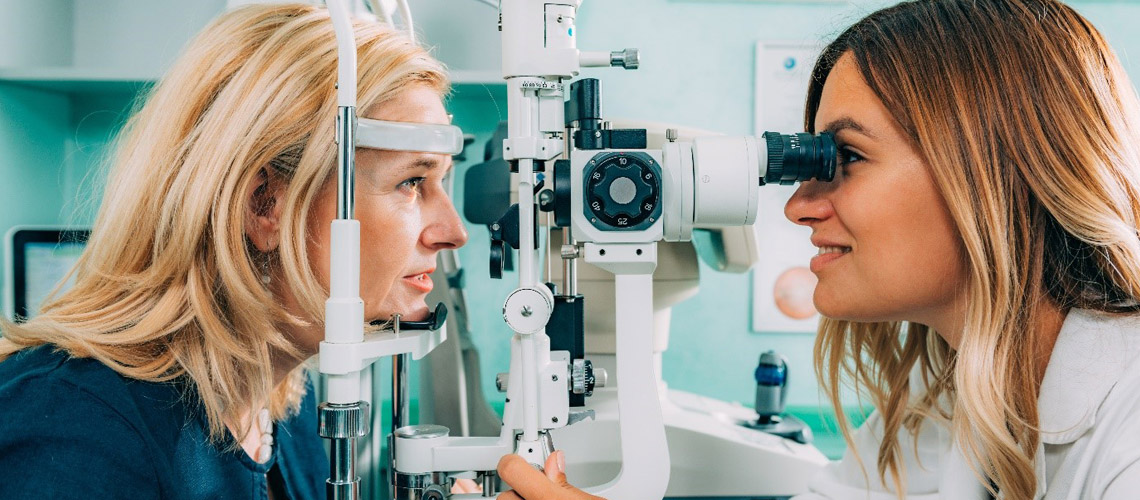
It was fun growing up with two generations of optometrists in the family. We got to spend our Saturday mornings in the practice, pretending the eye testing equipment was futuristic X-ray vision technology that could also shoot lasers. Half the fun was wearing those giant multi-lensed goggles. The other half was laughing at one's siblings when it was their turn. It was also fun staring at the posters advertising Italian eyewear and wondering about the lives of the people who got to stroll around Rome looking stylish. And, of course it was fun trying on each and every frame. A hundred times. Younger siblings didn't generally get a chance to operate the lens-cutting machine. But it didn't matter because it was fascinating enough to watch. And the magical fact that the oval pieces of glass somehow made people see better? The magic remains intact to this day because I still don't understand how it works (although I know the word "refraction" is somehow involved...) Sometimes we got our own eyes tested while we were there, and the oversized glasses became a functional device rather than a pair of fantasy X-ray goggles. I can still hear the words as lenses were swiftly interchanged: "Is this better, or worse, or the same?" What amazed me then and amazes me now is that I sometimes had to think about it. Sometimes it was obvious, but sometimes I had to ponder the question (or trio of questions, as it were). Which was actually better? What...
Continue reading
  1100 Hits
1100 Hits

MORE THAN A SIGN OF SADNESS


MORE THAN A SIGN OF SADNESS
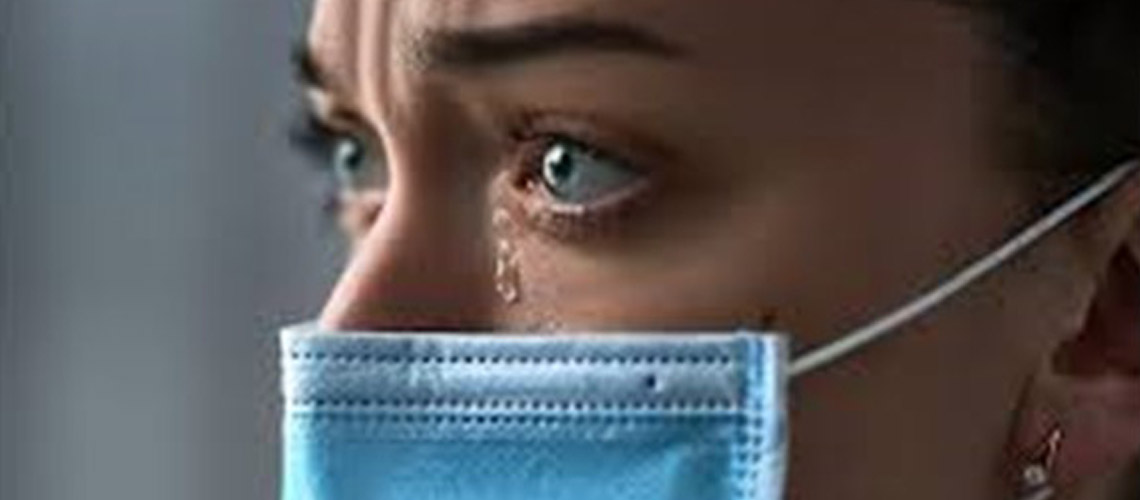
We cry when we're sad. We cry when we're happy. We cry when we chop onions. We cry when we are in pain. We cry when we have an eyelash in our eye. Tears serve a number of different functions, but the fundamental one is to keep the eyes healthy by lubricating them and flushing out debris. As well as the various different reasons for crying, our tears are made up of various different substances. Tears contain water for moisture, oils for lubrication and mucus for resistance to infection and even spreading across the surface of the eyes. Because there are no blood vessels on the surface of the eyes, tears transport oxygen and nutrients to the surface cells. The Origin of Tears For centuries, people thought tears originated in the heart. Later, in Hippocrates' time, it was thought that the mind was the trigger for tears. Finally, in 1662, a Danish scientist named Niels Stensen discovered that the lacrimal gland was the origin point of tears. His theory was that tears were simply a way to keep the eyes moist.      Types of Tears There are three kinds of tears, each of which has a different function. Basal tears , which contain oil, mucus, water and salt keep the eyes hydrated and help fight infection. They flow continuously from the lacrimal glands, moistening the eyes each time we blink. Reflex tears  form when the eyes are exposed to irritants, such as smoke and onion fumes, flushing out the material...
Continue reading
  1170 Hits
1170 Hits