EyeMark Newsletters

A list of all our EyeMark Newsletter Articles

JUST ANOTHER DAY?


JUST ANOTHER DAY? <br>  
If you remember your Geography, you’ll remember learning that every fourth year has an extra day. Maybe you even remember why (though many of us don’t). Like most things in Geography, it has to do with the earth’s movement around the sun. Cosmic things happen somehow, and we get February the 29th. We could see it as nothing more than just another day. Another day to sit in traffic, go to work, and then go home and complain that there’s nothing to watch on any of our three hundred channels. Or we could see it as a gift. An amazing opportunity. A whole extra day to do so many things. Where do we even start? Well, how often do we all complain that there isn’t enough time to do stuff? Now’s our chance - February 29 could be the day we’ve been waiting for. So, clean out the garage already. Or sort through that pile of papers on the kitchen counter. Or put away the suitcases that have been lying in the passage since the December holidays. Or... how about a few things that would be way more fun? Follow the loadshedding schedule and hop from region to region, so you can experience 24 hours of perpetual darkness. Alphabetise all the books on your bookshelf. Or organise them according to colour. Or arrange them so all the first words of all the books come together to form a sentence. Sort through the pictures on your phone and actually print them. Then...
Continue reading
  1263 Hits
1263 Hits

ARE MORE PEOPLE WEARING GLASSES?


ARE MORE PEOPLE WEARING GLASSES?
In recent years there has been a significant surge in the number of people across the globe wearing glasses or contact lenses, indicating the rise in visual problems and the growing need for visual correction. This may be due to a number of factors, including the higher prevalence of myopia in young children, increased screen time, lifestyle changes, improvement in diagnosis, aging populations worldwide, and the awareness of health conditions. SHORTSIGHTEDNESS BECOMING MORE COMMON Research has shown that just two decades ago optometrists were seeing far fewer children in their practices than they are today. As well as the number of young patients increasing, the age at which they are being seen is getting younger and younger, with more 4 to 12-year-olds than before needing glasses. Some estimates of children with myopia are as high as 40- 45%. Not only is myopia occurring more frequently, but it seems to be deteriorating faster and faster. Aside from the need to wear glasses or contact lenses to see clearly, myopia has additional risks later in life, including increased risk of retinal tear or detachment, premature cataracts, glaucoma and macular degeneration. Once a child reaches adulthood, progression of myopia naturally stops in most people. Addressing this issue of myopia while they are young and growing is important since this is the time when an intervention can be most successful. GENETIC VS. ENVIRONMENT       It has generally been believed that genetics plays a role in myopia, but with myopia rising so rapidly and...
Continue reading
  2266 Hits
2266 Hits

THE SECRET LANGUAGE OF WINKING


THE SECRET LANGUAGE OF WINKING
Winking, the rapid closing and opening of one eye to convey a message, is a universal form of non-verbal communication which carries a rich history of historical and cultural significance. First mentioned in the bible, it has been found in literature and art in ancient Greece and Rome and in numerous cultures throughout the ages. During medieval times, some believed winking to have the sinister power of casting spells or engaging in witchcraft. From Shakespearean plays to classic novels, winking has been used to add subtle layers of meaning to the narratives. With the passage of time and societal norms, the meaning behind winking has changed. Today, virtual winking has found its place in pop culture and everyday communication on social media platforms with their emphasis on emojis and symbols.       Although seemingly a simple act, winking requires the coordinated contraction and relaxation of as many as 49 muscles. Contrary to popular belief, not everyone can wink. Some people can wink with one eye but not the other. When we wink, the eyebrow above the non-winking eye is always pulled higher on the face; it is physically difficult to keep the eyebrows level. When associated with certain medical conditions, winking can occur unintentionally. Some people wink almost subconsciously, especially under stress. This simple eye gesture has diverse meanings and conveys certain emotions or intentions, which are open to various interpretations. Navigating the subtle nuances of winking requires an awareness of cultural norms and social cues, because it can be...
Continue reading
  2209 Hits
2209 Hits

I AM NOT MY VISION LOSS!


I AM NOT MY VISION LOSS!
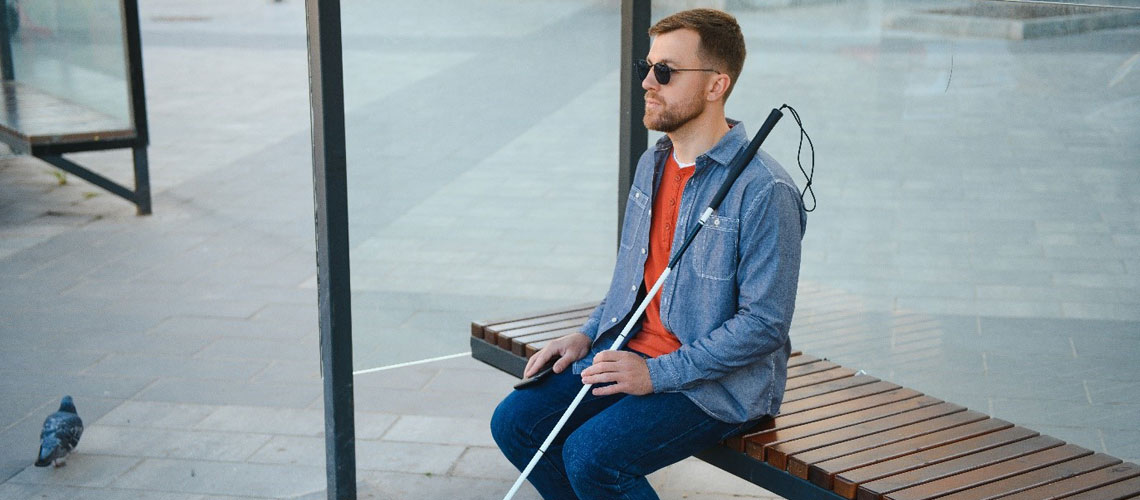
There are many assumptions and misconceptions around vision loss, such as that closing our eyes gives us an understanding of what it must be like to be blind, or people with vision loss need help with all their daily tasks. Vision loss is diverse and varies depending on the individual as well as on the eye condition which makes each individual see things in a unique way. "Rather than making assumptions, engage with blind people like you would anybody else. Show curiosity about them. And if you want to know if there's something they need, ask them and don't assume", suggests the parent of a blind child. Is it OK to use the word: ”blind”? Or should we say: “visually impaired” or “low vision”? In any situation, terminology is a sensitive issue, and some people may be more sensitive than others to the words used to describe their condition. Most people with vision loss have some degree of remaining vision and may prefer to use terms that express that, but the amount of vision a person has is not what defines them. The word “blind” has been found to have more negative connotations in society at large than amongst people with vision impairments.       “You don't have to watch all your words carefully,” says one person with vision loss. He goes on to say that we don’t have to be embarrassed to ask if some-one watched the rugby match on TV. Even if someone has limited to no remaining...
Continue reading
  1325 Hits
1325 Hits

WHY HAVE A GLAUCOMA SCREENING?


WHY HAVE A GLAUCOMA SCREENING? <br>  
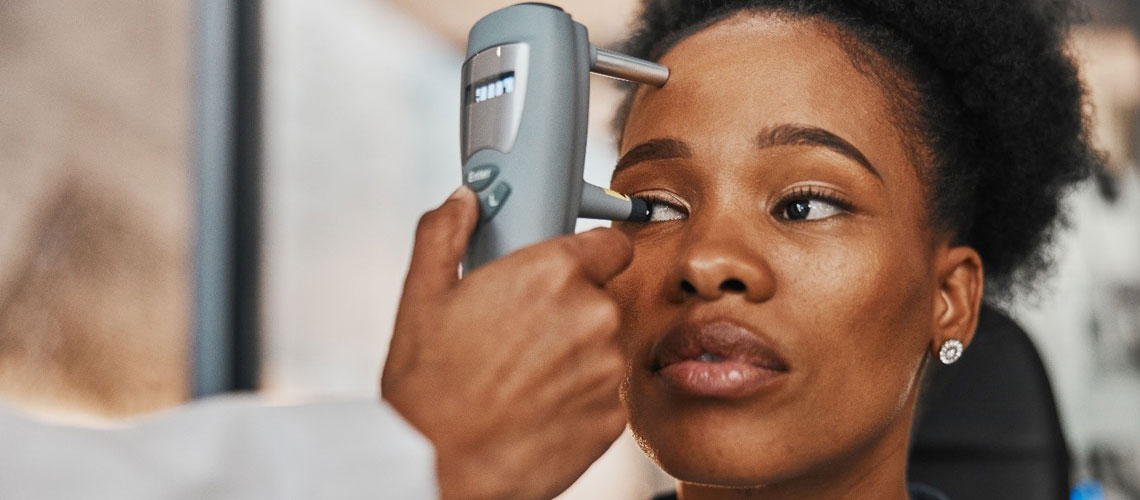
Glaucoma is a progressive eye disease that can eventually cause permanent irreversible vision loss if left untreated. It doesn’t always cause noticeable symptoms in its early stages, so testing can help detect it before it progresses to a more advanced stage. It typically becomes more severe over time, which is why early diagnosis and management can significantly slow or even stop its progression. WHO IS AT RISK FOR GLAUCOMA? While anyone may develop glaucoma, some people are at a higher risk. Like with most medical conditions, understanding and identifying the risk factors, as well as timely treatment are key factors towards preserving health. Family history is an important factor for open-angle glaucoma, the most common type. Risk increases for those over the age of 50. Other risk factors include certain ethnic groups, a high degree of shortsightedness or farsightedness, previous eye trauma or injury, increased eye pressure, retinal detachment, health conditions such as diabetes and heart disease, and long-term use of certain steroid medications. WHAT ARE THE FIRST SIGNS OF GLAUCOMA?     Glaucoma typically develops slowly with no early signs or symptoms, and most people do not notice vision changes until the condition has progressed and there is significant damage to the optic nerve. This is the reason it is usually first detected during an eye examination. There are several types of glaucoma, and not all of them are easy to identify in their earlier stages. The most common type of glaucoma is open-angle glaucoma which is due to inadequate...
Continue reading
  1165 Hits
1165 Hits

HELPING YOUR CHILD ADJUST TO GLASSES


HELPING YOUR CHILD ADJUST TO GLASSES
With the rapid rise in myopia throughout the world, particularly amongst children, it has become more common for children to be wearing glasses and parents are faced with the task of helping their children adjust to them. Getting new glasses can be both exciting and daunting for some children, and the process of accepting and adjusting to them can be challenging for both parents and children. OH NO! MY CHILD NEEDS GLASSES! Discovering that their child needs to wear glasses can be difficult for some parents, even if they themselves wear glasses. The first step towards helping the child adjust to them and feel confident wearing them is accepting that not wearing glasses if they are necessary could lead to numerous problems. FOCUS ON THE BENEFITS       “I didn’t realise I was supposed to be able to see each leaf on a tree” commented one child after receiving his first pair of glasses. Vision is subjective – a child does not know what he should be able to see, and a parent does not know that the child is unable to see clearly. It is important to have age-appropriate conversations with the child about how glasses will improve his ability to see and function better. Use positive language and provide honest answers to questions and concerns he may have. Encourage him to voice his concerns and discuss them with the optometrist. Your child may encounter curiosity or questions from friends about the new glasses. Prepare him with simple, confident...
Continue reading
  1248 Hits
1248 Hits