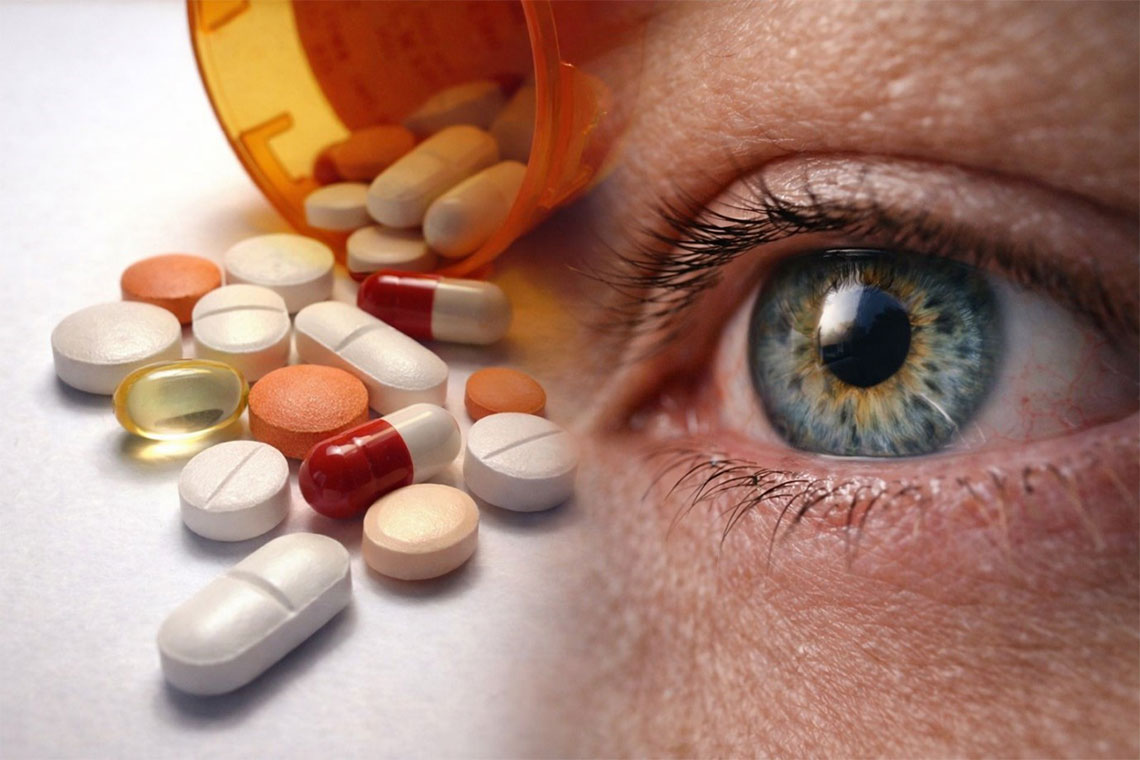
Imagine your eyes as quiet passengers on a long train journey. They don't drive the train. They don't choose the route. But they experience every bump, tunnel, and sudden change in speed. That train is your bloodstream. And every tablet, capsule, injection, or syrup you take becomes part of the journey. Most people think of medication as targeted: blood pressure pills for the heart, antibiotics for infections, antihistamines for allergies. But the body doesn't work in neat compartments. Once a medication enters your system, it travels everywhere, including to the eyes. And the eyes, delicate and highly vascular, are remarkably sensitive to these chemical travellers. Medications can affect vision through various mechanisms. Some drugs may alter the function of the optic nerve, while others might impact the muscles that control eye movement or the blood vessels supplying the eyes. Certain medications can lead to changes in the fluid balance within the eyes, potentially causing increased intraocular pressure. Some effects are subtle, others cause vision problems, and then there are those that cause less noticeable but more serious changes that happen gradually over time. Many medication-related eye effects are temporary and manageable when identified early, and simple interventions can protect long-term vision. Dry Eyes One of the most common side effects of medications on the eyes is dry eye syndrome, a condition which occurs when tear production is reduced, tears evaporate too quickly or the composition of the tears is altered. Typical symptoms may be blurred vision, burning and...
11 Hits
11 Hits