EyeMark Newsletters

A list of all our EyeMark Newsletter Articles

TRUFFLES, AMBASSADOR FOR VISION


TRUFFLES, AMBASSADOR FOR VISION
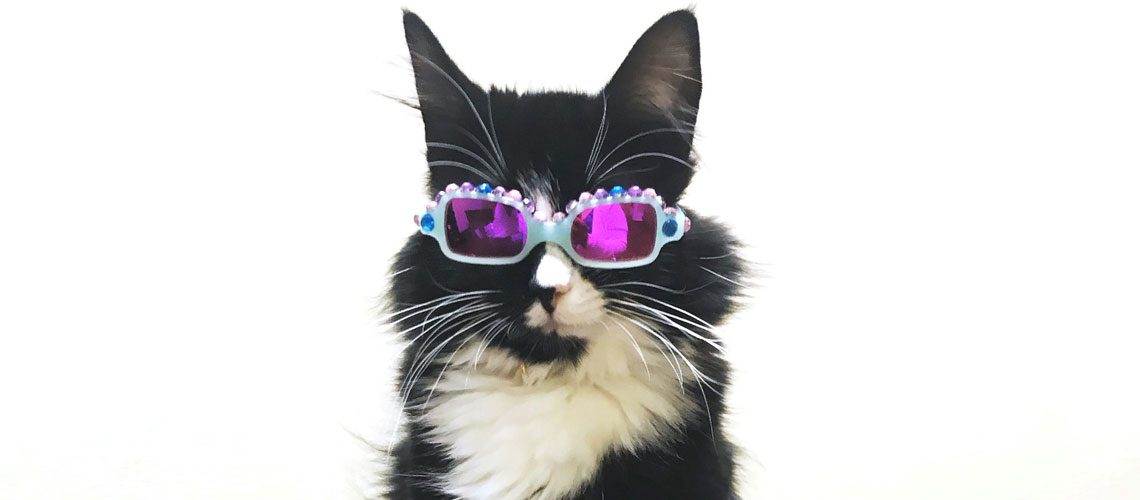
There are many unique situations and disabilities and many of these can be greatly improved with the use of a service animal. When one thinks of service animals the best known one that comes to mind is the guide dog, or "seeing eye dog". First trained in Germany after World War I to assist soldiers who had been blinded in combat, these dogs continue to play a vital role in helping and enhancing the lives, not only of the visually impaired, but of people with a variety of conditions such as multiple sclerosis, diabetes, hearing impairment, severe allergies, epilepsy and autism. There is a difference between service animals who are specifically trained to understand the specific needs of their handler, and therapy animals who are used primarily to provide comfort, help reduce anxiety and have a positive impact on the mood and general health of people. Therapy animals do not necessarily require special training but perform their role by merely being present. In recent years, animal trainers have been experimenting with a variety of service animals including cats, horses, monkeys and even birds. One such animal, Truffles the kitty, was not specifically trained but landed her important job in an optical practice by chance.       Starting life as a stray cat in a forest in Pennsylvania, USA, Truffles was adopted by optician Danielle Crull in October 2017. She is now changing the lives of hundreds of children by wearing glasses to help children with vision problems feel more comfortable...
Continue reading
  3381 Hits
3381 Hits

REFRACTIVE ERRORS


REFRACTIVE ERRORS
Refractive errors are disorders that affect the way the eyes bend light. Under normal conditions we are able to see a clear image because different parts of the eye bend or refract the light entering the eye and focus it precisely on the retina at the back of the eye. Light enters the eye through the cornea and travels through the lens which is flexible and changes shape to focus on objects at different distances from the eye. When the image reaches the retina, a message is sent via the optic nerve to the brain which interprets what is seen. If something interferes with the refraction of the light and prevents it from being focused correctly on the retina, a refractive error occurs and the image we see will not be clear. Refractive errors are very common, affecting roughly one in three people worldwide. They are usually the result of a problem with the shape or length of the eye, an irregularly curved cornea or a lens that is curved too much or too little or beginning to lose its flexibility. They may be present at birth, but most refractive errors first appear in children and develop over time as the child grows and develops. They can occur at any time in one's life, even if vision was clear before. A refractive error may occur in one or both eyes, and if it is present in both eyes, it may not be the same in both. Mild refractive errors may be...
Continue reading
  1475 Hits
1475 Hits

CRAZY EIGHTS


CRAZY EIGHTS
Can you believe it's August already, and where does the time go etc etc? Instead of dwelling on the passage of time, let's look at why this eighth month of the year is numerologically significant. Because cultures throughout history and throughout the world have recognised importance in the number eight, let's take a trip and explore. The number eight is significant in so many ways when it comes to mathematics - none of which make any sense to those of us who aren't mathematicians. So, let's move right along to science, where eight is regarded as a magic number. Again, the reason for this is highly complex and confusing. But magic is magic, so we'll take it. You might have wondered why the Beijing Olympics kicked off at 8:08:08pm on 8 August 2008. It's because the number eight is considered to be lucky in Chinese and other Asian cultures. It's also why a number plate containing an eight was recently sold for over half a million dollars in Hong Kong. It's all because the word for eight sounds similar to the word for building wealth... which adds a linguistic angle to the numerological one. Eight is a critical number in Ancient Egyptian mythology. Also, there were apparently eight people on Noah's Ark in addition to all the animals (though it's unclear whether the people marched onto the ark two by two). And, in the Middle Ages, there were believed to have been eight unmoving stars in the sky. This notion symbolised...
Continue reading
  1810 Hits
1810 Hits

IS EYE DISEASE IN YOUR FAMILY TREE?


IS EYE DISEASE IN YOUR FAMILY TREE?
You have your grandmother's red hair and your father's creative talent. As well as appearance and personality traits being passed down through generations, higher risks for certain health conditions are also within our genetic code. Knowing where, or who, we come from can tell us a lot about what we may expect to come. Genetics play a vital role in certain eye diseases. Being aware of which of these diseases may be found in your family tree may help to reduce the risk or at least lead to early detection and management before they become serious, improving the long-term outcome. Most eye diseases and conditions have multiple causes, but a large number of them are genetically linked. Some conditions do not pass directly from parents to offspring but may miss a generation and manifest later. Others may be the result of multiple genes or of the interplay between genetic, environmental and lifestyle factors.       The most common visual disorders are refractive errors which occur when the shape of the eye prevents light from being focused correctly on the retina. Research suggests that there is a significant risk of refractive errors in individuals whose parents have a refractive visual disorder, but that lifestyle factors have a role to play. The risk is higher if both parents have a refractive problem. Refractive disorders include myopia (shortsightedness), hyperopia (farsightedness) and astigmatism. Strabismus (misalignment of the eyes) and amblyopia ("lazy eye") have been found to have a genetic link. Among children, more than...
Continue reading
  2131 Hits
2131 Hits

WET VS DRY MACULAR DEGENERATION


WET VS DRY MACULAR DEGENERATION
Age-related macular degeneration (AMD) is a progressive condition, which is the leading cause of severe vision loss in adults over 50 years of age. It affects the macular, the central part of the retina which is responsible for sharp central vision and for seeing detail. Without central vision, it is difficult to recognise faces, read or drive. Because the vision loss is gradual, many people with AMD are unaware of it in the early stages and may notice the changes to their vision only once the disease is more advanced and irreversible vision loss has occurred. Early signs can be detected by an optometrist in a comprehensive eye examination before visual problems are experienced, and steps can be taken to slow the progression of the disease and the deterioration of the macula. There are two main types of macular degeneration, wet and dry. Dry AMD is the more common and less severe form of the condition. The difference between them is determined by the cause of the macular distortion. With wet AMD, the function of the macula is impeded by the growth and leakage of abnormal blood vessels beneath the retina. Dry AMD is the result of aging and the thinning of the macula over time. These divergent causes result in different treatments and prognoses. SYMPTOMS       The specific symptoms and progression of AMD depend on the type of AMD as well as other individual health factors. People who have dry AMD may experience vision problems, but these are...
Continue reading
  2469 Hits
2469 Hits

WINDOW TO THE SOUL AND BRAIN


WINDOW TO THE SOUL AND BRAIN
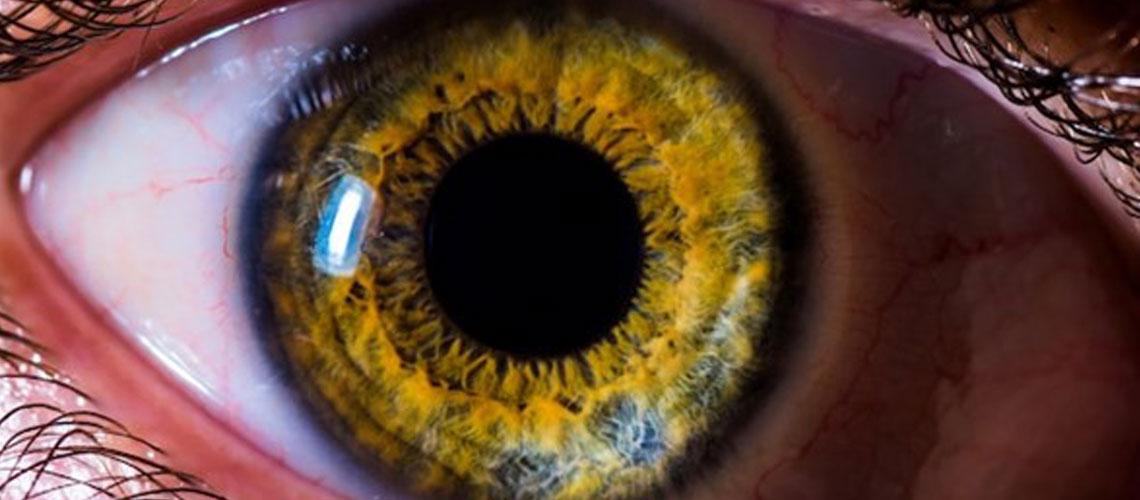
The pupil is the black circular opening in the centre of the iris, the coloured part of the eye. It plays a crucial role in vision by regulating the amount of light that enters the eye. Beyond this primary function, it also acts as a window to our internal state, revealing important information about our emotional and cognitive processes. The pupils are controlled by the autonomic nervous system, which controls involuntary actions, such as heart rate, breathing, and digestion. The size of the pupil is controlled by two sets of muscles in the iris, one of which widens it, while the other constricts or narrows it. The pupillary light reflex and the pupillary emotional reflex are both important for vision and for emotional expression. The pupillary light reflex helps to protect the eyes from damage, while the pupillary emotional reflex allows people to communicate their emotions to others. The pupillary response can be an involuntary reflex reaction to exposure to light or it may indicate interest in the subject of attention, uncertainty, indecision, conflict, errors, physical activity or increasing cognitive load or demand. PUPILLARY LIGHT REFLEX The primary function of the pupil is to regulate the amount of light entering the eye, which is essential for maintaining optimal vision in varying light conditions and protecting the delicate structures of the eye. The pupillary light reflex is a rapid automatic involuntary response of the pupils to changes in light. When light enters the eye, it stimulates the retina at the back of...
Continue reading
  1879 Hits
1879 Hits

EYE ALLERGY? INFECTION? DRY EYE?


EYE ALLERGY? INFECTION? DRY EYE?
At some time or another, everyone has had the experience of red, itchy, watery eyes, the feeling that there is something in the eye. Is this an allergy, an infection, a chronic eye condition or something else? Different eye conditions may have similar symptoms, but similar symptoms may have different causes. To add to the confusion, different eye conditions can coexist and overlap in ways that facilitate or worsen each other. Defining the distinguishing causes and features and making an accurate diagnosis will lead to appropriate treatment. EYE ALLERGIES An allergy is the overreaction of the body's disease-fighting immune system to something in the environment that typically causes no problem in most people. When the allergen comes into contact with the antibodies attached to the mast cells in the eyes, the cells respond by releasing histamine and other substances to defeat the irritants. The histamine stimulates the eye's blood flow, causing redness and watering as blood vessels dilate and leak. The histamine also stimulates the eye's many nerve endings resulting in itching.       There are various types of eye allergies, the most common being  seasonal allergic conjunctivitis , which, as the name implies, occurs at specific times of the year, typically spring, depending on the type of pollens in the air.  Perennial allergic conjunctivitis  occurs year-round and is generally a reaction to household allergens like dust mites or pet dander.  Vernal keratoconjunctivitis  is often associated with conditions such as asthma and eczema. While it can occur throughout the year,...
Continue reading
  1683 Hits
1683 Hits

HOW DO YOU SEE THE WORLD?


HOW DO YOU SEE THE WORLD?
What is it about a creative work such as a painting or piece of music that elicits our awe and admiration? Is it the thrill of being shown something new, something different, something the artist saw that we did not? As Pablo Picasso put it, "others have seen what is and asked why. I have seen what could be and asked why not". The idea that some people see more possibilities than others is central to the concept of creativity. Creativity is a multifaceted and awe-inspiring human trait that allows individuals to think outside the box, generate novel ideas, and bring forth original expressions. Creative people often possess a unique perspective on the world, perceiving and interpreting their surroundings in distinctive ways. By understanding these distinctive lenses, we can gain insights into the creative process and foster creativity in various aspects of life. ENHANCED PERCEPTION AND SENSITIVITY Research published in the Journal of Research in Personality suggests that creative people don't just bring a different perspective to things, they genuinely see things differently to the average individual. They tend to have heightened perception and sensory sensitivity, enabling them to notice details and patterns that others may overlook. They have a remarkable ability to observe and absorb information from their environment. This keen perception allows them to notice the subtleties, textures, colours, and nuances of the world around them, providing a rich source of inspiration for their creative endeavours. The findings of a study on binocular rivalry in which different images are...
Continue reading
  1931 Hits
1931 Hits

LET THE GAMES BEGIN


June is a big month for football. On Saturday the 10th, all eyes will be on Istanbul for the UEFA Champions League final. The world will witness all the action, all the excitement, and all the melodrama of players pretending their so-called “fouls” are much worse than they actually are. Just in case you’re feeling left out, here’s a quick Soccer 101 to catch you up before kick-off. Eleven That’s how many players are on a soccer team. In case you forget, just think of it as a quarter of the number of people who helped a certain prisoner fake his own death and escape from a South African correctional facility. Although, as investigations continue, that number could run into the hundreds or even thousands. Scratch that - the case of the convicted criminal and his doctor girlfriend won’t improve your soccer knowledge at all. Just remember the number eleven. Yellow card When a player gets into a bit of trouble but not so much. Red card When a player gets into big, big trouble and is pulled off the field. It’s like a book being pulled off the shelves when the leader of a political party claims it was “unauthorised” but later admits he paid millions to the author. The political leader tries to back-pedal (if you’ll excuse the mixed sports metaphors), but what’s been said has been said and the damage is done. So this one’s simple. Big trouble = red card. Penalty This is like a special gift...
Continue reading
  1291 Hits
1291 Hits

LIVING IN A DIGITAL AGE


Our lives are dominated by screens of one kind or another – computers, televisions, phones and tablets – and the impact has been far-reaching. They have influenced how we work, learn, are entertained, even socialise. While the screens are less to blame than the time spent staring at them, there has been a dramatic rise in vision related problems in both adults and children, resulting in computer vision syndrome or digital eye strain. CAUSES OF COMPUTER VISION SYNDROME Like any muscle in the body, the eyes become strained or fatigued from prolonged use, and this is more problematic with prolonged computer use as the eyes are required to work harder than with other close-up activities like reading. Viewing angles and distances are different from other common close-up activities. The eyes are required to constantly focus and refocus on the print which is made up of pixels or tiny dots. Often the letters on the computer are not sharply defined, the level of contrast between the letters and the background is reduced, and the presence of glare and reflections on the screen may place increased demands on the visual system.      In addition, uncorrected vision problems, such as farsightedness, astigmatism, problems with eye coordination or changes due to aging, no matter how minimal, can increase the severity of eyestrain symptoms. Even people who wear glasses or contact lenses may find them unsuitable for the specific viewing distances of the computer screen. When using a computer, most people tend to blink less...
Continue reading
  1370 Hits
1370 Hits