EyeMark Newsletters

A list of all our EyeMark Newsletter Articles

BY NOW


BY NOW
Januworry is called that for a reason. But we made it through. What we sometimes forget is that there’s another month immediately following the first one of the year. And then another and another. Yip, it didn’t take long for the hamster wheel to start spinning again, did it? And so, to help you get through the second month of a new year, here’s a helpful tool called the February By Now Checklist. It’s a handy set of milestones to assess how effectively you’ve transitioned into 2023. And so... By now it’s likely that you’ve removed your Christmas tree from your home (if you had one). It was relevant in December, cute and nostalgic in January, but now... it starts to look a little sad. There’s definitely a clear expiry date on these kinds of things. Like hearing “All I Want for Christmas” in a shopping mall on 1 January, and knowing it’ll be the last time you’ll hear it for another year (Here’s hoping...) By now you’ve thought about throwing away your diary/Filofax from 2021, because it’s been a whole year and you haven’t needed any info from it. And - if you’ve been really cautious - you can probably throw away the ones from 2020, 2019 and 2018 too. Or maybe you’re not ready to be so bold. By now you’ve hopefully adjusted to a brutal daily routine that doesn’t include an afternoon nap and a glass of wine (also taken in the afternoon). You’ve managed to make it...
Continue reading
  1091 Hits
1091 Hits

EYE CARE FOR OPTIMAL EYE HEALTH


EYE CARE FOR OPTIMAL EYE HEALTH
      A healthy lifestyle is not only important for the health of the body but has a direct impact on the health of the eyes. Following a nutritious diet, exercising, getting enough sleep and cutting back on smoking are some of the factors that have a role to play in health and well-being. However, living a healthy life and feeling well is not always an indication of good health. With the eyes in particular, you could have a developing vision problem even if your vision is good and your eyes feel healthy. The only way to be sure is to have a regular eye examination. Certain serious eye conditions have no obvious symptoms in the early stages, and people may be completely unaware that a vision problem is developing. During a comprehensive eye examination, optometrists often notice the early warning signs. By dilating the pupils, the optometrist is able to examine the retina and the blood vessels at the back of the eye and to look for signs of damage or disease. Most eye conditions, both minor and more serious, can be successfully treated or at least prevented from getting worse. The key is early detection! How to care for your eyes The health of the eyes is directly connected to the health of the heart and blood vessels. The tiny blood vessels in the eyes carry essential nutrients and oxygen to the eyes. Keep a check on your blood pressure and cholesterol levels. Consistent regular exercise can help...
Continue reading
  912 Hits
912 Hits

SEEING IS BELIEVING??


SEEING IS BELIEVING??
The eyes work in constant unison with the brain, which is why we see the world as we do. Every once in a while, the perception of the image that the brain processes is not what is actually in front of us, as the eyes trick the brain into seeing things that aren’t really as they appear. This is an optical illusion. Optical illusions, also known as visual illusions, are made up of visual deception. This is based on numerous factors including the way the images are arranged, the effect of colours, the impact of light source and other factors. There are three main types of optical illusions, namely literal illusions, physiological illusions and cognitive illusions. With each type, the brain is tricked into misunderstanding what it sees, seeing it in a different way. It is stimulated in a unique way with each type which causes misperception of reality. LITERAL OPTICAL ILLUSIONS       The simplest type of optical illusions are literal optical illusions, which describe images that can be looked at in two different ways. The perceived image in the brain will keep alternating between the possible illusions of the images in the picture. What the eyes will see, will not be a single view, but alternating images. This can be viewed as a reversible figure in which both images exist. Artistically, literal optical illusions can be used to establish a connection between two different ideas. An example of this is “My wife and my mother-in-law”, which shows a...
Continue reading
  1476 Hits
1476 Hits

THE SILENT THIEF OF VISION


THE SILENT THIEF OF VISION
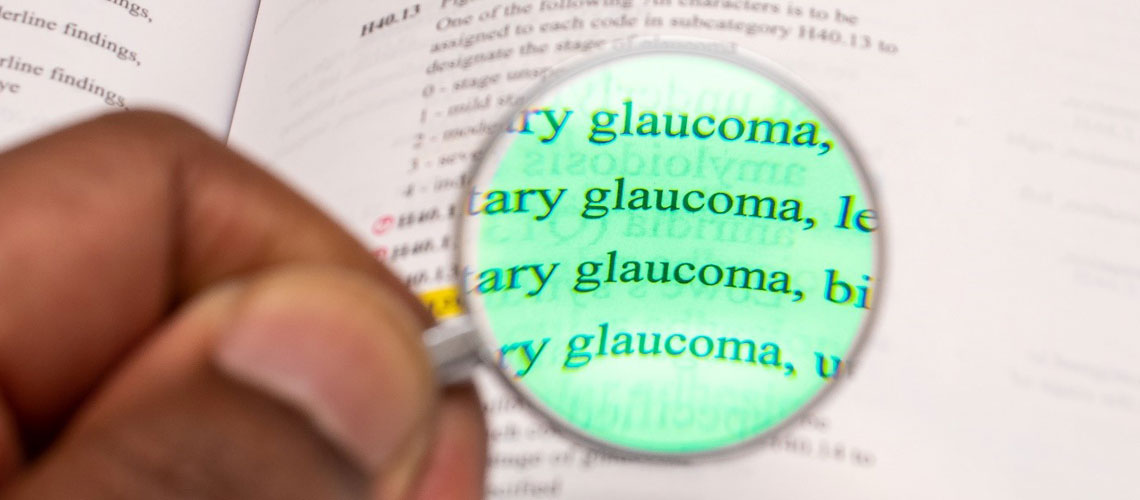
      Glaucoma is a chronic, progressive eye disease caused by damage to the optic nerve. The eyes constantly produce fluid which circulates in the front part of the eyes and drains through the drainage angle. If this becomes blocked or too much fluid is produced, a build-up of fluid leads to an increase in pressure and gradual damage to the optic nerve. Glaucoma is aptly called the “silent thief of vision” because there are no early symptoms and by the time the person is aware of a vision problem damage to the optic nerve has already occurred. Regular eye examinations can detect the condition in its early stages and the progression can be slowed or even stopped. “I don’t know what its like to have normal vision,” says Amanda. “My glaucoma was diagnosed when I was three months old. That was 35 years ago. Thanks to prompt action by my parents, it was detected and treated early, and my vision was stabilised.” Glaucoma is rare in children, affecting one in 10,000 children, and can be present at birth or develop in infancy. Typically, it affects adults over the age of 40 but it can happen to anybody at any age. Pat was diagnosed in her early 30s after an eye examination. “I just went to my optometrist for new glasses and she found I had early signs of glaucoma. Everybody should have regular eye examinations.” Nathan’s glaucoma was diagnosed when he was 54 years old. “My grandfather and mother...
Continue reading
  902 Hits
902 Hits

WHAT IS VISION THERAPY?


WHAT IS VISION THERAPY?
      Vision is a complicated dynamic process which involves the eyes and the brain. It is a combination of how clearly we are able to see, how well the eyes function and how efficiently the brain processes visual information. Light enters the eye and passes through the structures of the eye until it reaches the optic nerve which relays the visual information to the brain. The brain is responsible for organising, interpreting and giving meaning to this information allowing us to make sense of our visual world. Just because a child can see clearly and comfortably does not guarantee that the brain will be able to make effective use of the incoming information. A person may have 20/20 vision but have difficulty receiving and processing what they see. Vision therapy can help to correct and improve the functioning of the visual system by identifying specific problem areas and designing an individualised programme to address the unique needs of each person. Conducted by an optometrist in his practice, the therapy activities may be supplemented by the use of lenses, prisms and filters. As well as sessions with the optometrist, activities to be done at home may be given to reinforce and stabilise visual skills. Success in vision therapy depends on the appropriate programme and on an individual’s co-operation, participation and motivation.       If an individual’s visual skills are not adequately developed, or a person fails to coordinate vision with other senses, vision problems may occur, resulting in a...
Continue reading
  959 Hits
959 Hits

KEEP CALM, DON’T STRESS!


KEEP CALM, DON’T STRESS!
When we think of stress, our minds immediately go to the negative effects, and it is difficult to imagine that stress could have positive effects. A moderate amount of stress is not only helpful, it is also necessary. Healthy manageable stress motivates us, increases alertness, boosts performance and builds resilience and confidence. It has been reported to improve memory and help build relationships. However, when stress becomes chronic and turns into anxiety and panic, it often manifests physically and can have harmful ramifications on our health and physical well-being. The eyes, too, can pay the price. What are the Symptoms of Stress-Related Vision problems?       Vision symptoms caused by stress may be experienced in many different ways. Common symptoms include blurred vision, double vision, narrowed or tunnel vision, visual distortions, sore eye muscles, sensitivity to light, eye twitching, increase in floaters, reduced blink rate, very wet or dry eyes and eye strain. The symptoms are generally temporary and tend to come and go, although they may occur constantly. They may affect only one eye or both eyes, and sometimes shift back and forth between the eyes. They typically increase in response to stress and often precede anxiety or stress-related incidents. These symptoms are generally irritating rather than debilitating. However, if they become very uncomfortable or persist over an extended period of time, it is advisable to see an optometrist. How does Stress cause Vision Problems? Stress can be both a cause and a consequence of vision problems. The fear...
Continue reading
  969 Hits
969 Hits